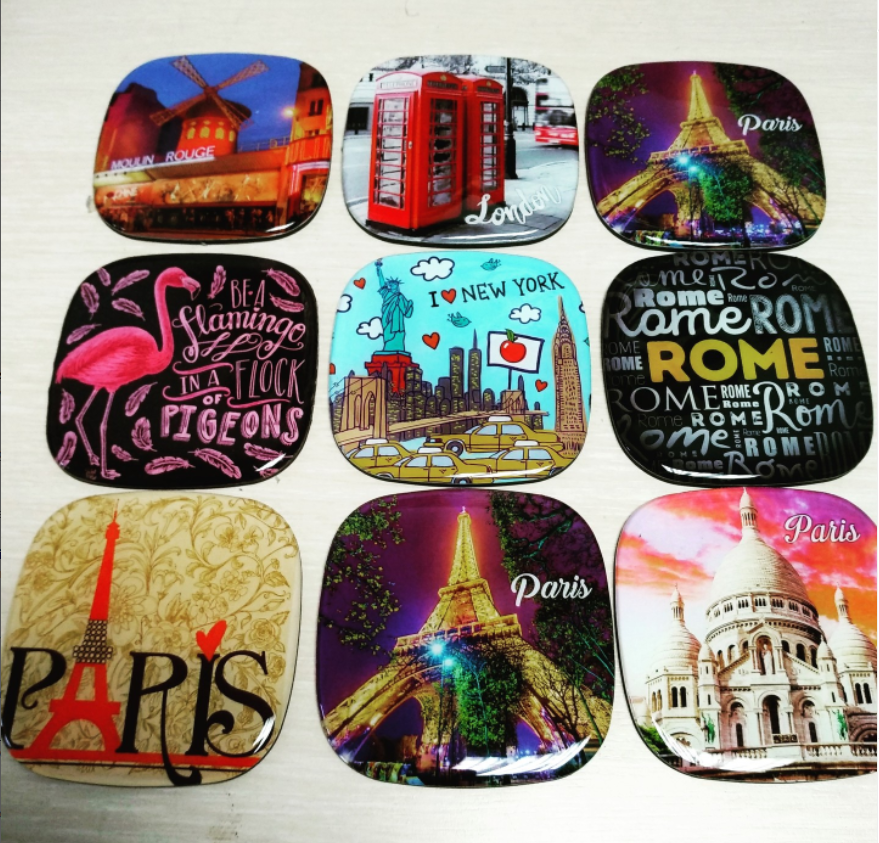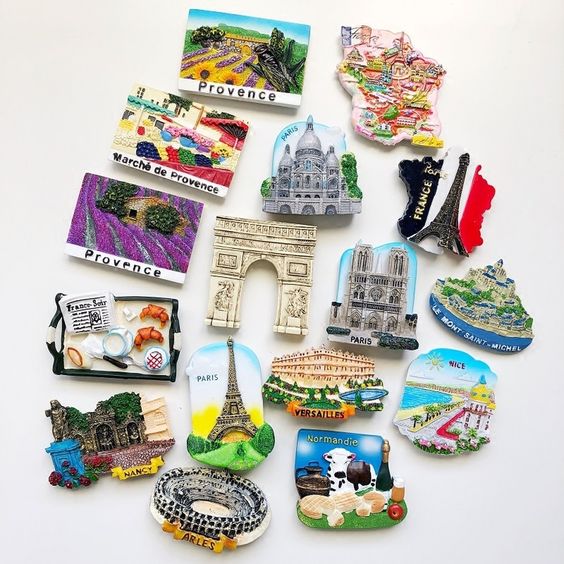
In the high-stakes environment of Global Travel Retail (GTR), the shelf is a battlefield. For a Category Manager at an industry titan like Dufry, Hudson, or Lagardère, every square inch of display space must generate maximum yield. In this pursuit of margin, the siren song of the “low-cost” quote is ever-present. A souvenir figurine that looks identical to a premium version but costs $0.30 less seems like an easy win for the bottom line.
However, in the world of thermosetting polymers, you truly get what you pay for. At Craftmgf.com, we have spent decades auditing the supply chains of global souvenir importers, and we’ve seen a recurring pattern: the “savings” found in low-grade resin are almost always vaporized by high return rates, damaged brand equity, and logistical nightmares.
If you are sourcing for airport environments—where UV exposure is constant, chemical odors are magnified, and products undergo the physical stress of long-haul travel—understanding the chemistry of your materials is not just a technical detail. It is a financial imperative.
The Competitor Landscape: Why Surface-Level Sourcing Fails
Most manufacturing blogs focus on the “what” rather than the “why.” A typical competitor’s outline usually looks like this:
- Introduction: Resin souvenirs are popular in airports.
- Quality Matters: Cheap resin breaks easily.
- Appearance: It might look different after a while.
- Conclusion: Work with a reliable factory.
The Skyscraper Expansion: Deep-Dive Material Engineering
To provide real value to a professional buyer, we must go deeper. Our “Ferris Wheel” SEO approach expands the conversation into the molecular and logistical reality of the product:
- UV Stability and Molecular Cleavage: Why high-traffic retail lighting is the enemy of cheap polymers.
- The VOC Crisis: Why “smell” is the #1 silent killer of airport retail conversion.
- Structural Brittleness vs. Impact Resilience: Engineering souvenirs for the 10,000-mile journey.
- The Forensic Return Rate Math: Calculating the actual cost of a $15 return in a duty-free zone.
1. The Chemistry of Failure: UV Degradation and the “Yellowing” Disaster

Airport retail environments are unique. They are characterized by 24/7 high-intensity LED lighting and, often, large glass facades that let in significant amounts of natural UV radiation.
Molecular Cleavage in Low-Grade Resin
Low-grade unsaturated polyester resins often lack a critical component: UV Stabilizers and Hindered Amine Light Stabilizers (HALS). When these polymers are exposed to light, the ultraviolet energy breaks the molecular bonds—a process known as photodegradation or “molecular cleavage.”
For a wholesale souvenir distribution group, the result is a product that looks pristine in the warehouse but turns a sickly, translucent yellow after just 30 days on an airport shelf. To a traveler paying a premium “airport price,” a yellowed souvenir looks like old, defective stock. The result? The customer puts it back, or worse, buys it and discovers the discoloration later, leading to a digital-age return that tarnishes your brand on social media.
The CraftMGF Standard
We utilize high-clarity epoxy and polyester resins specifically formulated with high-grade UV inhibitors. This ensures that the “crystal-clear” effect of an Eco-Embed or the vibrant Pantone colors of a hand-painted figurine remain stable for years, not weeks.
2. The Smell Test: VOCs and Off-Gassing in Enclosed Spaces

Travelers in an airport are in a heightened state of sensory awareness. In an enclosed duty-free shop, the air quality is strictly monitored. Low-grade resin souvenirs are notorious for “off-gassing”—the release of Volatile Organic Compounds (VOCs) long after the curing process should have finished.
Why “The Resin Smell” Kills Sales
If a traveler picks up a magnet or a snow globe and is met with a sharp, chemical sting in their nostrils, the subconscious reaction is “Toxic.” In 2026, the modern traveler is hyper-aware of chemical safety. High VOC levels are a sign of:
- Incomplete Curing: The factory rushed the production cycle to meet a low price point.
- Cheap Monomers: The use of low-quality styrene or fillers that remain reactive.
For an experienced souvenir importer, a “smelly” shipment is a catastrophic risk. It can lead to the entire batch being rejected by airport health and safety inspectors, or a flood of returns from customers who don’t want a “toxic-smelling” gift in their carry-on luggage.
3. The Brittle Reality: Impact Resistance vs. The 10,000-Mile Journey

An airport souvenir is the world’s most traveled product. It is purchased, stuffed into a cramped “personal item” bag, shoved into an overhead bin, and subjected to the pressure changes of a 35,000-foot cruise altitude.
Structural Integrity and Plasticizers
Low-grade resin is inherently brittle. To save costs, some factories use excessive amounts of cheap fillers (like calcium carbonate) which reduce the percentage of actual resin in the mix. This makes the product “chalky” and prone to “micro-fracturing.”
A manufacturing partnership focused on quality uses a balanced resin-to-filler ratio and high-performance plasticizers. This gives the souvenir a degree of “flexural strength.” If a traveler drops their bag, a high-quality resin figurine has the structural integrity to survive the impact. A cheap one will shatter, often into sharp, needle-like shards—creating a safety hazard and a guaranteed refund request.
4. The Forensic Math: High-Grade vs. Low-Grade Cost Analysis

Many buyers look only at the unit price (FOB). As a Google SEO expert in the manufacturing space, I advocate for the Total Landed Cost (TLC) and “Risk-Adjusted Margin” model.
| Metric | Low-Grade Resin (“Cheap” Factory) | High-Grade Resin (CraftMGF Standard) | Business Impact |
| Unit Price (FOB) | $1.20 | $1.45 | $0.25 initial difference. |
| UV Stability (Shelf Life) | 2-3 Months | 24+ Months | Low-grade leads to “Dead Stock” within a season. |
| VOC / Odor Level | High (Noticeable) | Zero / Low (Compliant) | High odor reduces conversion rates by 15%. |
| Defect/Return Rate | 5% – 8% | <0.5% | The “Hidden Invoice” of returns. |
| Average Return Cost | $18.00 (Logistics + Admin) | $18.00 | A single return wipes out the profit of 70 units. |
| Compliance (REACH/Prop 65) | High Risk (Failures common) | Certified Pass | Risks of $50k+ fines or port rejections. |
| Net Profit per 10k Units | $42,000 (Adjusted for returns) | $58,500 | Quality is ~40% more profitable. |
The “Return Multiplier”
In airport retail, the cost of a return is disproportionately high. You aren’t just losing the sale; you are losing the Category Manager’s trust. If your products have a 5% return rate, you will lose your shelf space to a competitor with a 0.5% return rate, regardless of your unit price.
5. Compliance and the “Brand Equity” Shield
For a brand manager at a global retail group, compliance standards are the “floor,” not the “ceiling.”
REACH, Prop 65, and the Global Importer
Low-grade resins often contain heavy metals (like lead or cadmium used in cheap pigments) or phthalates that are banned under REACH (EU) and Prop 65 (USA).
- The Risk: A random customs inspection or a third-party laboratory test commissioned by a competitor can shut down your entire supply chain.
- The Protection: By sourcing high-grade, certified materials, you are building a “Brand Equity Shield.” You can tell the Dufry or Hudson buyer with 100% confidence: “Our products are safe, stable, and compliant.”
6. Strategic Sourcing: How to Spot Low-Grade Resin Before You Buy
How can an experienced souvenir importer tell the difference before the shipment arrives? It requires moving from intuitive sourcing to technical refined data.
- The Transparency Test: If the resin is supposed to be clear, look at it against a pure white background. Low-grade resin often has a slight blue or yellow tint even when new—this is an attempt to mask impurities.
- The “Weight-to-Volume” Ratio: Cheap fillers make products feel “stony” but brittle. High-grade resin has a slight “heft” that feels like a solid polymer, not a compressed powder.
- The Cure Cycle Audit: Ask your China souvenir factory for their curing schedule. If they are de-molding in half the recommended time to save on mold costs, the resin is not fully polymerized and will off-gas.
- The UV Chamber Report: Demand a 48-hour accelerated UV aging test report. A quality manufacturer will have this data on hand.
7. Conclusion: Why Quality is the Only Sustainable Hedge
In the 2026 travel market, the consumer is more discerning, the retailer is more data-driven, and the margins are tighter than ever. Obsessing over a $0.25 unit price difference is a “race to the bottom” that ends in high return rates and lost contracts.
The hidden costs of cheap resin are not just financial; they are existential. By investing in high-grade materials, you are investing in the longevity of your retail partnerships. You are ensuring that when a traveler buys a souvenir at Heathrow or JFK, it remains a beautiful memento of their trip, not a yellowed, brittle reminder of a poor purchasing decision.
At Craftmgf.com, we don’t believe in “cheap.” We believe in Total Value. We engineering souvenirs that stand the test of time, the stress of travel, and the scrutiny of the world’s most demanding retailers.
Is your current supplier cutting corners on material quality? Don’t wait for the return rates to spike. Contact Craftmgf.com today for a Material Integrity Audit and see how our premium resin formulations can protect your margins and your brand.

- Souvenir Magnet Program Planning: What Actually Sells for Museums, Parks & Tourism Boards - October 20, 2026
- Custom Fridge Magnet Sampling and Proofing: The B2B Guide to Approving a Sample (2026) - October 15, 2026
- Custom Mold Ownership & Design IP Protection for Souvenir Magnets: A B2B Buyer’s Guide (2026) - October 9, 2026