
In the high-stakes arena of global travel retail, procurement is often viewed through the lens of design, quality, and lead times. However, for a Category Manager overseeing multi-million dollar contracts for giants like Dufry, Hudson, or Lagardère, there is a silent margin killer that often goes unaddressed until it is too late: Currency Volatility.
As we navigate the economic landscape of 2026, the traditional “set it and forget it” pricing model for souvenir sourcing is dead. The fluctuations between the US Dollar (USD), Euro (EUR), and the Chinese Yuan (RMB/CNY) can turn a high-performing product line into a financial liability overnight. When your margins are built on high-volume efficiency, a 5% swing in exchange rates can be the difference between a successful season and a net loss.
At Craftmgf.com, we recognize that we aren’t just a resin souvenir manufacturer. We are a strategic partner in your supply chain. This guide provides a deep-dive analysis into how professional importers can hedge currency risks through smart contract engineering and manufacturing transparency.
The Competitor Landscape: Why “Standard” Sourcing Advice is Obsolete
Most B2B manufacturing blogs offer the same surface-level advice regarding currency: “Check the exchange rate daily” or “Ask for a discount if the dollar is strong.” This is not a strategy; it is a reaction.
The Competitor Outline (The Baseline)
- What is exchange rate risk? (Basic definition).
- Pay in local currency. (Simplistic advice).
- Monitor the news. (Vague suggestion).
- Conclusion: Currency matters.
The Skyscraper Expansion: Strategic Financial Engineering
To protect enterprise-level margins, we must move beyond basic definitions and into financial supply chain resilience. Our “Ferris Wheel” approach expands the topic into:
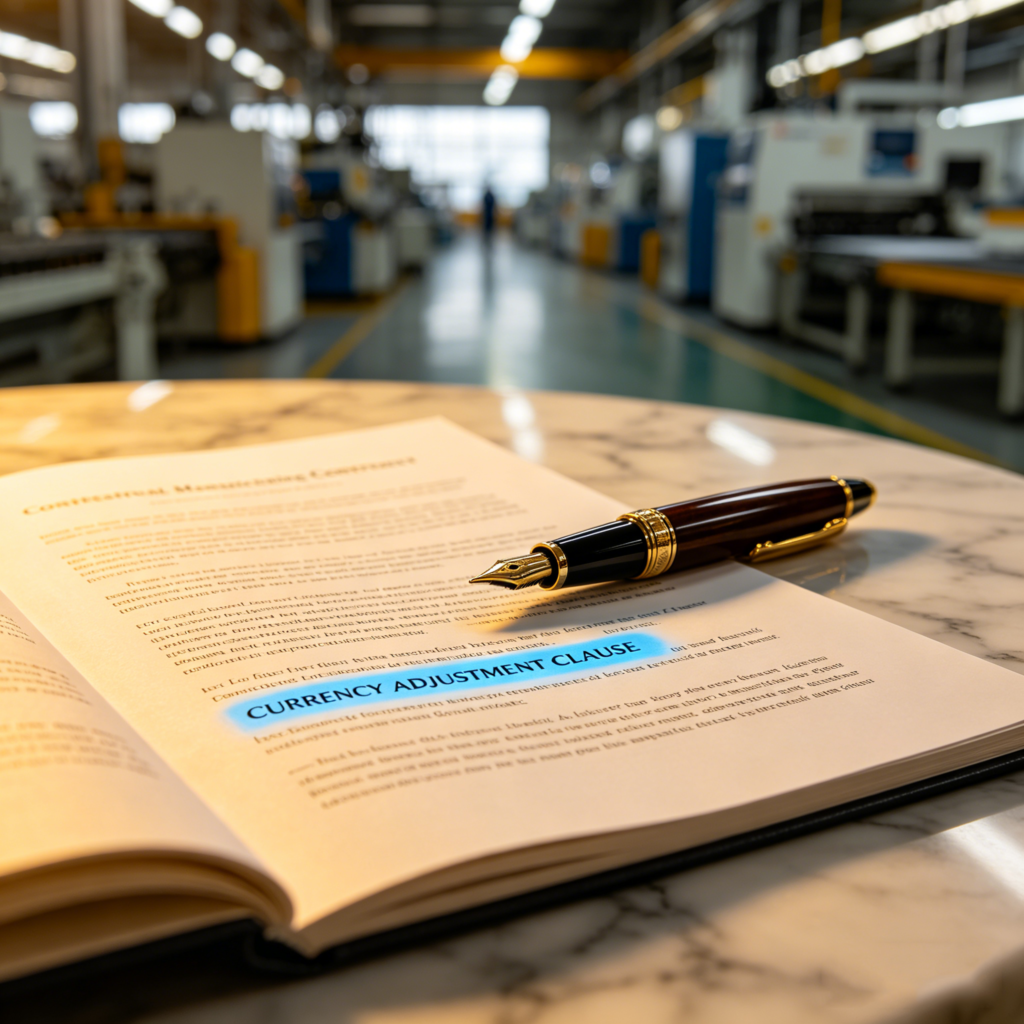
- The “Pricing Floor” Logic: Why fixed-term pricing requires a “Currency Adjustment Clause” (CAC).
- Manufacturing Efficiency as a Natural Hedge: Reducing waste to offset currency devaluations.
- FOB vs. DDP Pricing Strategy: Who should carry the currency risk?
- The 2026 Macro-Economic Forecast: Preparing for a multi-polar currency environment.
1. The Hidden Impact of Currency on the “Total Landed Cost”

When an experienced souvenir importer looks at a quote of $0.85 per unit, they are seeing a static number. But in reality, that price is a living organism.
For a China souvenir factory, their costs—raw resin, energy, and labor—are paid in RMB. If the USD weakens against the RMB by 4%, the factory’s profit margin may disappear. In a desperate bid to survive, a low-tier factory might cut corners on souvenir quality control or use cheaper, low-grade resins that lead to high return rates.
A strategic Total Landed Cost (TLC) analysis must include a “Currency Buffer.” If you aren’t accounting for the volatility in your initial procurement math, you are essentially gambling with your retail brand’s profitability.
2. The Power of the “Currency Adjustment Clause” (CAC)

In long-term souvenir supply contracts (12–24 months), “Fixed Pricing” is often a trap for both the buyer and the supplier. If the currency shifts too far in one direction, one party will eventually feel cheated, leading to a breakdown in the manufacturing partnership.
How to Structure a Professional CAC
A professional contract with Craftmgf.com often includes a “Neutral Zone.” For example, as long as the USD/RMB exchange rate stays within a +/- 3% band, the price remains fixed. If the rate moves beyond that band, a pre-negotiated price adjustment is triggered.
This transparency allows Category Managers to forecast their budgets with 97% accuracy, regardless of geopolitical shifts. It removes the “guesswork” from wholesale souvenir distribution and ensures that the factory can maintain the high standards of AQL 2.5 quality control without financial strain.
3. Data Comparison: The Forensic Impact of Currency Swings

To illustrate the stakes, let’s look at a hypothetical 12-month contract for 500,000 custom resin magnets for a major airport group.
| Scenario | Exchange Rate (USD/RMB) | Per Unit Cost (FOB) | Total Contract Value | Margin Impact on Importer |
| Baseline (Contract Signed) | 7.10 | $0.80 | $400,000 | Target Margin Met |
| USD Weakens (5% Drop) | 6.75 | $0.84 (Adjusted) | $420,000 | -$20,000 Profit Erosion |
| USD Strengthens (5% Gain) | 7.45 | $0.76 (Adjusted) | $380,000 | +$20,000 Profit Bonus |
| No CAC (Contract Breach Risk) | 6.50 | $0.80 (Unchanged) | $400,000 | Factory may stop production due to losses. |
The “Supplier Bankruptcy” Risk
The table reveals a critical insight: without a CAC, a massive currency shift (Scenario 4) creates a “Sourcing Crisis.” If the factory loses money on every unit produced, they will eventually prioritize other clients or, worse, go out of business mid-production. Protecting the supplier’s viability through a CAC is actually an act of supply chain risk mitigation for the buyer.
4. Manufacturing Efficiency as a “Natural Hedge”

If the currency moves against you, how do you recover that 3-5% loss without raising retail prices? This is where packaging engineering and material science become financial tools.
At Craftmgf.com, we use “Value Engineering” to offset currency inflation:
- CBM Optimization: If the currency makes the product 3% more expensive, we look to reduce the shipping volume (CBM) by 5% through smarter packaging. This lowers the freight cost per unit, neutralizing the exchange rate impact.
- Material Innovation: Switching to high-performance Bio-Resins can sometimes offer more stable pricing than petroleum-based resins, which are doubly hit by currency and oil price volatility.
5. Forward Contracts and Financial Tools for Category Managers

Large-scale global travel retail suppliers should work closely with their finance departments to utilize “Forward Contracts.”
A Forward Contract allows you to “lock in” an exchange rate for a future date. If you know you will need to pay $1,000,000 to your China souvenir factory in six months, you can buy that currency now at today’s rate. This transforms a variable cost into a fixed cost, providing total peace of mind for the CFO.
However, this only works when you have a manufacturing partnership expert who provides reliable, fixed lead times. If your factory is constantly late, your Forward Contracts will expire, leaving you exposed to the spot market. Reliability is the foundation of financial hedging.
6. Sourcing Geography: RMB vs. VND and the 2026 Outlook
The “China-Plus-One” strategy is often touted as a way to reduce risk. Many importers look toward custom souvenirs manufacturing Vietnam (VND) to diversify.
The Correlation Trap
While the Vietnamese Dong (VND) is a different currency, it often tracks closely with the RMB due to the integrated nature of the Asian supply chain (raw materials for resin souvenirs often still originate in China). True diversification requires a multi-polar sourcing strategy where you understand the “Currency Sensitivity” of each region.
In 2026, we advise our clients to analyze not just the labor cost of a region, but the Currency Volatility Index of that region over the last five years. High volatility in a “cheap” labor market can quickly make it more expensive than a stable, high-efficiency market like Quanzhou.
7. Strategic Advice: How to Conduct a “Currency Stress Test”
Before signing a high-volume wholesale souvenir contract, ask your supplier for a “Stress Test” audit:
- Transparency: Ask what percentage of their BOM (Bill of Materials) is sensitive to USD fluctuations.
- Settlement Flexibility: Can the factory accept payment in EUR or HKD if that is more advantageous for your treasury?
- Inventory Buffering: Would it be cheaper to pay for 6 months of stock upfront when the exchange rate is favorable, and store it at the factory’s warehouse?
Conclusion: Turning Volatility into a Competitive Advantage
Currency volatility is only a “risk” if you are unprepared. For the experienced souvenir importer, it is an opportunity to outmaneuver competitors who are still using 20th-century sourcing tactics.
By integrating Currency Adjustment Clauses, leveraging packaging engineering, and choosing a transparent manufacturing partner, you can stabilize your margins and focus on what really matters: capturing the hearts of travelers with world-class souvenirs.
Sourcing is a memories business; manufacturing is a data business. Don’t let a fluctuating decimal point dictate the success of your brand.
Is your current supply chain protected against the next currency swing? Contact Craftmgf.com today to discuss our “Strategic Pricing Models” and how we protect the margins of the world’s leading travel retailers.

- Souvenir Magnet Program Planning: What Actually Sells for Museums, Parks & Tourism Boards - October 20, 2026
- Custom Fridge Magnet Sampling and Proofing: The B2B Guide to Approving a Sample (2026) - October 15, 2026
- Custom Mold Ownership & Design IP Protection for Souvenir Magnets: A B2B Buyer’s Guide (2026) - October 9, 2026