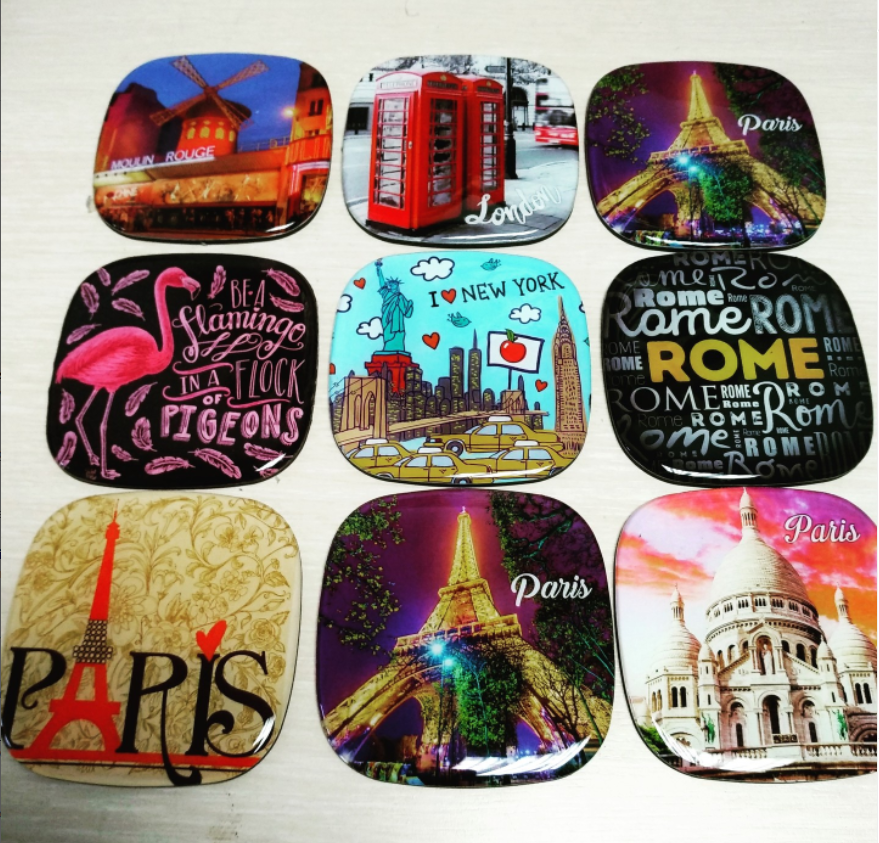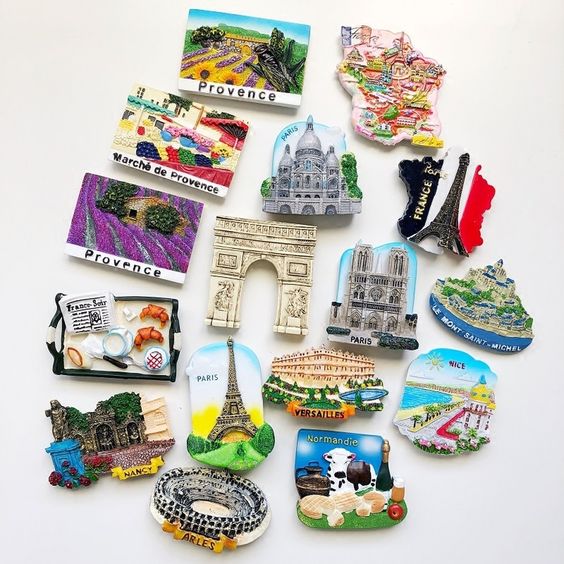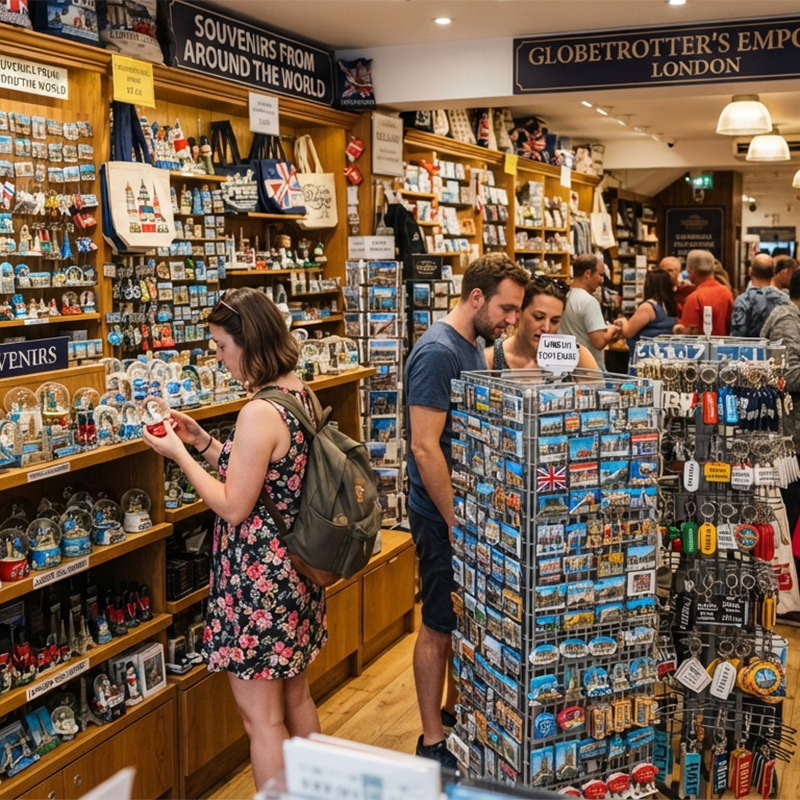
Running a tourist gift shop is a balancing act. On one hand, you want to offer unique, high-quality items that tourists genuinely want to take home as a memento. On the other, you are limited by shelf space, inventory costs, and the fast-paced nature of the tourism industry. If your shelves are filled with generic products that gather dust, you aren’t just losing money; you’re losing prime retail real estate.
Many gift shop owners, museum buyers, and attraction operators fall into the trap of buying “stuff” rather than building a souvenir collection. The difference between a struggling gift shop and a profitable one is the strategy behind the product mix.
In this guide, we will explore the best selling souvenir ideas for gift shops and provide a roadmap for inventory planning that turns browsing tourists into paying customers. Whether you are stocking a boutique museum shop or a high-traffic airport kiosk, understanding the psychology of the purchase is your first step toward retail success.
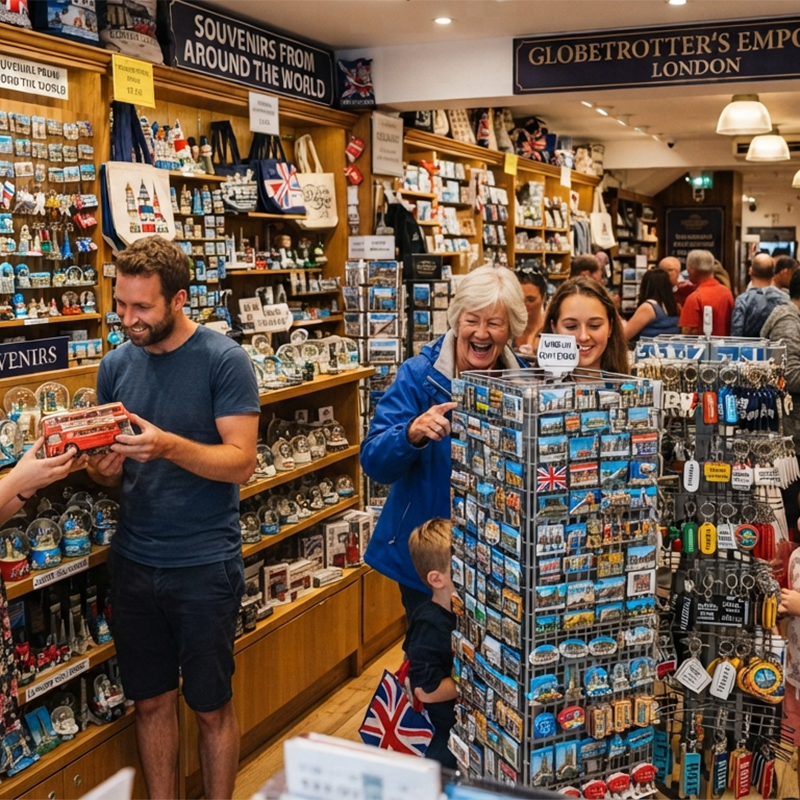
Why Some Souvenir Products Sell Better Than Others
If you walk into a dozen tourist gift shops, you will notice a pattern. Some shops are crowded, messy, and feel like warehouses for plastic trinkets. Others are curated, inviting, and seem to have a higher “sell-through” rate. Why?
The secret lies in the emotional connection. Tourists aren’t shopping for a product; they are shopping for a memory. When a customer picks up a fridge magnet or a snow globe, they aren’t looking at the manufacturing cost; they are evaluating whether that item can transport them back to the moment they stood in front of the Eiffel Tower or explored an ancient cathedral.
Products that sell best have one thing in common: they solve the “memory retrieval” problem. A high-performing souvenir acts as a physical anchor for a travel experience. If a product is generic—lacking destination branding or a clear link to the location—it loses its value. Best selling souvenirs bridge the gap between “this is a cool object” and “this represents my trip.”
Understanding What Tourists Actually Buy
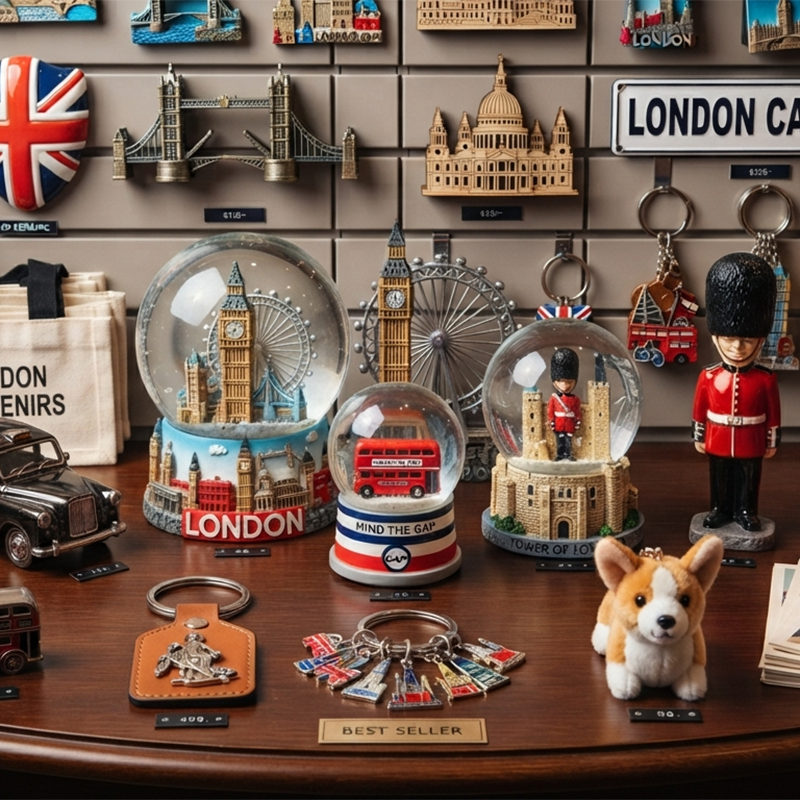
Understanding what tourists actually buy requires looking at their behavior patterns. Tourists are generally in a hurry, they have a limited budget, and they are carrying luggage.
- Size Matters: The vast majority of top-performing tourist gift shop products are portable. If a customer is flying, they aren’t going to buy a giant, fragile sculpture unless you offer easy shipping. Small, lightweight items are “grab-and-go” champions.
- Affordability: The impulse-buy threshold is real. Most tourists are comfortable spending between $5 and $20 on a spontaneous memento. If your items are consistently over $50, you are entering “gift” territory rather than “souvenir” territory.
- Visual Impact: Tourists scan retail shelves quickly. Your products need high visual contrast and distinct “destination branding” that pops from three feet away.
The Characteristics of Best-Selling Souvenirs
What differentiates a “best selling souvenir” from a dud? It isn’t just luck; it is a specific set of characteristics.
- Authenticity: Does it feature the local landmark, animal, or cultural symbol accurately?
- Collectability: Does it fit into a category people are already collecting? Many tourists have a “thing.” Some collect spoons, some collect keychains, but almost everyone collects custom fridge magnets.
- Durability: It needs to survive the trip home in a suitcase. Resin, high-quality plastic, and sturdy metal are preferred over fragile ceramics.
- Price Point: It sits in that sweet spot where a customer doesn’t have to think twice before handing over their credit card.
The Most Profitable Souvenir Categories for Gift Shops
To maximize revenue, you need a mix of high-margin items and high-volume items. Your gift shop inventory planning should reflect this hierarchy.
- The “Everyday Essentials”: These are your custom souvenir products like magnets, keychains, and postcards. They sell in high volume because they are cheap and easy to carry.
- The “Display Pieces”: Think snow globes, resin figurines, and decorative plates. These have higher price points and higher profit margins, but they move slower.
- The “Niche Interests”: Think educational items for museums or marine-themed gifts for aquariums. These provide character to your store.
Why Fridge Magnets Continue to Dominate the Souvenir Industry
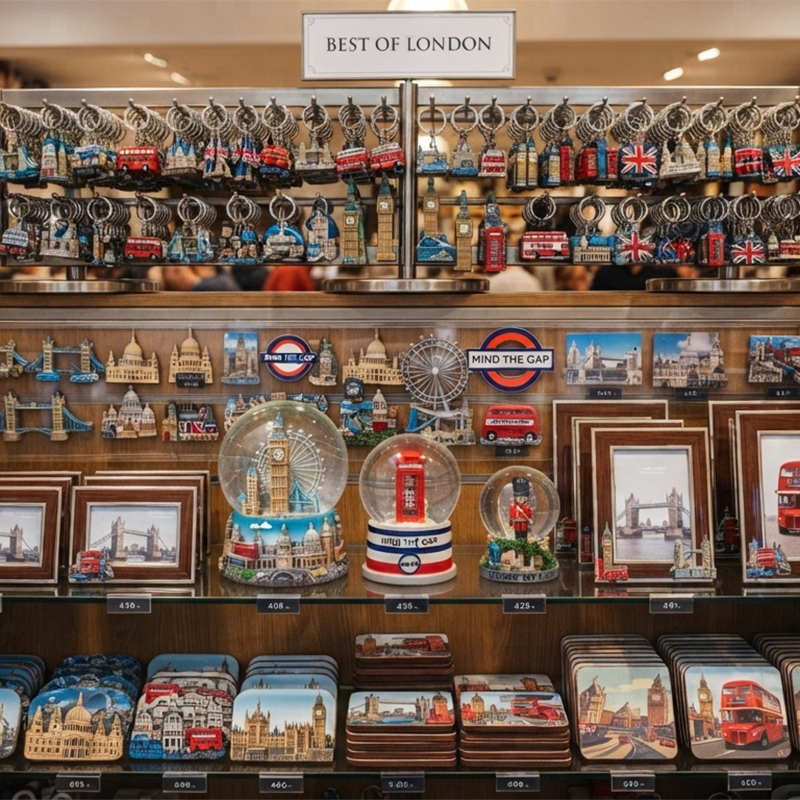
You might think that custom fridge magnets are a “tired” product, but they remain the undisputed king of the souvenir industry. Why?
They are the perfect souvenir. They are inexpensive, they take up zero shelf space, they are incredibly durable, and they serve a function. A fridge magnet is the only souvenir that, once bought, gets displayed in the owner’s home for years, serving as a daily reminder of their vacation. From a retail perspective, magnets offer incredible margins. They are easy to stock, easy to display, and easy to replenish. If your shop doesn’t have a dedicated magnet wall, you are leaving money on the table.
How to Build a Souvenir Collection Instead of Selling Individual Products
Here is where the real strategy comes in. Stop buying individual items and start building a souvenir collection.
A collection is a group of products that share a visual language—perhaps the same color palette, the same art style, or the same theme (e.g., “The History of our City”). When you display items as a collection, you aren’t just selling a keychain; you are selling a “set.” Customers often buy more than one item from a collection because they look good together.
- Cross-Merchandising: Place your magnets near your keychains. Place your snow globes near your figurines.
- Tiered Pricing: Ensure you have a “good, better, best” option for every popular landmark or icon you represent.
Comparing Different Souvenir Categories
To help you with your inventory planning, we have broken down how different categories perform in a typical gift shop environment.
| Souvenir Category | Turnover Rate | Profit Margin | Shipping/Logistics | Impulse Buy Potential |
| Custom Fridge Magnets | Very High | High | Very Easy | Extreme |
| Snow Globes | Moderate | Medium-High | Difficult (Fragile) | Medium |
| Keychains | High | Medium | Easy | High |
| Resin Figurines | Moderate | High | Moderate | Medium |
| Textiles (T-shirts/Totes) | Moderate | Medium | Easy | Moderate |
As shown in the table above, the combination of high turnover and high margin makes custom fridge magnets the bedrock of any profitable gift shop.
How Museums, Aquariums, and Tourist Attractions Choose Souvenir Products
For specific institutions like museums or aquariums, the souvenir isn’t just a revenue stream—it’s an extension of the educational experience.
Buyers for these institutions look for products that reinforce the visit. If a family visits an aquarium, the aquarium gift shop products should focus on marine life—plush toys, educational books, and realistic resin figurines of sea creatures. The goal is to provide a “take-home” version of the exhibit.
This is where destination souvenirs get a twist: they become “thematic souvenirs.” The key here is to partner with a custom souvenir manufacturer who understands your brand guidelines and can replicate specific artifacts or exhibits in a collectible format.
Common Mistakes Gift Shops Make When Selecting Inventory
Even with the best intentions, many shop owners get it wrong. Here are the pitfalls to avoid:
- Over-complicating the Inventory: Don’t try to stock 500 different SKUs. It’s better to have 50 great SKUs that sell out quickly than 500 items that sit there for a year.
- Ignoring “The Tourist Gaze”: Buyers often choose products they personally like. You need to choose products that your tourists like. Research what sells in similar locations.
- Lack of Destination Branding: If your souvenir could be sold in any city in the world, it isn’t a destination souvenir. Make sure your products clearly identify the location.
- Poor Packaging: In the age of social media, unboxing matters. Premium packaging can justify a higher price point.
Future Trends in Tourist Souvenirs
The souvenir industry is evolving. We are seeing a shift toward “sustainable souvenirs”—items made from eco-friendly materials or packaged without single-use plastics. There is also a move toward “limited-edition collectibles.” These items create a sense of urgency (FOMO—fear of missing out) that drives sales.
Another trend is the integration of digital experiences—souvenirs that include a QR code linking to an augmented reality (AR) experience of the destination. As a shop owner, staying ahead of these trends will keep your inventory fresh and exciting for returning visitors.
Final Thoughts
Building a profitable souvenir collection is a marathon, not a sprint. It requires careful planning, a deep understanding of your customer base, and a willingness to iterate based on what actually sells. By focusing on high-performing categories like custom fridge magnets, prioritizing items that capture the emotional memory of a trip, and avoiding the trap of generic inventory, you can transform your shop into a destination in its own right.
Remember, the goal is to sell more than just a product; you are selling a piece of the experience. Choose your partners wisely, keep your collection curated, and your inventory will start working as hard as you do.

- Resin Fridge Magnet Manufacturing Processes Compared: UV Printing, Screen Printing, Epoxy Dome & Hand-Painting (2026 Buyer’s Guide) - August 11, 2026
- How to Choose a Reliable Resin Souvenir Factory in China: A Comprehensive Audit Guide for B2B Buyers - August 5, 2026
- The Ultimate Guide to Sourcing Custom Resin Souvenirs: From Factory Design to Global Wholesale (2026 Edition) - July 29, 2026