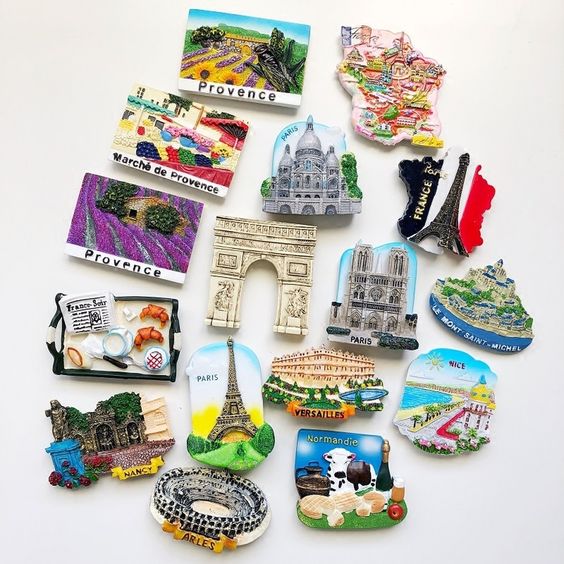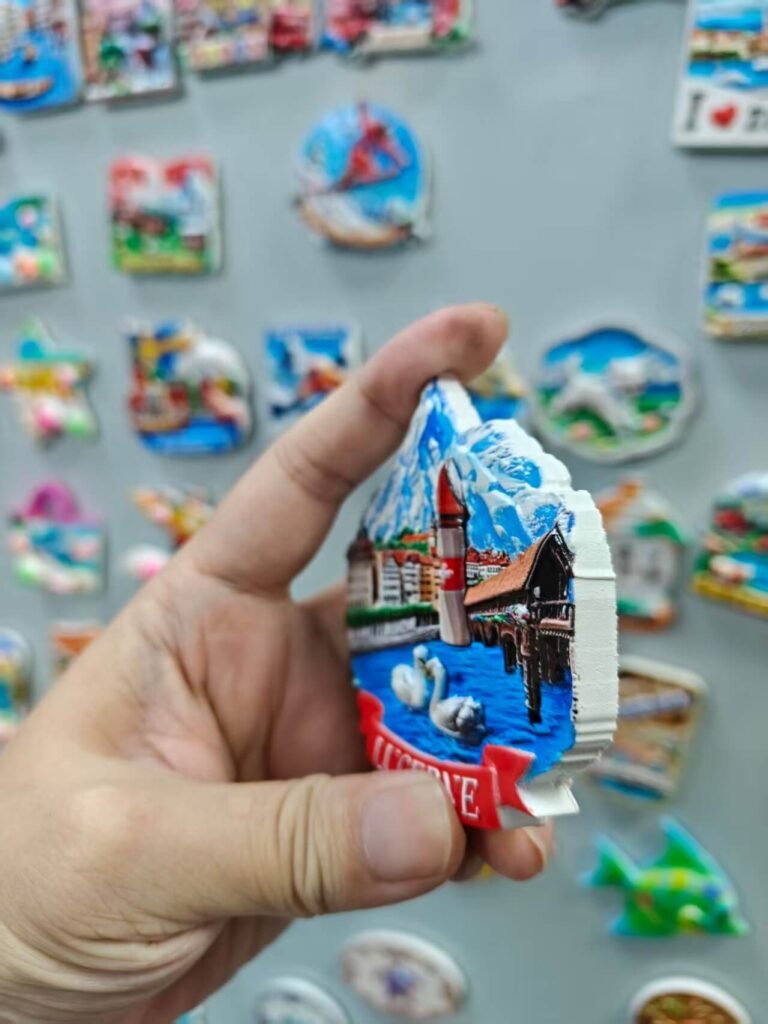
Choosing a resin souvenir supplier in China is not a simple product-search exercise. A catalogue may show attractive fridge magnets, snow globes, and keychains, but a catalogue cannot prove that the supplier can reproduce the same finish at scale, protect a buyer’s design, meet a documented lead time, or pack fragile products for international freight.
For a distributor, museum procurement team, tourist-attraction operator, or professional gift wholesaler, supplier selection is a risk decision. The wrong partner can create inconsistent colour, missed seasonal inventory, damaged cartons, unclear ownership of moulds, and costly communication gaps. The right partner gives a buyer a repeatable process for turning a concept into a compliant, commercially viable product.
This guide explains how to evaluate a reliable resin souvenir factory in China before a bulk order. It is written for B2B buyers who need evidence rather than broad promises. The framework covers the difference between a factory and a trading company, technical capability, sampling, quality control, compliance documentation, production planning, packaging, intellectual property, and communication. It also includes a practical audit table and a decision process that can be used during supplier calls or factory visits.
The goal is not to select the supplier with the lowest quoted unit price. The goal is to identify the partner with the lowest total procurement risk for the required product, market, volume, and delivery window.
What a Reliable Resin Souvenir Factory Must Prove

A dependable supplier should be able to connect five parts of the buying decision:
- The supplier can manufacture the specific product category requested, including resin fridge magnets, snow globes, or keychains.
- The design team can translate a brief, drawing, reference image, or approved file into a repeatable prototype.
- The production team can maintain colour, dimensions, assembly, and finish across a bulk run.
- The compliance and documentation process matches the destination market and product requirements.
- The logistics process protects the goods and gives the buyer clear milestones before shipment.
These points should be verified through records, samples, live explanations, and production evidence. A polished website is useful for understanding a supplier’s positioning, but it is not a substitute for an audit.
A buyer should also separate confirmed facts from estimates. If a supplier states a monthly capacity, a certification, a defect rate, or a delivery guarantee, request the supporting document and confirm that it applies to the relevant product and facility. Do not treat an unverified figure as a procurement fact.
Factory or Trading Company: Why the Distinction Matters
A trading company may coordinate orders through several factories. This can be useful when a buyer needs a broad catalogue, but it can make production control, quality accountability, and design ownership less transparent. A direct manufacturer may offer stronger control over moulds, processes, workers, and inspection, although the buyer still needs to verify which operations are performed in-house and which are outsourced.
The distinction should not be decided by a label in an email signature. It should be tested with practical questions.
Ask for a Clear Production Map
Request a process map for the exact product under discussion. For a 3D resin fridge magnet, the process may include design review, prototype approval, mould preparation, casting, curing, trimming, painting, magnet assembly, inspection, packaging, and carton loading. For a snow globe, the map may also include base production, globe assembly, liquid filling, sealing, leak testing, and protective packaging.
The supplier should be able to explain who owns each step, where it takes place, and how quality is checked. If the representative can only discuss price and photographs but cannot explain the process, the buyer should treat the supplier as unverified.
Review Corporate and Facility Evidence
Ask for the legal company name, factory address, operating entity, main contact, and the relationship between the trading entity and manufacturing site. Compare these details across the quotation, invoice, audit document, website, and shipping paperwork. Differences do not automatically indicate a problem, but they should be explained before payment.
A live video tour can help confirm whether the facility has the claimed work areas. The tour should show the sample room, raw material area, mould or casting area, painting stations, inspection space, packaging area, and finished-goods storage. A staged product wall alone is not sufficient evidence of production capability.
Check Accountability for Nonconformities
Ask who pays for rework, replacement, or approved corrective action when a bulk shipment does not meet the approved sample. A reliable partner should have a defined escalation process rather than responding to every issue as a new negotiation.
How to Evaluate Design, 3D Modelling, and Prototyping
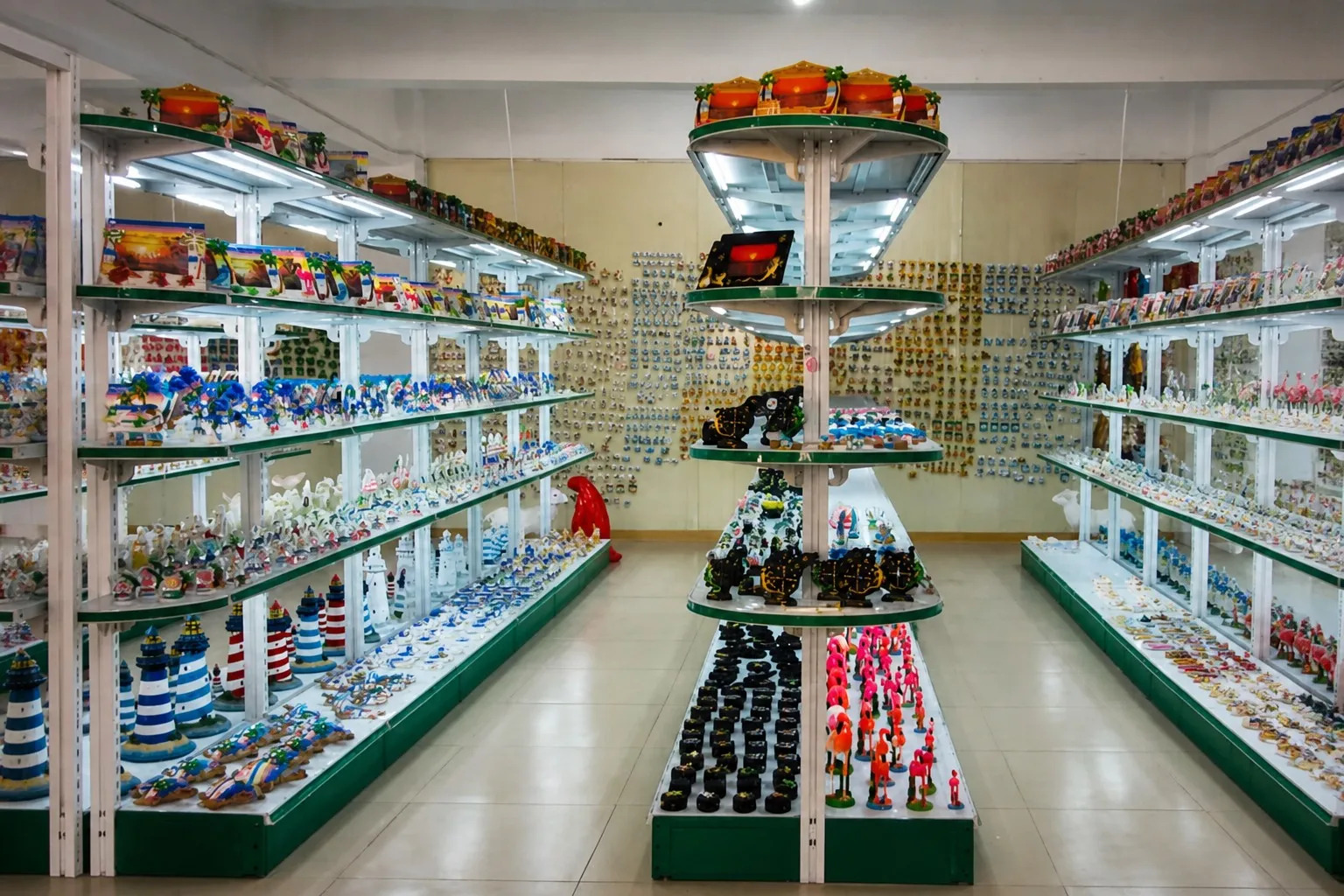
Resin souvenirs are often selected because they can represent a landmark, local symbol, animal, landscape, or brand character with depth and texture. The supplier’s design workflow therefore has a direct impact on commercial value.
Evaluate the Design Brief Process
Before requesting a quotation, provide a controlled brief containing the intended product type, approximate dimensions, reference images, colour direction, logo or text requirements, packaging needs, target market, and expected order volume. Ask the supplier to identify missing information instead of immediately offering a generic price.
A capable design team should clarify which details are technically feasible in resin, which elements may require reinforcement, and how small text or thin parts may behave after casting. This early discussion can prevent an attractive but impractical design from reaching the tooling stage.
Review the Prototype Approval Gate
A professional OEM or ODM workflow should contain a documented approval gate. The buyer should receive a drawing, digital render, physical prototype, or approved sample before mass production begins. The approval record should identify the version, dimensions, colours, artwork, packaging, and any permitted tolerances.
For repeat orders, retain the approved reference sample and product specification. A supplier should not rely on memory or a casual message thread for a design that will be reproduced months later.
Examine Detail Reproduction
Ask to see close-up views of architectural edges, lettering, layered relief, recessed areas, and colour transitions. The relevant test is not whether one sample looks attractive; it is whether the supplier can explain how the detail will be protected during moulding, casting, trimming, and painting.
For a buyer comparing multiple suppliers, request the same test design from each candidate. A controlled comparison is more useful than comparing unrelated catalogue items.
How to Assess Production Capacity and Lead-Time Control
Capacity is not a single number. A supplier may have sufficient theoretical equipment or labour but still lack available production slots during a seasonal peak. Buyers should evaluate capacity as a combination of people, process, materials, equipment, scheduling, and contingency planning.
Separate Theoretical Capacity from Available Capacity
Ask the supplier to distinguish between maximum monthly output and capacity available for the buyer’s proposed production window. Request the assumptions behind any stated figure, including product size, number of colours, painting intensity, packaging method, and number of shifts.
If a supplier states a monthly capacity or a lead time, mark it as to be verified with supplier until the figure is supported by a current production plan, purchase order schedule, or written quotation. A capacity number without assumptions can mislead procurement teams.
Build a Milestone Schedule
A useful production schedule includes artwork confirmation, prototype completion, sample approval, mould completion, raw-material preparation, pilot run, bulk production, inspection, packing, and shipment handover. Each milestone should have an owner and an approval requirement.
For seasonal products, work backwards from the required warehouse-arrival date rather than the factory shipment date. Include time for sample revisions, laboratory testing where required, freight booking, customs clearance, and receiving inspection.
Ask About Continuity Plans
A buyer should ask what happens if a key painter is absent, a mould is damaged, a raw material is delayed, or a shipment is rescheduled. The supplier does not need to promise that every disruption is impossible. The important question is whether there is a documented response and whether the buyer will be notified early enough to make a decision.
How to Evaluate Painting Consistency and Workmanship
Hand-painted detail can make a resin souvenir commercially distinctive, but manual work also introduces variation. A reliable factory manages that variation through training, reference standards, process checks, and a clear acceptance sample.
Define the Colour Standard
Use physical colour chips, approved paint references, or a signed sample rather than descriptive words such as bright, warm, vintage, or natural. Photographing a sample under controlled lighting can help, but a photograph should not replace a physical standard when colour is commercially important.
The specification should address acceptable variation, paint coverage, edge definition, shading, gloss level, and the treatment of concealed areas. It should also identify which marks are acceptable and which are defects.
Inspect Multiple Units
Ask for several units from the same production stage, not only the best-looking sample. Compare facial features, lettering, raised relief, paint boundaries, base attachment, and overall finish. For a complex design, inspect different colour areas and the back of the product as well as the front.
For large programmes, agree on a pre-production sample and a pilot-run sample. The pilot-run sample provides a more realistic view of the factory’s repeatability than a hand-selected development prototype.
Test Assembly Points
Fridge magnets require reliable attachment between the magnet and resin body. Keychains require secure hardware and a stable connection point. Snow globes require careful assembly, sealing, and protection. Ask the supplier to identify the highest-risk assembly points and the inspection method used for each one.
What to Check in Quality Control and Sampling
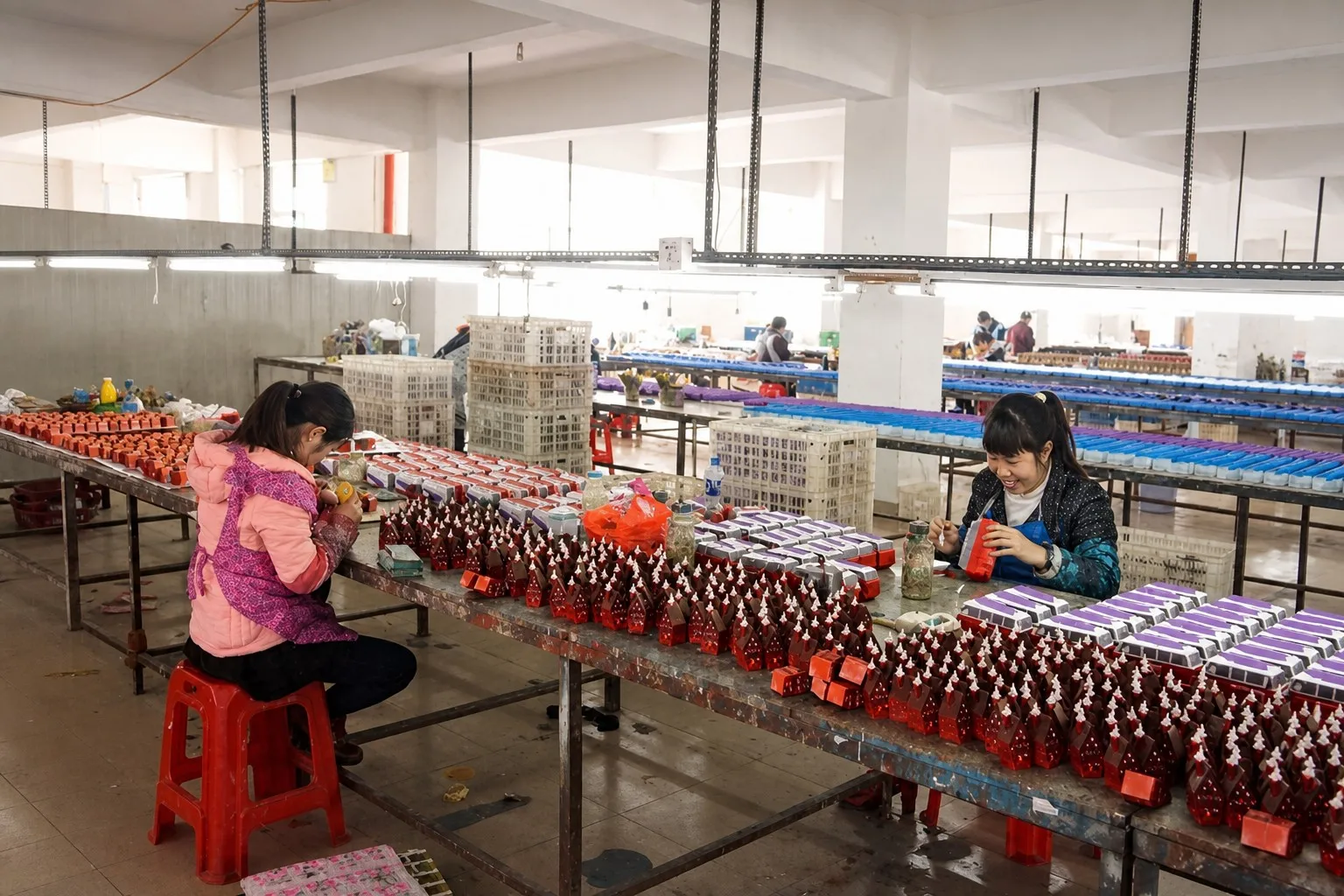
Quality control should be visible in the process, not added as a final promise. A buyer should understand who inspects the product, when inspection occurs, what records are kept, and how nonconforming units are handled.
Use a Three-Stage Inspection Structure
A practical structure includes incoming-material checks, in-process inspection, and final inspection. Incoming checks may cover resin, paint, hardware, glass, packaging materials, and printed components. In-process checks may cover dimensions, curing, paint layers, assembly, and leakage. Final inspection may cover appearance, quantity, packaging, carton markings, and shipping readiness.
The exact inspection plan should match the product and destination market. Buyers should not assume that a generic inspection label covers every relevant risk.
Compare Sample, Specification, and Bulk Goods
The approved sample, written specification, and bulk order should be treated as one control set. If the supplier changes resin, paint, hardware, packaging, or a production location, the buyer should receive written notice and decide whether a new approval is required.
Keep records of approved files and communications. This protects both parties when a question arises about a design change or a quality expectation.
Use Independent Inspection Where Appropriate
For high-value orders or new supplier relationships, a buyer may use an independent inspection company. The inspection scope should be agreed in advance, including product appearance, measurements, function, quantity, packaging, carton condition, and sampling method. Independent inspection does not remove the need for supplier quality control; it adds a separate verification layer.
How to Check Compliance, Documentation, and Social Responsibility
Compliance must be evaluated according to the destination market, product construction, age grading, packaging, labelling, and buyer requirements. A supplier should not present a generic certification as proof that every product meets every market rule.
Request Current, Relevant Documents
Depending on the order, request the applicable company documents, material declarations, test reports, social-audit documents, and product records. Confirm the legal entity named on each document and check the validity period, scope, factory address, product category, and testing standard.
If a buyer requires a BSCI audit, the buyer should request the current report or verification details and confirm the scope with the supplier. Do not describe a supplier as BSCI certified unless the status has been independently verified and applies to the relevant facility.
Review Chemical and Product Safety Requirements
For resin products, discuss pigments, coatings, adhesives, magnet components, metal hardware, glass, liquids, and packaging inks. The buyer should identify the destination-market requirements before production. REACH and California Proposition 65 are examples of regulatory topics that may be relevant, but the correct compliance route depends on the product and market.
A dependable supplier should be willing to discuss testing and documentation rather than dismissing the request as unnecessary. If documentation is pending, record the gap and assign an owner and deadline before mass production.
Assess Working Conditions and Traceability
Social responsibility is also a supply-chain risk issue. Buyers should ask about working hours, fire safety, occupational protection, wage practices, and subcontracting. A social audit can provide evidence, but it should be current and linked to the actual manufacturing site.
How to Assess Packaging, Freight, and Delivery Risk
Resin products can be heavy, detailed, and fragile. Packaging therefore affects the delivered cost and the buyer’s ability to receive usable stock.
Evaluate Packaging by Product Risk
A packaging review should cover individual protection, inner boxes, dividers, master cartons, moisture exposure, stacking, carton markings, and container loading. Snow globes require particular attention to glass, liquid chambers, seals, and impact protection. Magnets and keychains may require different protection against scratches, tangling, or hardware damage.
Ask the supplier to provide a packaging diagram or sample carton. Where possible, review the packed product rather than only an empty carton.
Define Damage Handling Before Shipment
Agree on how the buyer will report damage, what evidence is required, and how replacement or credit decisions will be made. The buyer should also clarify whether the supplier’s quality commitment covers factory defects, transit damage, or both. These are different risk categories and should not be combined into an unclear promise.
Align Incoterms and Documents
Confirm the selected Incoterm, export documentation, carton list, commercial invoice, product descriptions, and shipping marks. Ask who is responsible for booking, inspection coordination, and document correction. Clear responsibilities reduce delays when a shipment is ready.
Data Comparison: A Structured Supplier Audit Versus a Price-Only Decision

A price-only decision can appear efficient because it reduces the first comparison to one number. A structured audit takes longer at the beginning but provides more information about operational risk. The table below is a decision framework, not a claim about any specific supplier’s performance.
| Procurement Dimension | Price-Only Evaluation | Structured B2B Audit | Evidence to Request |
|---|---|---|---|
| Supplier identity | Website name and quotation | Legal entity, facility, and accountability map | Business registration, factory details, invoice entity |
| Product quality | One catalogue sample | Approved sample plus pilot-run comparison | Signed sample, specification, multi-unit photos |
| Capacity | A single monthly figure | Available capacity for the required window | Production plan and lead-time milestones |
| Compliance | Generic certification statement | Document scope matched to product and destination | Current reports, declarations, test records |
| Logistics | Unit price before freight | Packaging and delivered-risk review | Carton sample, packing plan, Incoterm details |
| Problem handling | Informal promise | Defined corrective-action process | QC procedure and claim workflow |
| Design protection | Verbal assurance | Written ownership and confidentiality terms | NDA, mould ownership, artwork controls |
The structured approach does not guarantee that every order will be problem-free. It gives the buyer enough evidence to make a controlled decision and identify open risks before placing the order.
A Practical Supplier Audit Workflow for B2B Buyers
Start with a written supplier questionnaire. Ask the same core questions to every candidate so that the comparison is fair. Then request a small evidence pack covering the supplier identity, facility, product capability, compliance position, sampling process, quality system, packaging, and delivery plan.
Next, hold a technical call with the design and production contacts, not only a sales representative. Ask the team to review the same product brief and explain the difficult parts. Record which answers are confirmed, which require documents, and which remain unclear.
After the call, order a controlled sample or prototype. Evaluate design fidelity, material feel, paint consistency, assembly, packaging, and communication speed. If the design is proprietary, establish confidentiality and mould ownership terms before sharing sensitive files.
For a larger order, approve a pre-production sample, define the inspection plan, and agree on milestones. Keep the approved reference set in one place. Do not make a production decision based solely on a chat message or an outdated catalogue image.
Finally, conduct a post-order review. Measure whether the supplier met the approved specification, quantities, milestones, document requirements, and communication commitments. Use the review to decide whether the supplier should remain approved, require corrective action, or be replaced.
60-Second Quick-Screen Table for a China Resin Factory
Use the following quick screen before spending time on a full quotation process.
| Question | Acceptable First Answer | Follow-Up Evidence |
|---|---|---|
| Can you show the actual production facility for this product? | A live or recorded factory walkthrough with process context | Facility address and production-area images |
| Can you explain your OEM/ODM workflow? | A clear design, sample, approval, and production sequence | Sample timeline and approval form |
| Can you provide a current compliance document relevant to my market? | The supplier identifies the correct document scope | Report, declaration, or testing plan |
| How will you control painting consistency? | Reference samples and in-process checks | Multi-unit sample review and QC checklist |
| How is the product packed for export? | Product-specific protective packaging | Packing diagram and carton specification |
| Who owns the mould and artwork? | Written terms are available before tooling | NDA and mould-ownership clause |
| What must be verified before I place a bulk order? | The supplier identifies open risks honestly | Written quotation with assumptions |
A quick screen is not a certification. It is a way to decide whether a supplier deserves a deeper audit.
FAQ for B2B Resin Souvenir Buyers
What is the difference between a resin factory and a sourcing agent?
A factory directly controls some or all of the manufacturing process, while a sourcing agent or trading company coordinates supply from one or more producers. The important issue is not the label but the level of transparency, accountability, and process control available to the buyer. Ask who makes the product, who approves changes, and who handles quality claims.
What should I request before ordering custom resin magnets?
Request a written product brief, digital design or artwork review, prototype or pre-production sample, material and colour specifications, packaging details, lead-time milestones, payment terms, and a quality-claim process. If the design is proprietary, settle confidentiality and mould ownership before tooling begins.
How should a buyer verify a BSCI-related claim?
Ask for current audit or verification details, then check the legal entity, facility address, validity, scope, and issuing or verification body. The claim should apply to the facility and production relationship relevant to your order. If the evidence cannot be checked, record the claim as unverified.
Is the lowest unit price the best indicator of a good supplier?
No. Unit price excludes sampling revisions, packaging, freight damage, inspection, delays, rework, compliance testing, and communication costs. Compare total procurement risk and delivered cost, not only the first quotation line.
How can I protect a custom souvenir design?
Use a written NDA or confidentiality agreement where appropriate, define artwork and mould ownership, restrict unauthorised use, and keep an approved version history. Ask how the supplier controls access to customer files and whether subcontractors are involved.
What information should be included in a wholesale enquiry?
Include product category, target quantity, dimensions, reference images, destination market, packaging requirement, customisation scope, requested sample timing, expected production window, and any compliance or labelling requirements. A complete brief helps the supplier provide a more accurate quotation.
Final Decision: Select Evidence, Not Promises
A reliable resin souvenir factory in China should be able to explain its process, show relevant evidence, accept reasonable verification, and document the decisions that affect your order. The buyer should be able to see how a concept becomes a sample, how a sample becomes a controlled production run, how quality is checked, and how the finished goods are protected for export.
The strongest supplier relationship is not built on a single low quotation. It is built on a shared specification, transparent milestones, documented quality control, market-appropriate compliance, and a clear response when something changes.
CraftMGF works with B2B buyers seeking resin fridge magnets, snow globes, and keychains for wholesale, distribution, tourist destinations, museum retail programmes, and OEM/ODM collections. Product capability, documentation, MOQ, lead time, packaging, and compliance requirements should be confirmed for each project before production.
Request a B2B Factory Review and Quotation
Send your product brief to sales@craftmgf.com for a project-specific discussion. Include the product category, estimated quantity, destination market, artwork or reference images, packaging expectations, and target delivery window. The team can then confirm the appropriate sampling route, documentation requirements, and quotation assumptions.
Website: https://craftmgf.com/

- Resin Fridge Magnet Manufacturing Processes Compared: UV Printing, Screen Printing, Epoxy Dome & Hand-Painting (2026 Buyer’s Guide) - August 11, 2026
- How to Choose a Reliable Resin Souvenir Factory in China: A Comprehensive Audit Guide for B2B Buyers - August 5, 2026
- The Ultimate Guide to Sourcing Custom Resin Souvenirs: From Factory Design to Global Wholesale (2026 Edition) - July 29, 2026