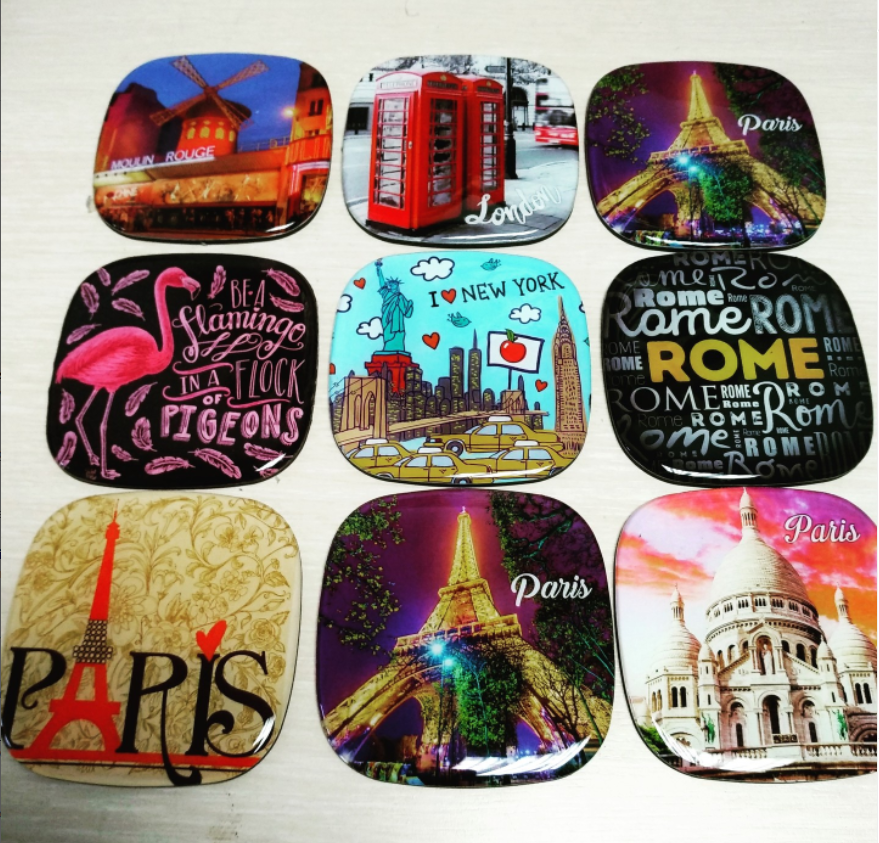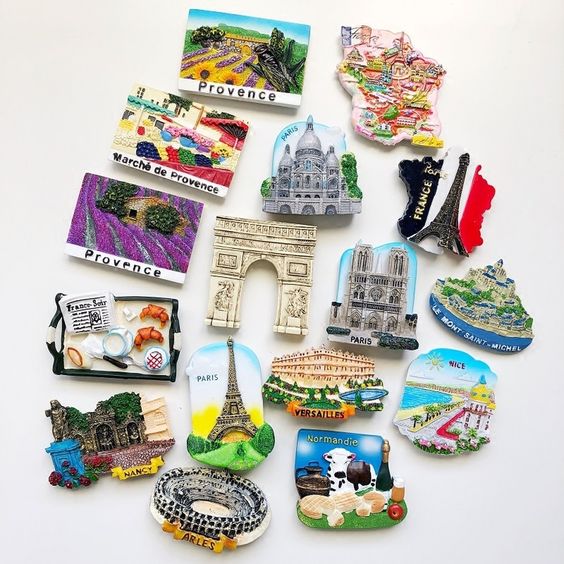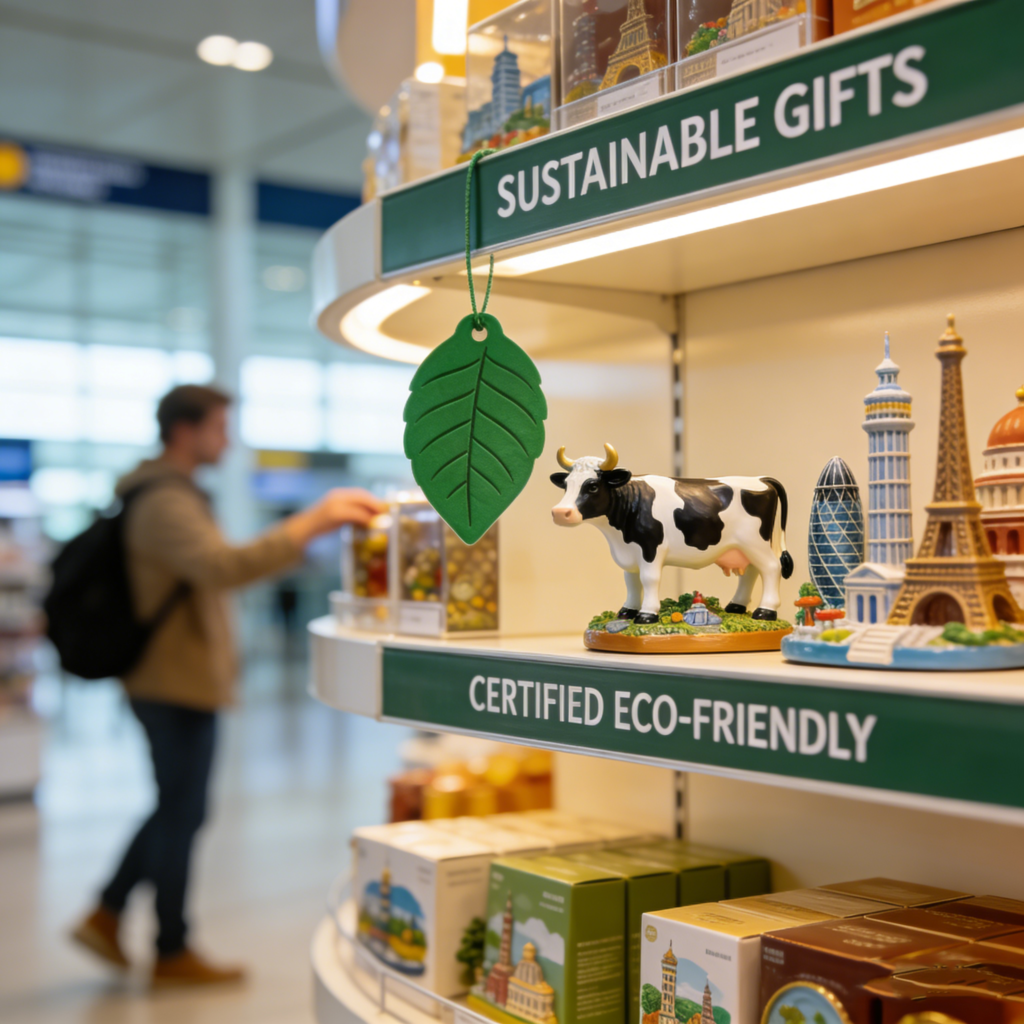
For decades, the global souvenir industry has relied on a silent workhorse: petrochemical-based polyresin. This versatile, durable plastic, derived entirely from crude oil, has sculpted billions of custom fridge magnets, miniature landmarks, and detailed figurines that fill gift shops worldwide. But as we navigate 2025 and 2026, the intersection of intense consumer demand, regulatory pressure, and manufacturing innovation is driving a profound materials revolution. The era of eco-friendly resin souvenirs is no longer a futuristic concept; it is the definitive future of sustainable manufacturing.
At Craftmgf.com, we are witnessing this fundamental transformation firsthand within the Chinese and Vietnamese manufacturing ecosystems. Souvenir importers, wholesalers, and major global brand retailers are increasingly demanding more than just competitive unit costs and fast lead times. They are demanding verified green supply chain souvenirs, sophisticated carbon accounting, and manufacturing partners who can engineering materials for renewability.
The emerging hero of this sustainable pivot is soy-based bio-resin. This innovative material is not merely a superficial “green checkmark” for corporate social responsibility reports; it is fundamentally transforming how sustainable corporate gifts and retail souvenirs are produced, sourced, and perceived in the global market.
As Google SEO experts and manufacturing consultants, we understand that capturing significant search volume for terms like “sustainable gifts” requires providing genuine, definitive, deep-funnel value to B2B buyers. Passive sourcing is a Major Trap; proactive material understanding is the strategy. This guide moves beyond the surface-level greenwashing, diving into the technical, logistical, and financial realities of the bio-resin revolution for the professional souvenir sector.
1. Defining the Materials: What Exactly are Soy-Based Bio-Resins?
When a category manager or tourism souvenir importer begins searching for eco-friendly resin, they are often confronted with a confusing array of terminology: “bioplastics,” “PLA,” “UV resin,” and “green composites.” For high-volume, detailed custom manufacturing, the technical material science definition matters immensely. Passive calculation relying on vague definitions is dangerous.
Traditional polyresin, used in 95% of current detailed souvenir production, is a synthetic polymer, usually polyurethane (PU) or unsaturated polyester, derived 100% from fossil fuels. Soy-based bio-resins are not a completely separate material class; rather, they are advanced polymers where a significant percentage of the petrochemical components (specifically the polyols) have been replaced by renewable resources derived from agricultural soybean oil.
forensic material analysis: The Soy Replacement Chemistry
Traditional polyurethane (PU) resin requires two main components: an isocyanate and a polyol. In soy-based bio-resin formulations, scientists chemically transform raw soybean oil through processes like epoxidation or hydroxylation, creating stable, reactive bio-polyols. These bio-polyols are then cross-linked with isocyanates to form polyurethanes, or used in robust epoxy formulations.
This technical distinction is crucial for B2B decision-makers: soy-based bio-resin gifts often perform almost identically to traditional resin in terms of weight, texture, and detail capture, while offering a significantly improved sustainable profile from the very beginning of the global souvenir supply chain.
Deep Material logic: Renewability vs. Biodegradability
We must also clear up a critical point of confusion for the B2B sector.
- Renewable Resource (Plant-Based): Focuses on the origin of the material, using agricultural feedstocks rather than fossil fuels. This reduces the carbon footprint reduction of the initial production phase.
- Biodegradable Resin: Implies the material will break down in specific environmental conditions (usually an industrial composting facility) within a set time.
Most high-performance eco-friendly resin souvenirs are renewable but not necessarily biodegradable under generic landfill conditions. The material transformation currently reshaping the market is the shift toward plant-based resin that integrates a green supply chain souvenir model, focusing on reduced fossil fuel dependency rather than end-of-life zero-waste. For durable items intended to be kept for years—like detailed architectural replicas or branded collectibles—durability remains a defining feature, and soy bio-resins can engineered for exceptional longevity.
2. Market Drivers: The Indisputable B2B Business Case for Sustainable Gifts
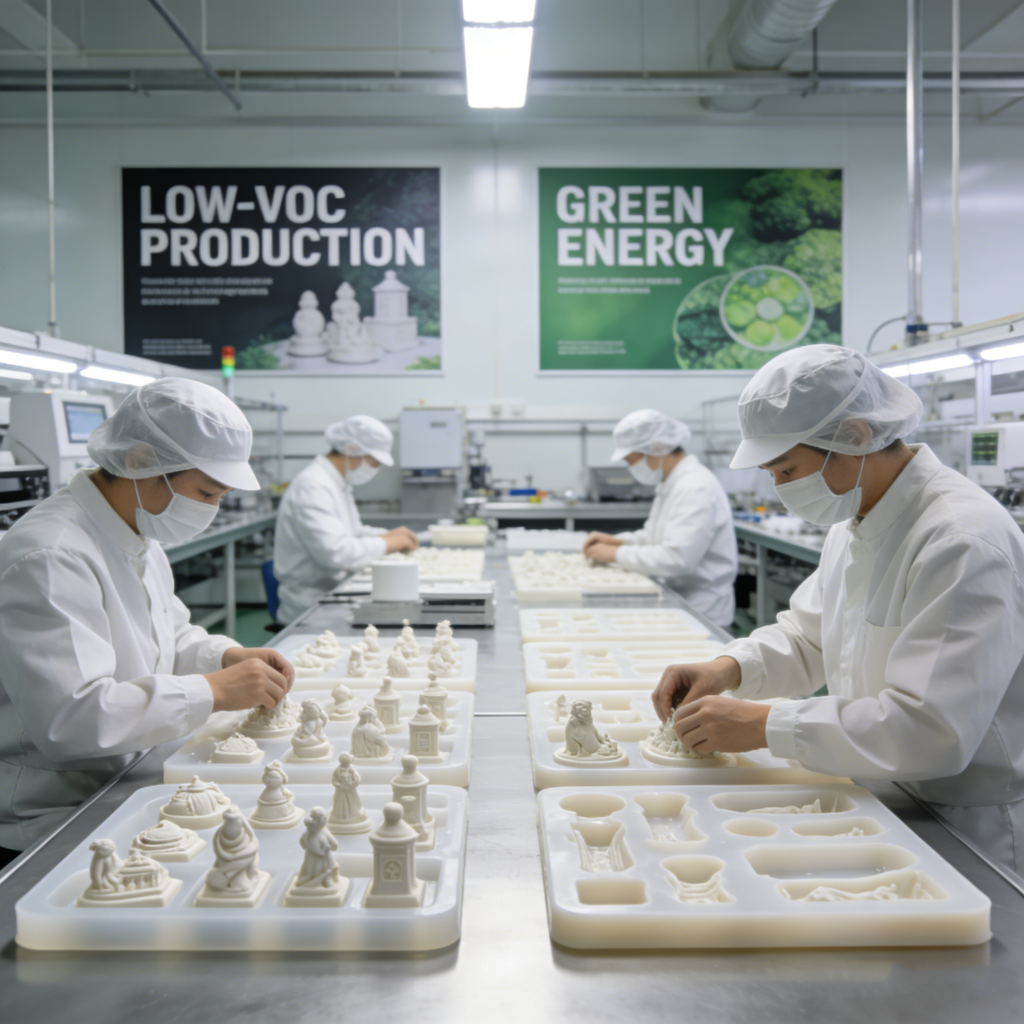
The shift to plant-based materials is rarely driven purely by environmental altruism in the manufacturing sector; it is driven by ruthlessly pragmatic risk mitigation and quantified market opportunity. For an experienced souvenir importer, category managers, and wholesale souvenirs groups, sticking to traditional petrochemical polyresin is becoming a material business risk.
Gen Z and Millennial Demand Engineering
The end-consumer—the tourist in a museum gift shop or a resort—has fundamentally changed. Multiple quantified market studies confirm that Gen Z and Millennial consumers actively prioritize products with verified sustainable credentials and are increasingly willing to pay a premium for them. A tourism souvenir importer who fails to stock eco-friendly resin souvenirs is not just missing a trend; they are becoming obsolete to a major demographic. Stocking traditional resin is increasingly seen as outdated and irresponsible, directly impacting retail sell-through rates.
The Regulatory Pincer: EPR, EU Anti-Microplastics, and ESG Reporting
This is not a theoretical scenario. Governments globally are tightening regulations on plastics:
- Extended Producer Responsibility (EPR): Countries are making importers and brand retailers financially responsible for the end-of-life environmental impact of their products. Non-renewable petrochemical plastics face significantly higher fees and taxes under these new structures.
- The EU Anti-Microplastic Drive: The European Union and other regions are banning intentionally added microplastics and strictly restricting non-biodegradable polymers that break down into microplastics. Bio-based polyurethanes often face far less severe scrutiny than traditional formulations.
Switching to a sustainable souvenir production model is a proactive defensive strategy, future-proofing a B2B catalog against these accelerating regulatory shifts. For major multinational corporate clients, sustainable corporate gifts that tell a story of verified renewability are now mandatory to meet their own internal ESG (Environmental, Social, and Governance) targets. When you secure a manufacturing partnership for bio-resin, you are buying regulatory security.
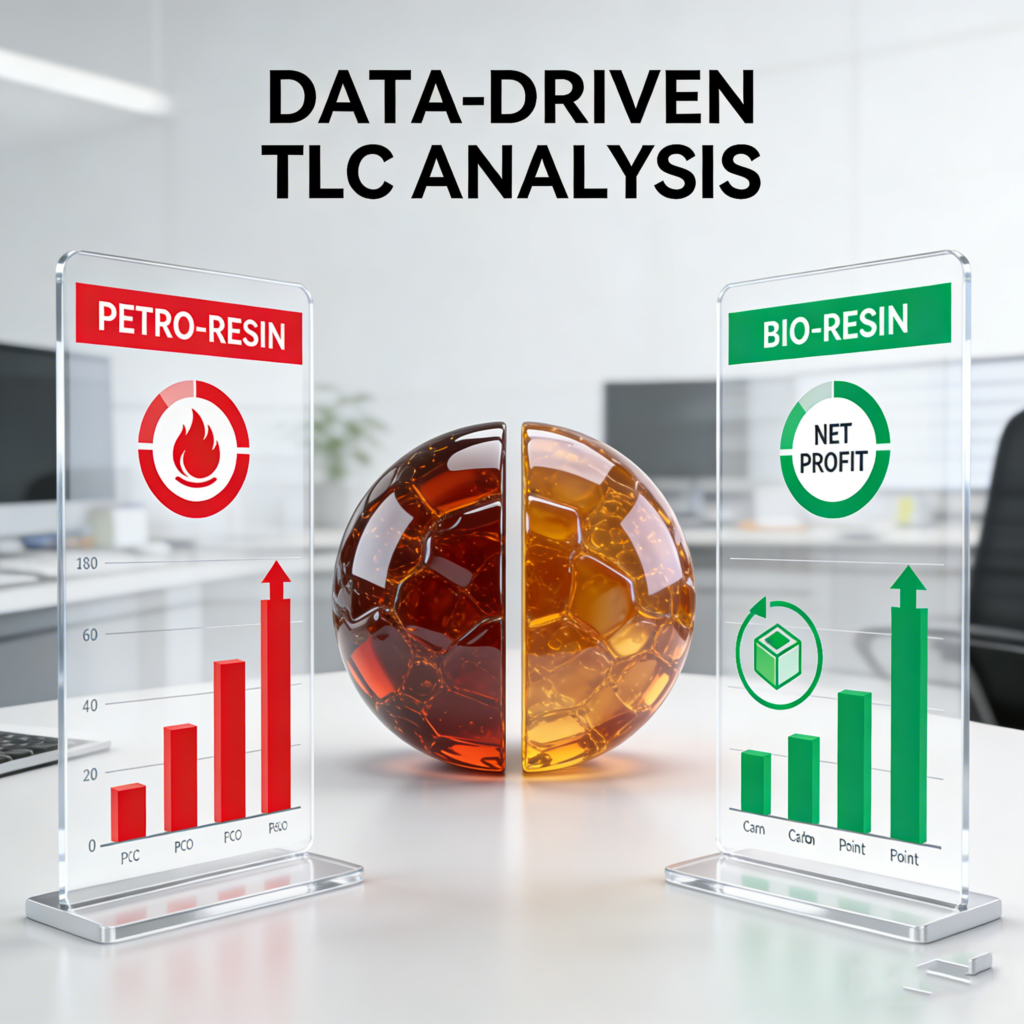
3. The Data: Side-by-Side Performance and TLC Analysis
For the B2B decision-maker, abstract sustainability claims must be quantified. We need a rigorous, data-driven comparison. The table below provides a forensic side-by-side analysis of traditional polyresin versus soy-based bio-resin across critical performance and financial metrics for detailed figurine production.
Note: Data is illustrative of generic high-volume order metrics for a standard 4-inch figurative souvenir with intricate detail. For an accurate, personalized TLC and Profit Audit, please contact your specialized manufacturing consultant.
| Metric | Traditional Petrochemical Polyresin (PU) | Soy-Based Bio-Resin (Renewable Content Mix) | B2B Manufacturing Impact & Profit Center Logic |
| Renewable Material Content | 0% (100% Fossil Fuel Derived) | 20% – 50%+ (Soy Polyols) | Direct impact on brand’s green credentials and custom souvenirs marketing. |
| Carbon Footprint Reduction (LCA) | High CO2e (Significant emissions per kg) | Moderate to High (Offset by initial soy plant growth) | Crucial data for B2B ESG reporting and global souvenir supply chain compliance. |
| Material Volatility (Pricing) | Extreme (Hypersensitive to crude oil price shocks) | Moderate to Lower ( Agricultural feedstock pricing more stable than oil) | Managed through strategic manufacturing partnership. |
| Material Density / Texture | Baseline PU Feel | Comparable to Traditional | No perceptible difference to the tourist consumer. |
| Aesthetic Finish (Detail Capture) | Excellent (Standard of the industry) | Excellent (Equal fidelity in complex silicone molds) | expertise required from the resin souvenir manufacturer Quanzhou or Vietnam center. |
| Durability & Curing | Established (Well-documented curing cycles) | Comparable to Established (Resins engineered for equal strength; slightly modified curing) | Souvenir quality control (QC) must review PPS for curing consistency. |
| Material Toxicity / VOCs | Moderate (Requires significant factory ventilation) | Lower (Cleaner production environment, fewer harmful emissions) | Improves worker safety and health in the China souvenir factory. |
| FOB Unit Cost (Illustrative) | Baseline | 5% – 15%+ Premium (Depending on the bio-content percentage) | Absorbable through premium pricing and perceived sustainable value. |
Analysis of the Data: Value vs. Base Cost
The data clearly demonstrates that while soy bio-resins carry a marginal material cost premium, they deliver comparable technical performance with profound sustainability advantages. For a high-volume tourism souvenir importer, this minimal increase in custom souvenir cost is often easily absorbed by a higher retail price point, marketing the product as a “verified eco-material” or “premium plant-based collectible.” The profit center engineering is not won by finding the lowest base cost, but by engineering maximum perceived value and market relevance.
Furthermore, relying purely on traditional petrochemical polyresin exposes a wholesaler to extreme material price volatility linked directly to global oil conflicts, whereas soy agricultural production is significantly less centralized, offering long-term pricing stabilization opportunities through strategic sourcing and manufacturing contracts. Passive calculation is a major trap; data analysis proves TLC advantage. Turn economic headwinds into strategic tailwinds.
4. Manufacturing Realities: Sourcing Bio-Resins from China and Vietnam
The theoretical sustainability claims are irrelevant without an understanding of the practical manufacturing challenges. As Google SEO experts, we know B2B buyers search for answers to technical fears. Switching to bio-materials is not a simple “drop-in” replacement; it requires significant manufacturing technical advice and process refinement.
Mold Fidelity, Curing Time, and Detail Capture Consistency
From a purely technical perspective, curing kinetics change.
- Curing Times: Soy bio-polyols often react slightly differently than petrochemical polyols. The daily throughput of a large quantity souvenir production run can be impacted by slightly longer curing times in the mold. This must be meticulously managed during production planning to avoid delays during peak season.
- Paint Adhesion and Priming: While the final painted look is identical, the surface chemistry of the unfinished cast is different. A specialized resin souvenir manufacturer center must use technically refined Low-VOC production primers to ensure paint adhesion passes rigorous durability testing (such as REACH or Prop 65). Traditional primers often fail on bio-resin surfaces.
- Tooling Consistency: Silicone molds remain the industry standard for highly detailed figurative work. Soy bio-resins do not require fundamental tooling changes, making the transition accessible for highly expert, established factories who understand material lineages.
Managing the “Green Premium” in a Global Supply Chain
The 5–15%+ increase in raw material cost is a real challenge in a competitive wholesale market. Passive communication is dangerous; proactive cost engineering is the strategy. To absorb this premium, leading manufacturers in China are focusing on:
- Supply Chain Optimization: Specialized resin souvenir manufacturers in Quanzhou or Vietnam are establishing direct, large-scale contracts with bio-polyol suppliers, leveraging global monetary shifts and agricultural feedstock pricing.
- Waste Minimization: Bio-resins are significantly more expensive to waste. Advanced technical advice during the casting process minimizes rejects, directly lowering the overall TLC.
- Profit Optimization Logic: Buyers are encouraged to view the bio-resin product not as a slightly more expensive version of a cheap magnet, but as a completely different, premium category. Perceived green value, coupled with sophisticated packaging engineering container fill rate optimization, can easily offset the material cost increase. Sourcing is a memories business; manufacturing is a data business. Proactive sourcing is your future.
5. Trust but Verify: Quality Control for Plant-Based Materials
The single biggest risk for any experienced souvenir importer, wholesaler, or brand retailer sourcing eco-friendly resin is greenwashing. The market is saturated with unverified claims. How do you know that the “soy resin” you ordered from a generic B2B directory is actually plant-based, rather than just traditional petrochemical PU mixed with green dye?
Passive exporting is a Major Trap; proactive technical verification is the requirement. Sourcing from a generic factory is purely intuitive; strategic sourcing is a data process.
Forensic Certifications and ASTM D6866 Chemical Testing
Proactive souvenir quality control must move beyond verbal assurances or surface-level inspections. Our recommended verification process is purely data-driven:
- forensic MSDS and TDS Review: Mandate that the manufacturing partner provide the current Material Safety Data Sheets (MSDS) and Technical Data Sheets (TDS) specifically for the liquid bio-resin mixture. We cross-reference the raw chemical components to ensure bio-polyols are listed.
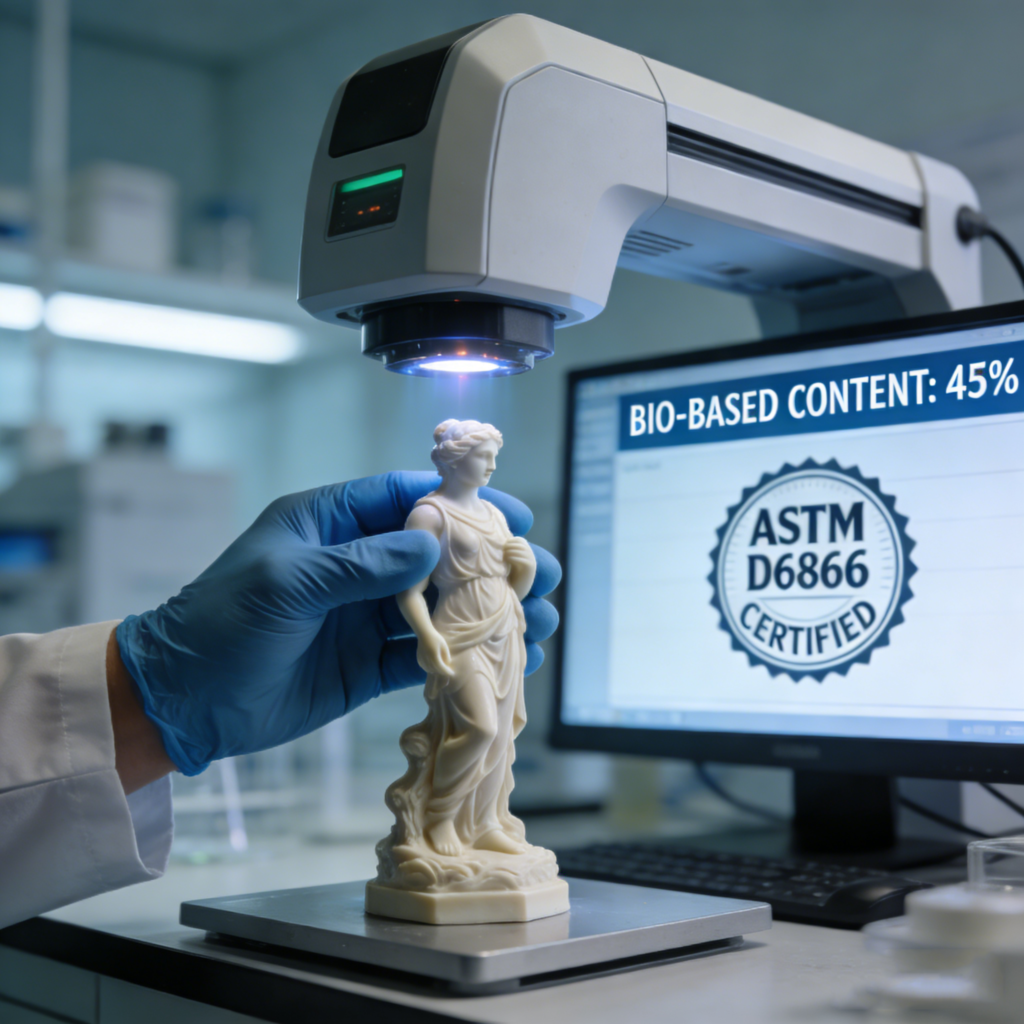
- technically refined ASTM D6866 Testing: This is the international gold standard. It is the definitive method for determining the precise “bio-based content” of solid materials using carbon-14 dating. This test can scientifically distinguish between carbon from recently living plants (soy agricultural production) and carbon from ancient fossil fuel sources (petrochemicals). A reputable resin souvenir manufacturer must provide these certifications for their material formulations, verifying the percentage claim (e.g., 40% Bio-Based content).
- Finished Product testing (SGS or Intertek): While the material itself is sustainable, the finish must also be compliant. We mandate testing of the final, painted custom souvenir for total non-toxicity (phthalates, lead, phthalates), ensuring the “green” material isn’t finished with toxic paint, ensuring a complete green supply chain souvenir integrity.
By enforcing these data-driven standards, a sophisticated experienced souvenir importer protects their brand reputation and ensures they are getting the quantified sustainable value they are paying for. Compliance is your foundation; technically refined optimization is your profit.
6. Sourcing Strategies for the Multi-Polar Souvenir Supply Chain
The global geography of souvenir sourcing is shifting toward a multi-polar model. Sourcing is a memories business; manufacturing is a data business.
- strategic manufacturing partnership China: China remains the undisputed hub for high-volume, hyper-detailed figurative resin work. Specialization clusters like resin souvenir manufacturer Quanzhou are increasingly investing in green material technologies, making them the default choice for scalable plant-based resin manufacturers partnership.
- Exploring Vietnam Manufacturing Strategy: We are seeing a significant custom souvenirs manufacturing Vietnam trend emerging, where factories are often supported by material lineages and technical advice established by Taiwanese and Chinese managers. While slightly less detailed than China’s peak work, Vietnam potentially offers competitive costs and a less volatile tariff environment for simplified custom fridge magnets production.
- FSC-Certified Wooden Souvenir China: For specific categories, non-resin alternatives like certified sustainable wood offer inherent renewability and compliance.
Passive communication relying purely on intuition creates risk; proactive sourcing based on data is the strategy. Sourcing is a memories business; manufacturing is a data business.
Conclusion: Turn Economic Headwinds into Strategic Tailwinds through Data Over Hope
The “Rise of Bio-Resins” is not a fleeting eco-trend; it is a fundamental restructuring of the market for wholesale souvenirs and custom manufacturing. Sourcing is no longer a memories business; manufacturing is a data business. Success in this new market requires a technical refined understanding of materials, a quantified Total Landed Cost (TLC) analysis, and a ruthlessly proactive souvenir quality control process.
Category managers and souvenir category managers cannot rely on generic green claims. If you are an experienced souvenir importer looking to secure your long-term market position, or a brand retailer requiring verified ESG compliance through manufacturing partnership, Craftmgf.com can engineering a compliant solution. Craftmgf.com don’t just quote unit prices; we engineer profitable and compliant manufacturing partnerships tailored for the 2025/2026 economic realities. Let’s turn economic headwinds into strategic tailwinds. Passive exporting is a major trap; turn economic headwinds into strategic tailwinds. Sourcing is a memories business; manufacturing is a data business. Turn economic headwinds into strategic tailwinds. Sourcing is a memories business; manufacturing is a data business.
Ready to future-proof your custom souvenir catalog? Contact Craftmgf.com today for a definitive, side-by-side material performance review and total landed cost analysis of soy-based bio-resins versus traditional options. Let’s engineering your next verified success.

- Currency Volatility & Sourcing: Hedging Risks in Long-Term Souvenir Supply Contracts - May 7, 2026
- The Hidden Costs of Cheap Resin: Why Low-Grade Materials Lead to High Return Rates in Airport Retail - April 29, 2026
- Profit Margin Optimization: How Packaging Engineering Reduces Shipping Costs by 15% - April 22, 2026