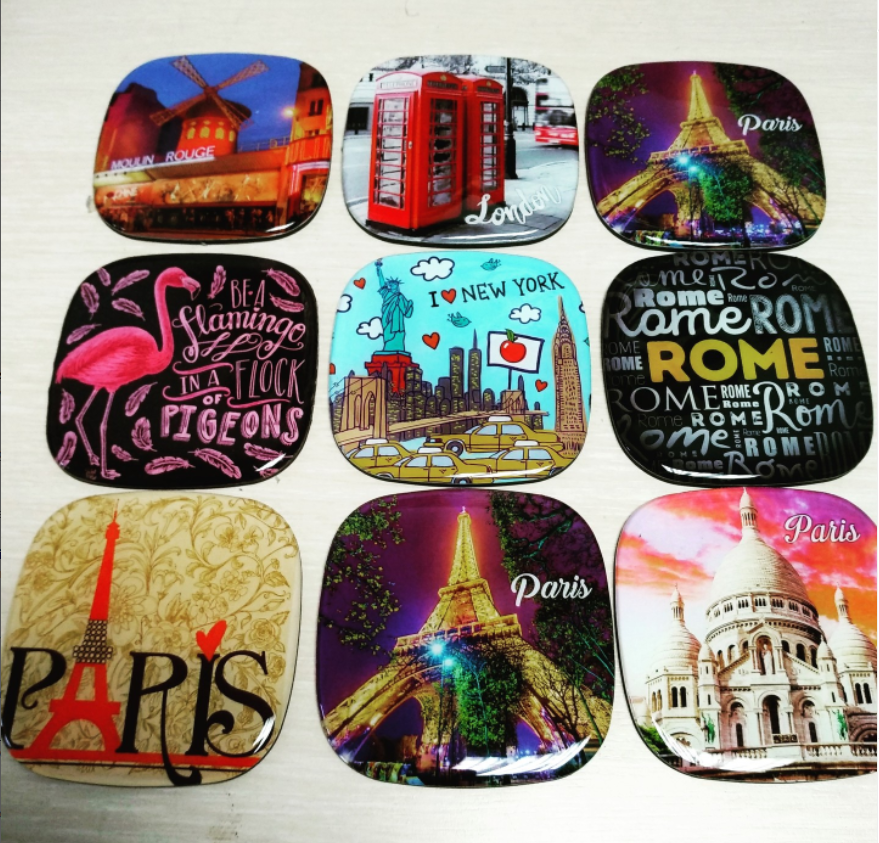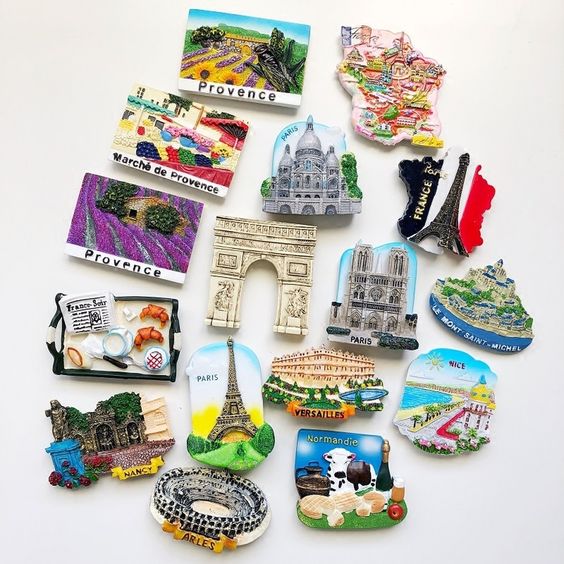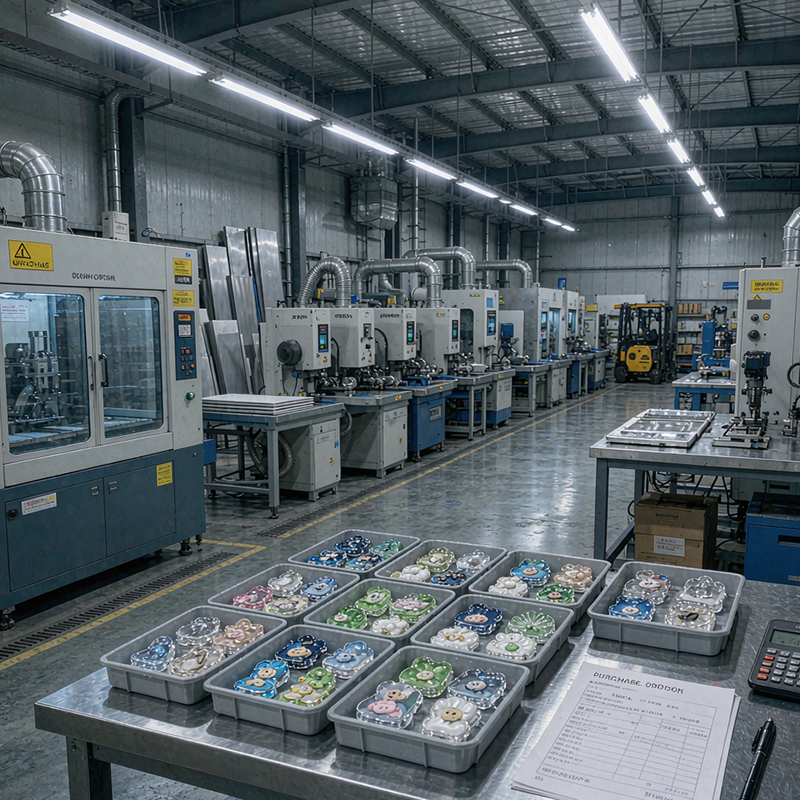
If you run the buying for a museum store, a national park concession, an airport gift shop, or a city tourism retail chain, the magnet wall looks like an easy category. It is not. The difference between a magnet program that sells through every season and one that comes back as a box of complaints is almost never the artwork. It is the resin fridge magnet supplier behind it. Pick the wrong one and you inherit slipped lead times, a factory you cannot verify, a price that quietly climbs on reorder, and a product that yellows under your own retail lights. Pick the right one and the whole category runs itself.
This guide is written for the people who actually place the order, not for a search engine. It uses the real production specs from a factory-direct resin magnet workshop — the same numbers we quote every day — so you can vet a custom resin fridge magnet manufacturer on facts instead of a polished brochure. We cover how to prove a supplier is a real factory, how to read the MOQ and the per-piece math, what a documented quality system looks like, and how to plan lead time so your stock lands before the first bus of the season.
Why Your Supplier Choice Quietly Controls Your Margin
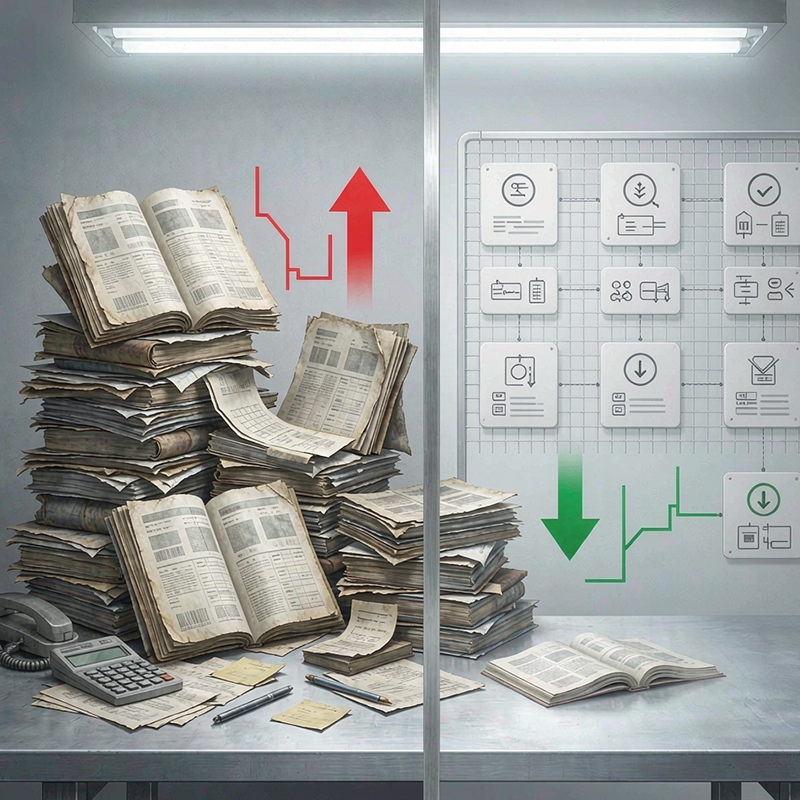
A souvenir magnet is a low-ticket, repeat-purchase item. Your profit lives in three places: the unit cost, the defect rate, and the reorder cycle. All three trace back to the supplier, not the shape.
- Unit cost swings on whether you are buying factory direct or paying a trading company that stacks its own markup on top of a factory it does not own.
- Defect rate swings on whether the supplier runs its own inspection line or hopes the subcontractor caught the problem. A magnet that drops off the fridge in week four is a return, not a sale.
- Reorder cycle swings on lead-time control. A supplier with a locked 45–60 day bulk window lets you plan a season. A supplier that “depends on partner factory availability” leaves your shelves bare in July.
The cheapest quote and the cheapest supplier are rarely the same thing. The rest of this guide is the checklist we wish every souvenir buyer ran before the first container.
Step 1 — Prove It Is a Factory, Not a Trading Desk
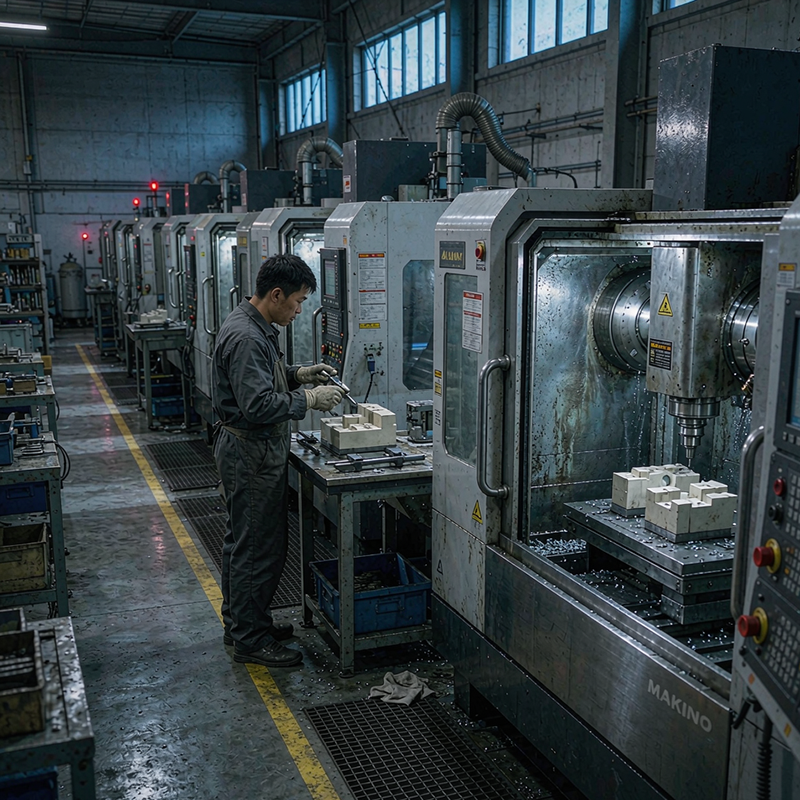
The first move when you evaluate any resin fridge magnet supplier is to confirm it is a manufacturer at all. On the major B2B platforms, a large share of “factories” are trading companies — offices with a catalog and no production floor. They can still ship you product, but you lose control of price, quality, and timing the moment your order passes through a middleman.
Here is how a real factory answers, and how a trading desk dodges:
- Ask for a live video factory tour. A real workshop shows you the mold bench, the resin casting line, and the painting stations in one building. A trading desk offers stock photos or a “factory we work with” sentence.
- Ask what machinery they own. A resin magnet manufacturer should name vacuum-casting or silicone mold equipment, UV flatbed printers, and painting booths. If they cannot describe the floor where resin is poured, they are not the manufacturer.
- Ask who controls the production schedule. Factory direct means the supplier plans its own lines. A trading desk schedules around whatever partner is free that week, which is exactly why lead times slip.
- Ask whether the export license is their own. A factory that holds its own export license can claim the export tax rebate and pass some of that back into your wholesale pricing. A trading desk cannot.
For a museum or park buyer, the practical test is simple: can the supplier state, in writing, that mold making, casting, painting, and final inspection all happen under one roof? If the answer is yes, you are talking to a factory. If the answer is vague, you are talking to a reseller.
Step 2 — Match Production Capability to Your Artwork (OEM/ODM)
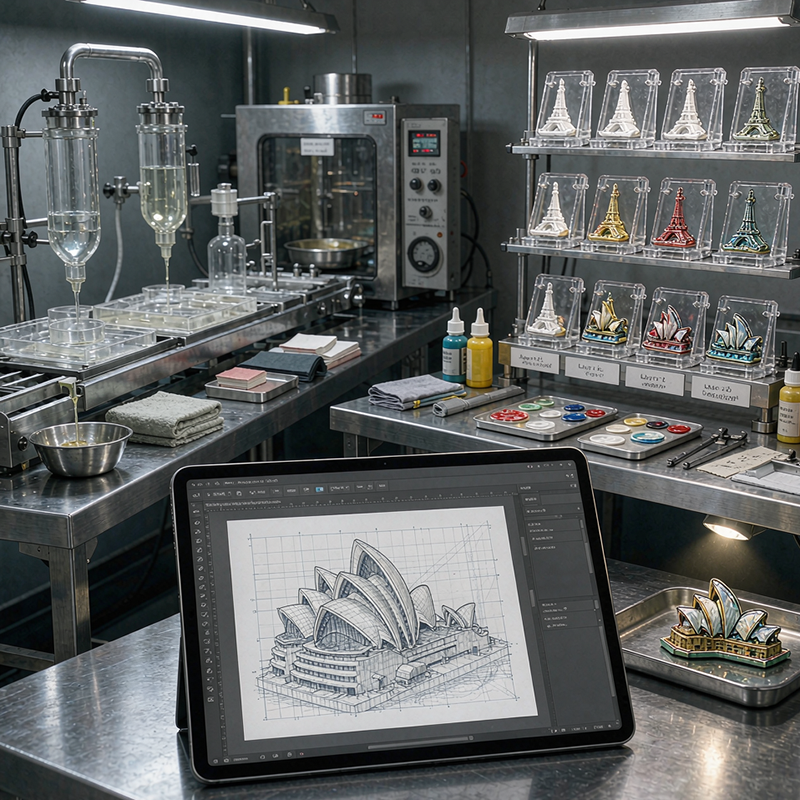
Once you know it is a real factory, the next question is whether its capabilities fit your designs. A strong OEM magnet manufacturer does more than print a logo on a ready shape. It takes your landmark, your mascot, or your city font from a file to a finished, magnet-backed product.
The capabilities worth confirming by name:
- File handling. Can they read your AI, PDF, or PSD artwork and return a production-ready proof? Weak suppliers ask you to “just send a picture.”
- Process range. For souvenir magnets, the two workhorses are UV printing (sharp, photographic, automated) and hand-painting (tactile, artisan, character-driven). A factory running both under one roof lets you launch a UV skyline and a hand-painted mascot in the same program. See our breakdown of the four magnet processes for which method fits which artwork.
- Custom shape and mold. Can they cast a bespoke silhouette, not just a rectangle? For a tourism board, the shape is the product.
- Private label and packaging. Can they print your backing card, your barcode, and your story on the back of the magnet? Private label is what turns a generic item into your store’s item.
A single factory-direct resin workshop running both UV and hand-painted lines can sustain roughly 100,000 pieces per month. That capacity covers most regional museum and park programs with room to reorder — and it means your hero design and your slow mover are made on the same floor, by the same QC system, with the same shade every time.
Step 3 — Decode the MOQ and the Real Per-Piece Math
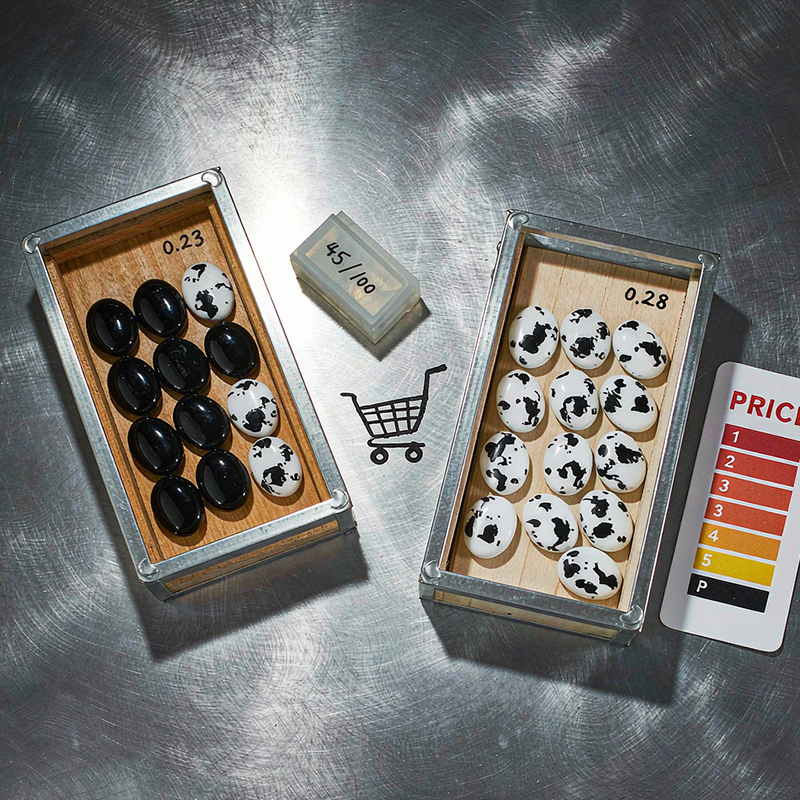
Minimum order quantity is the number that decides how small you can launch. On a factory-direct resin line, the floor is 1,200 pieces per design. Two things hide inside that sentence that buyers miss.
First, the minimum is per design, not per order. You can run a UV landmark at 1,200, a hand-painted mascot at 1,200, and a screen-printed logo at 1,200 in one program and ship them in a single container. The factory cares about reaching its economic run size on each artwork, not about how many SKUs share the truck.
Second, the per-piece price is only half the math. The full cost picture for custom resin fridge magnets looks like this:
- UV printing: about $0.23–0.25 per piece at the 1,200-piece minimum, with a one-time mold charge near $45.
- Hand-painting: about $0.28–0.35 per piece, with a one-time mold charge near $100, because the labor is per unit.
- Tiered pricing: volume bends the curve. The move from 1,200 to 5,000 pieces is real; the move from 10,000 to 50,000 is smaller, because resin production is partly automated and partly labor.
- The mold is retained. Reorders of the same design do not pay the mold again. A changed artwork — new text, resized shape, different backing — is a new mold, so confirm the retained mold before you reorder.
The trap to avoid: a quote of $0.18 at 1,200 pieces is almost always a weaker magnet or a thinner coat, not a better factory. The 450g pull-force minimum and the 48-hour yellowing test cost real material. Price the total cost of ownership — returns, reputation, reorders — not the sticker. A $0.25 magnet that lasts the season beats a $0.18 magnet that comes back as a complaint.
Step 4 — Demand a Documented Quality System and the Right Certifications
Process choice is half the battle. The other half is the factory’s quality system, because a perfect process still fails on a loose line. The specs below are what a serious souvenir magnet wholesale buyer should ask for by name — and what a real factory-direct workshop should state without hesitation.
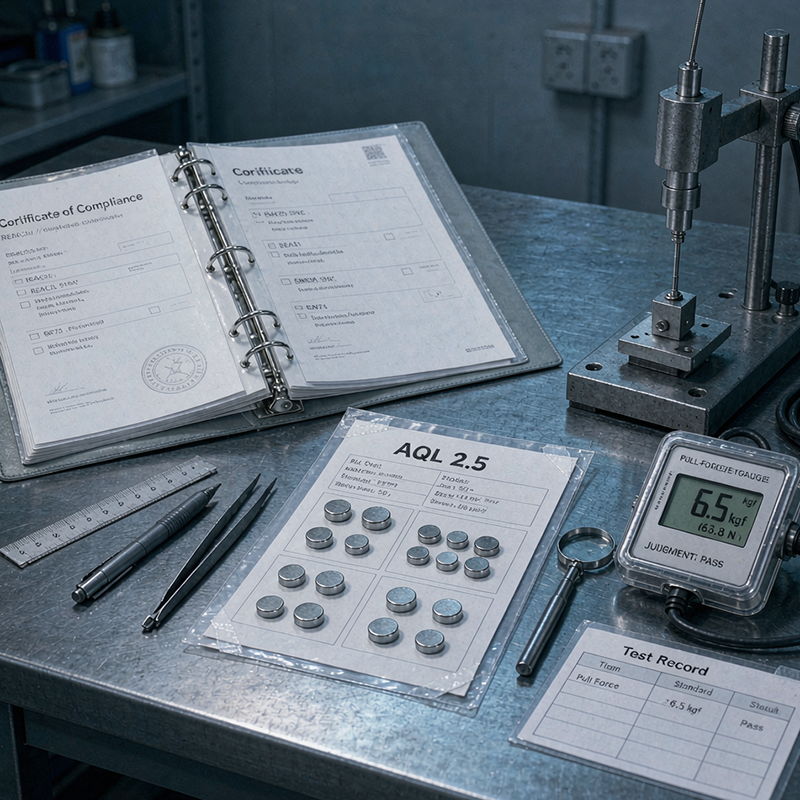
- Pull-force test: a minimum of 450g on every single piece, so the magnet stays on the fridge instead of the floor.
- Yellowing test: 48 hours at 6500K retail lighting, so the color does not fade under shop light.
- Final inspection: AQL 2.5 random inspection, the retail-industry standard for acceptable quality limit.
- Defect tracking: a supplier that tracks defects under 1.2% across a full year is running a system, not a vibe.
For museum, park, airport, and city tourism buyers, compliance is no longer optional. Children handle these, and they sit on shelves for years. Ask for documented, per-program certification:
- REACH (EU) and CPSIA (US) confirm the resin is phthalate-free and heavy-metal controlled.
- EN71 covers toy-and-novelty safety for the EU market.
- RoHS confirms low hazardous substances in the printed and coated layers.
A real factory supplies the lab report per program, not a verbal promise. If a supplier “can provide certificates” but only after you chase them, that is a yellow flag on its own. For a deeper walk-through on ordering in volume, our complete guide to bulk ordering resin fridge magnets shows the landed-cost math behind these specs.
Factory-Direct vs Trading Company: The Numbers That Decide
The single most expensive habit in souvenir buying is quoting only the ex-factory price from a supplier you never verified. The table below puts a factory-direct resin workshop next to a typical trading desk across the dimensions that actually move your margin and your shelf availability. Use it as your shortlist before you request a quote.
| Evaluation dimension | Factory-direct resin workshop (e.g., Xinfeng Resin) | Trading company / reseller |
|---|---|---|
| Production control | Mold, cast, paint, QC in one building; one accountable owner | Depends on whichever partner factory is available that week |
| Wholesale pricing | No trading-company markup; UV from $0.23/pc, hand-painted from $0.28/pc | Factory price plus a stacked markup, often 15–30% higher |
| MOQ flexibility | 1,200 pcs per design; mix multiple designs in one container | Often higher, passed straight through from the maker |
| Lead-time control | Fixed 45–60 day bulk window from sample approval | Slips with subcontractor capacity; “it depends” |
| Quality transparency | AQL 2.5, 450g pull, 48h yellowing stated in the quote | Relayed from a partner, rarely owned in writing |
| Compliance docs | REACH / CPSIA / EN71 supplied per program | Collected per order, sometimes delayed |
| Reorder consistency | Mold retained on file; same shade and spec next run | Re-negotiated each time; shade can drift |
| Customization depth | OEM/ODM, UV + hand-painted under one roof | Limited to what partner factories happen to offer |
The pattern is consistent: a trading desk is not evil, it is just a layer. Every layer adds cost, delays a decision, and diffuses accountability. For a custom souvenir magnets program where consistency across reorders is the whole game, that diffusion is exactly what breaks a magnet wall.
Step 5 — Plan Lead Time Backward From Your Peak Season
Tourism retail is seasonal, and the factories that understand it give you a fixed window instead of a vague hope. For a custom resin fridge magnet program, the clock has two segments:
- Sampling: 7–21 days from approved artwork to a physical proof you can hold.
- Bulk production: 45–60 days from sample approval to container loading.
That is 52–81 days of unavoidable factory time before a ship ever leaves port. The date that matters is your sample approval date, not your order date. Buyers who order in May for a July peak are not unlucky. They are late by the calendar.
Build backward from a US retail calendar:
| Peak window | Stock landed by | Sample approve by | Artwork send by |
|---|---|---|---|
| Memorial Day push | Early May | Late February | Early February |
| Summer tourism (July) | Early June | Late March | Early March |
| Q4 holiday (Nov–Dec) | Early October | Late July | Early July |
Approve your hero designs in the quiet quarter, lock the 45–60 day window, and have stock landed before the first bus of the season. Buyers who treat lead time as fixed — not as a hope — are the ones with full pegs in July.
Step 6 — Communication, IP Protection, and the Reorder That Keeps You Stocked
The first bulk order is the easy one. The second is where programs live or die, because the second order has to land before the shelf empties, not after. Three things separate a supplier you will reorder from one you will replace.
- Communication. A factory with clear, fast English responses turns a spec question into a one-line answer instead of a three-day loop. Ask how quickly they answered your first email — that is your reorder speed.
- IP protection. Your landmark and mascot designs are your assets. A professional OEM magnet manufacturer treats your artwork as confidential, runs it on its own floor, and does not shop it to your competitor down the road. Ask directly how they handle client files.
- Reorder discipline. Keep the mold on file and confirm it before reorder, so the second run matches the first exactly. Travelers notice when the magnet they bought last year is a different shade this year — and a museum brand feels it first.
For a best resin magnet for museum gift shop programs, this is the quiet differentiator. The factory that remembers your shade is worth more than the factory that was two cents cheaper.
The Red-Flag Checklist Before You Commit
After reviewing hundreds of custom souvenir programs, the same avoidable errors show up again and again. Run this list before you pay a deposit:
- No live tour, only photos. A real factory shows you the floor live. Stock images are a dodge.
- “MOQ depends” with no number. A factory states 1,200 pcs per design. A reseller quotes a number it does not control.
- No QC spec in the quote. If pull force, yellowing resistance, and AQL level are not written down, they are not promised.
- Compliance “available later.” REACH / CPSIA / EN71 should be part of the program, not a chase after the container sails.
- Lead time stated as a hope. “About two months” is not “45–60 days from sample approval.” Make them name the clock.
- Mold ownership is unclear. Confirm the mold is retained and for how long, or you pay for it twice.
None of these are exotic failures. They are the ordinary reasons a promising magnet line underperforms — and every one is decided at the supplier-selection stage, long before production starts.
How This Fits With Process and Bulk Planning
Choosing a supplier is step one; the other two steps are already written. Once you have a factory you trust, the next decisions are which magnet manufacturing process fits each design, and how to model the MOQ, tooling, and landed cost of the bulk run. The three guides work as one system: vet the factory, pick the process, plan the volume. Skip any one and the other two lose half their value.
Frequently Asked Questions
How do I verify a resin magnet factory is real?
Request a live video factory tour that shows the mold bench, the resin casting line, and the painting stations in one building. Ask the supplier to name its own production machinery and its own export license. A real factory describes its floor in detail; a trading desk offers stock photos and vague partner language.
What is the minimum order for custom souvenir magnets?
The standard factory-direct minimum is 1,200 pieces per design. You can mix multiple designs in one shipment; the minimum applies to each artwork, not to the total order. That floor exists because below it, mold setup and sampling overhead per piece outweigh the resin and labor.
Factory direct vs trading company — does it matter for price?
It matters directly. A trading company stacks its own markup on top of a factory price it does not control, so your ex-factory quote climbs 15–30% before the magnet is even made. Factory direct removes that layer, which is why UV pricing can start near $0.23 per piece with no reseller surcharge.
What certifications should a souvenir magnet supplier provide?
For museum, park, airport, and tourism retail, ask for REACH (EU), CPSIA (US), and EN71, plus RoHS for the printed and coated layers. These confirm the resin is phthalate-free and heavy-metal controlled. A real factory supplies the lab report per program, not a verbal promise.
How long is the lead time for a custom fridge magnet bulk order?
Sampling runs 7–21 days from approved artwork, and bulk production runs 45–60 days from sample approval. Build your calendar backward from your peak selling week, not forward from the order date, or you will miss the season by a quarter.
What magnet strength should I specify?
Spec a minimum pull force of 450g per piece. Anything lower risks the magnet sliding off a steel fridge door, which is the fastest way to turn a souvenir into a return. The spec should appear in the quote, not just the catalog.
Can I mix UV and hand-painted magnets in one container?
Yes. A factory running multiple lines can produce a UV skyline and a hand-painted mascot in the same program. The 1,200-piece minimum applies per design, and all cartons ship together — which is how a small launch becomes a full magnet wall without betting the season on one untested design.
Talk to a Factory That States Every Number Up Front
The right resin fridge magnet supplier is not the one with the cheapest teaser price. It is the one that tells you — honestly — whether it is a factory, what the MOQ is per design, what the mold costs once, how the per-piece price moves at volume, what the quality system proves by name, and exactly how long the window is before your stock lands. Look for factory-direct pricing with no trading-company markup, a 1,200-piece minimum that lets you launch small, sampling in 7–21 days, bulk in 45–60 days, and a quality line that states pull force, yellowing resistance, and inspection level in writing.
If you are planning a museum, park, airport, or city tourism magnet line and want a quote that lists the process, the mold charge, the per-piece cost, and the lead time in plain numbers, send us your artwork. We quote within 24 hours, and we will tell you — straight — whether a real factory, a documented QC system, and a fixed lead-time window are what your shelf actually needs.

- Souvenir Magnet Program Planning: What Actually Sells for Museums, Parks & Tourism Boards - October 20, 2026
- Custom Fridge Magnet Sampling and Proofing: The B2B Guide to Approving a Sample (2026) - October 15, 2026
- Custom Mold Ownership & Design IP Protection for Souvenir Magnets: A B2B Buyer’s Guide (2026) - October 9, 2026