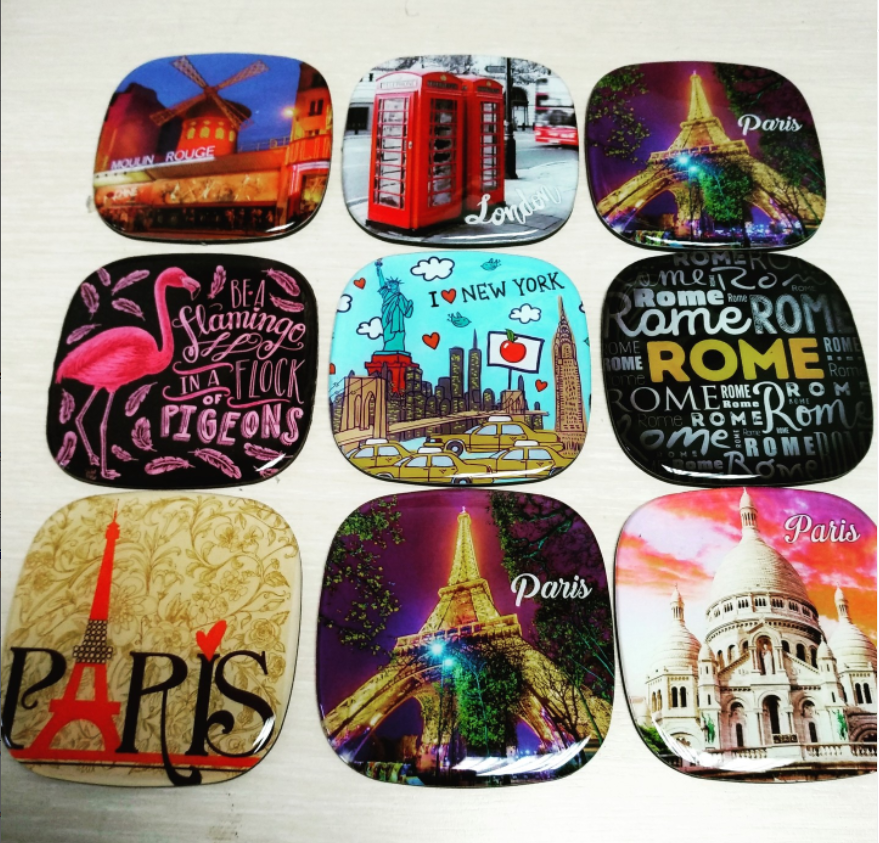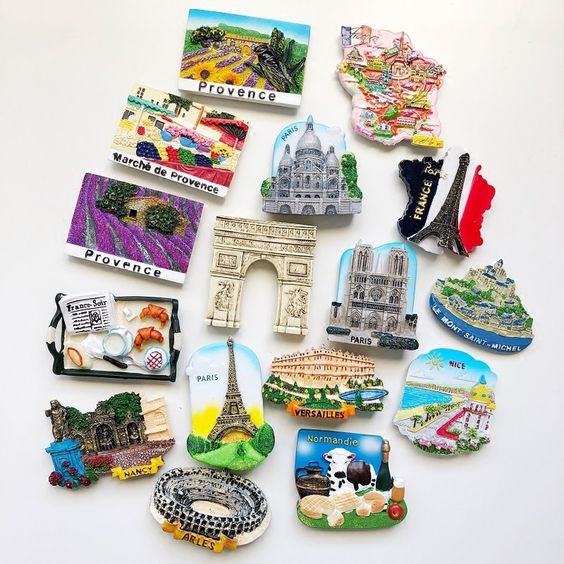
If you run a museum store, a national park concession, or a city tourism-board creative program, the single biggest reason a custom magnet line misses its season is not the design — it is the calendar. Knowing when to order custom magnets is a planning discipline, not a purchasing afterthought. The product can be perfect and still arrive a week after your peak visitor window closes. This guide gives attraction buyers a working seasonal buying calendar built on the real production clock of a factory-direct resin magnet program: sampling, bulk casting, ocean transit, and customs, mapped backward from the date you actually need stock on the shelf.
The Real Reason Magnet Programs Miss Their Season
Most failed merchandise programs were never product failures. The item was right; the order was late. That is the pattern every experienced promotional-products buyer already knows, and it is the first thing a seasonal buying calendar fixes. A custom magnet is bought for a moment — a summer opening weekend, a December holiday rush, a spring break at a coastal city — and an order that lands after that moment has passed is worth almost nothing, no matter how good the magnet looks.
Generic promotional-product advice tells you to plan six to twelve weeks ahead. That number is built for screen-printed totes and embroidered caps that run in a domestic shop. It is dangerously wrong for a cast resin magnet sourced from a factory in China, where the production clock alone runs two to three months before a ship ever leaves the port. Treat the generic timeline as a floor, not a plan, and you will still miss your window.
The fix is to work backward from the moment, not forward from the quote. Start with the date you need product in the hands of your visitors, then subtract the full chain — sampling, bulk production, ocean transit, customs, and drayage — and the date you must brief the factory falls out of the math. Everything in this calendar is that subtraction, applied to the real numbers a magnet buyer works to.
Why a Resin Magnet Clock Is Not a T-Shirt Clock

A flat promotional product is decorated; a custom resin magnet is manufactured. That difference is the whole reason the calendar looks different. A resin magnet begins as a silicone production mold, gets cast, is cleaned and painted or UV-printed, is magnetized, and is packaged — a sequence with hard, non-overlapping stages that no rush fee can fully compress.
The custom magnet production timeline has two factory stages that competitors rarely separate. Sampling takes 7–21 days from approved artwork, during which the mold is cut and the first painted or printed sample is made and shipped to you for sign-off. Bulk production then takes 45–60 days from sample approval. That is 52–81 days of unavoidable production before transit, and it is the number that should sit at the top of every planning spreadsheet you keep.
The mold is also a gate, not just a cost. The production clock does not start when you place the order — it starts when you approve the sample. Every day spent debating a color, a pose, or a back-card layout is a day borrowed from your own peak season. A factory-direct resin magnet costs $0.23–0.25 per piece UV or $0.28–0.35 hand-painted before freight, and the one-time tooling — a $45 UV mold or $100 hand-painted mold — sits entirely outside the shipping math, but it is what makes the clock real. You cannot bulk-run a design you have not approved.
The custom magnet lead time China factories work to is the reason the plant is rarely the bottleneck — the calendar is. With a monthly capacity of 100,000 pieces, a buyer who sends artwork in May for a July peak is not unlucky; they are late by the calendar, because the bulk run plus ocean transit will consume the months they thought they had.
Generic Promo Timing Versus the Real Resin Magnet Clock
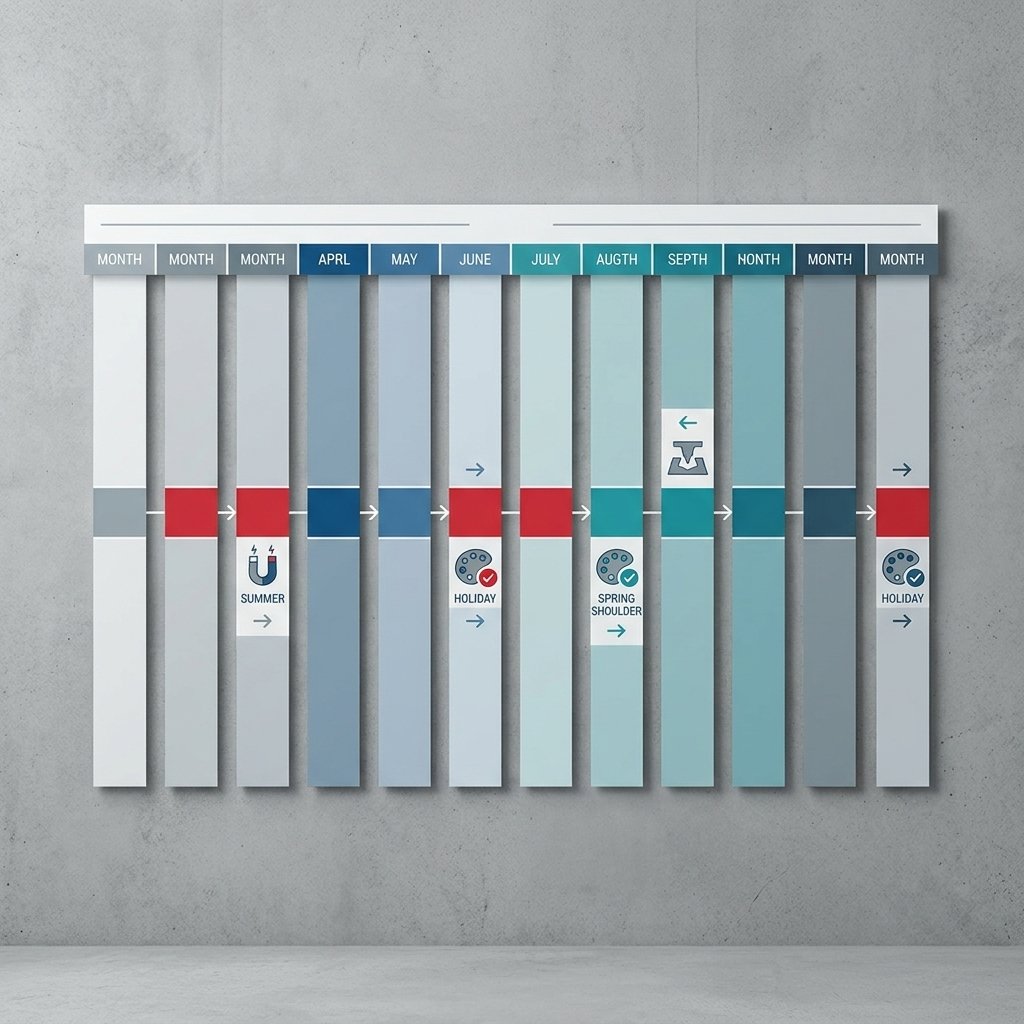
The clearest way to see why the generic six-to-twelve-week rule fails a magnet buyer is to put the two timelines side by side. The table below contrasts a typical domestic promotional product with a custom resin magnet program sourced factory-direct.
| Stage | Generic domestic promo product | Custom resin magnet (factory-direct) |
|---|---|---|
| Artwork to approval | A few days to two weeks | 7–21 days sampling, including mold cut and first sample |
| Production run | 2–4 weeks (6–8 in peak season) | 45–60 days bulk from sample approval |
| Shipping | 1–3 weeks domestic ground | 25–45 days ocean plus drayage and customs |
| Order to shelf | 6–12 weeks | 11–19+ weeks, about three to four and a half months |
| Reorder speed | Faster on a repeat | Faster if the mold is stored, but bulk still runs 45–60 days |
The practical read is simple. A custom resin magnet program needs roughly triple the lead time a generic promo calendar assumes. If your internal merchandise calendar says “order twelve weeks out,” rewrite it to “order four months out” for any cast magnet program, and add a buffer for customs and a late-season carrier delay.
Your Peak Window Decides Everything
A seasonal buying guide for museum stores, parks, and tourism boards only works if it is built around your actual peak, not a generic quarter. Attraction retail has sharper peaks than almost any other merchandise category, and they do not all land in the fourth quarter. Mapping your window is the first planning step.
National parks and scenic-area retail live or die on summer. A park with a six-week summer window needs stock in the building before Memorial Day, which means the mold and first sample must be approved no later than four months before opening weekend. Museum stores lean harder into the holiday season, when member gifts and tourist traffic converge, so their hard deadline is the December rush. Coastal and warm-weather tourism cities often run two peaks — summer and the winter holiday escape — which means two order cycles, not one.
City tourism-board creative procurement sits somewhere between, with a spring shoulder season, a summer high, and a year-end push. The point is that your “moment” is specific, and the calendar exists to protect it. A line ordered for the wrong window is the same as a line ordered late: it arrives when nobody is buying.
The Order-Start Calendar: When to Send Artwork by Peak

Translate the production clock into a date on the page. The table below gives the latest date to send artwork to the factory for the most common attraction peaks, assuming the standard 7–21 day sampling, 45–60 day bulk, and 25–45 day ocean transit. Build in at least two weeks of buffer before your absolute in-hand-by date.
| Your peak sales window | Send artwork to factory by (latest) | Why this date |
|---|---|---|
| Summer (June–August, parks) | February | Four months back clears sampling, bulk, and ocean before a hard summer open |
| Holiday (November–December, museums) | July | Beats the Q4 capacity crunch when every buyer orders at once |
| Spring shoulder (March–May) | November of the prior year | Locks production before the year-end supplier slowdown |
| Fall events (September–October) | April | Clears back-to-school and fall-show demand ahead of the holiday pile-up |
| Coastal year-round (two peaks) | February and July | Split into a summer run and a holiday run rather than one oversized order |
These are latest dates, not target dates. The buyers who never miss a season send artwork earlier than this table and treat the buffer as insurance, not waste. If your in-hand-by date is fixed by an event contract, work backward from it exactly as the clock above dictates and do not negotiate with the math. Missing the holiday season magnet ordering deadline is the single most common way a first program fails, and it is entirely preventable.
Artwork Readiness Is the Hidden Delay
The number one cause of late magnet orders is not the factory — it is artwork that arrives unfinished. A design sent as an RGB JPG, a low-resolution photo, or a file with live text instead of outlined fonts triggers two or three rounds of back-and-forth that quietly eat the buffer you thought you had. Our custom magnet artwork prep guide walks through the file specs that prevent this, but the calendar rule is shorter: keep a print-ready artwork library so the only thing between you and a submitted order is a final color sign-off.
For a magnet program, your artwork also has to survive a real environment. Color and yellowing are verified under controlled light — a yellowing test runs 48 hours under 6500K retail light — so what you approve on a calibrated monitor is what arrives. Send files in CMYK with proper bleed and outlined fonts from day one, and the approval stage that competitors lose weeks in becomes a matter of days.
Samples First, Bulk Second
Because the production clock starts at sample approval, the sampling stage deserves its own line in the calendar. Our sampling and proofing guide covers the mechanics, but for planning purposes the rule is: book sampling early, approve decisively, and never let a “maybe” hold the clock. Sampling takes 7–21 days, and a sample you sit on for two weeks is two weeks of bulk production you will never get back.
A sample is also your first and cheapest quality gate. It is where you confirm the 450g pull-force on a steel surface, the paint finish, and the back-card alignment — and where the piece is inspected to AQL 2.5 — before 5,000 or 50,000 pieces are committed. The cost of a slow sample approval is measured not in the sampling fee but in the peak season it pushes you past.
Respect the Capacity Crunch
Lead times compress for every buyer at once before a holiday. The plant’s 100,000-piece monthly capacity is real, but it is shared, and the weeks before Q4 and before summer are when every museum, park, and distributor places orders simultaneously. A factory that quotes 45–60 days in a quiet month can slip in a busy one if you brief it late. Peak season inventory planning starts in July, not October, for exactly this reason.
This is why the order-start calendar above front-loads holiday artwork to July. The buyer who orders in January for a June opening beats the buyer who orders in April and misses July, not because the factory prefers them, but because they are not competing for the same production slot. Our bulk ordering guide explains how capacity and tooling amortize across reorders, and the timing lesson is the same: the early buyer sets the schedule; the late buyer accepts the leftover.
Annual-Edition Magnets Turn One Mold Into a Calendar Asset
The smartest calendar play a magnet buyer has is the annual edition. It is the same approved mold produced with a new year or event date each season, so only the artwork or date changes while the geometry stays proven. Because tooling is already paid — a $45 UV mold or $100 hand-painted mold — the reorder math stays clean and the sampling stage shrinks to a decoration check rather than a full mold cut.
An annual edition also builds a collector habit. Visitors who bought last year’s piece return for this year’s, turning a one-time mold into a multi-year asset and giving you a predictable, repeating order slot you can pencil into the calendar a year ahead. Our souvenir magnet program planning guide covers the assortment logic behind it; for timing, the takeaway is that a stored mold is the closest thing this supply chain offers to a fast reorder.
Tiered Pricing and Consolidation Timing
The calendar and the price list are the same document. Per-piece cost steps down as the program deepens, with tiered pricing breakpoints at 5,000, 20,000, and 50,000 pieces, so consolidating reorders across your hero designs into one combined shipment almost always prices better than four separate ones. That same consolidation is what moves you from a less-than-container load to a full container, and it protects you from the lead-time crunch that hits every buyer at once before a peak.
For a first launch line of three hero designs at the 1,200-piece minimum per design, you are at 3,600 pieces — almost always a less-than-container load worth testing before you commit to depth. Plan the second, consolidated reorder to cross the 5,000-piece tier and you improve both the unit price and the freight math in the same move. Our bulk ordering guide and our shipping and Incoterms guide cover the mechanics; the calendar rule is to let the price tier drive the order date, not the other way around.
Compliance Files Belong Inside the Clock
A magnet can be finished and still stuck if the paperwork is not ready. Permanent magnets and painted finishes clear predictably, but the documents that prove it — a REACH 168-item test on the painted finish, an SVHC test, an SGS polyresin material report, and an MSDS for the magnet and paint — are what keep a broker from holding your container. Build the compliance file into the calendar, not after it. On the physical side, lot-numbered cartons with EPE foam insert trays keep a delayed or damaged carton traceable to a batch rather than a mystery, and a TÜV Rheinland verified-supplier status backs the paperwork with a third-party mark buyers recognize.
Our safety standards guide lists the full set a factory-direct supplier should hold and share on request, so your broker is never waiting on a missing paper at the worst possible moment. Hold those files ready before the vessel sails, and the clearance step that surprises late planners becomes a non-event for you.
Your Incoterm Choice Changes the Calendar
The Incoterm you pick does not change how long the magnet takes to make, but it changes who controls the clock after it is made. Under FOB, you engage your own freight forwarder and customs broker and keep visibility of the ocean booking; under DDP, the seller handles the whole journey and you lose leverage to negotiate or expedite the freight leg. For a buyer protecting a fixed peak date, that control is worth more than the convenience of a single delivered price.
Our importing and Incoterms guide lays out the full comparison, but the calendar takeaway is narrow: if your in-hand-by date is non-negotiable, own the ocean leg so you can rebook or expedite without asking permission. A term that hides the freight inside a quote also hides your ability to react when a carrier slips.
Build Your Own One-Page Calendar
You do not need a planning system; you need one page. List every peak your attraction runs, write the in-hand-by date next to each, subtract the full chain — 7–21 days sampling, 45–60 days bulk, 25–45 days ocean plus customs — and the artwork-to-factory date is your deadline. Add two weeks of buffer, set a reminder a month before, and the souvenir magnet reorder calendar is done.
The buyers who never miss a season are not the ones with the biggest teams. They are the ones who decided, a year ago, that the calendar is the product. A custom magnet reorder schedule planned this way turns a stressful annual scramble into a quiet, repeatable order slot, and planning custom magnet programs around a stored mold makes next year’s slot even easier.
Frequently Asked Questions
How far in advance should I order promotional products?
For a custom resin magnet program, plan four months or more before your in-hand-by date: 7–21 days for sampling, 45–60 days for bulk production from sample approval, and 25–45 days of ocean transit plus customs. Generic promotional products quoted at six to twelve weeks are a different, faster supply chain; do not apply that number to a cast magnet sourced from China.
What is the minimum lead time for custom magnets?
The shortest realistic window is about eleven weeks if everything is approved immediately — roughly three weeks of sampling and seven to eight weeks of bulk — but that excludes ocean transit, which adds another four to six weeks. Treat thirteen to nineteen weeks, or three to four and a half months, as the working minimum, and add buffer for customs and peak-season capacity.
When should a museum store reorder best-selling magnets?
Reorder before the peak, not during it. Set a trigger at roughly thirty percent of stock remaining, then place the consolidated reorder early enough to clear the 45–60 day bulk run and ocean transit ahead of the holiday rush. The museum that orders in July for December beats the one that orders in October and waits.
What happens if I order too late for the holiday season?
After the capacity crunch starts, you compete for the same production slots as every other buyer, lead times stretch, and ocean space tightens. A late order may still ship, but it risks arriving after your peak or incurring expedited freight you did not budget. The only reliable fix is to have sent artwork by July for a December window, well ahead of the holiday season magnet ordering deadline.
Request a Quote
If you are planning a custom souvenir magnet program and want the seasonal calendar applied to your specific designs and peak dates, send your artwork, target retail price, and in-hand-by date through the form. We manufacture resin souvenir magnets factory-direct with in-house molding and painting, a 1,200-piece minimum per design, sampling in 7–21 days, and bulk in 45–60 days from approval — and we can quote FOB, CIF, or DDP so you see the landed cost before you commit. Plan the calendar first, then the product: request a quote here.

- When to Order Custom Magnets: A Seasonal Buying Calendar for Museums, Parks & Tourism Boards - November 4, 2026
- Importing Custom Magnets from China: A Shipping & Incoterms Guide for B2B Buyers - October 29, 2026
- Souvenir Magnet Program Planning: What Actually Sells for Museums, Parks & Tourism Boards - October 20, 2026