If a custom magnet order has ever arrived late, off-color, or somehow weaker than the sample you approved, you already know the lesson the hard way: the expensive problems are rarely in the design. They are in the ordering process. This guide covers the mistakes to avoid when ordering custom magnets for a museum store, national park, airport duty-free counter, city tourism board, or wholesale program. Most custom magnet mistakes are predictable, and every one of them has a cheap fix if you catch it before bulk production starts. The advice below comes from a factory-direct resin magnet supplier’s side of the table, so it reflects what actually goes wrong between a signed quote and a container at the port — not generic purchasing theory.
Treating a Cast Resin Magnet Like a Printed Promo Item
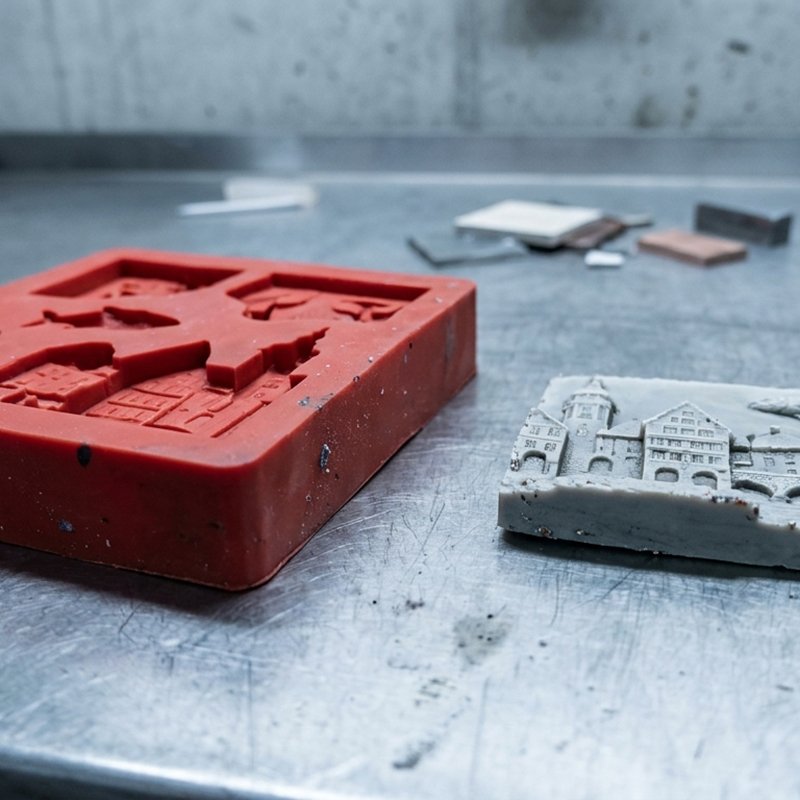
The first of the common mistakes when sourcing resin magnets from China is a category error. Buyers used to totes, pens, and embroidered caps assume a magnet is a flat surface that gets decorated in a day. A cast resin magnet is manufactured, not decorated. It begins as a silicone production mold, gets cast in resin, is cleaned and either hand-painted or UV-printed, is magnetized, and is then packaged. Those are sequential stages with hard boundaries, and no rush fee removes them.
That difference explains why a supplier’s answer to “how fast can you do this?” should be a range, not a promise. In our plant, sampling takes 7–21 days from approved artwork and bulk production takes 45–60 days from sample approval. A trading company quoting two weeks is either describing a different product or about to disappoint you. When you understand the casting sequence, the quote makes sense instead of feeling slow.
It also changes how you brief the factory. A printed promo brief is a logo and a color. A resin magnet brief needs a 3D form, a finish, a backing decision, and a packaging spec. Skip any of those and the gap shows up later as a revision request — or worse, as a bulk run you cannot sell. Our guide to resin magnet manufacturing processes breaks down which stage owns which decision, and it is worth reading before you send a single file.
Approving From a Photo Instead of a Physical Sample
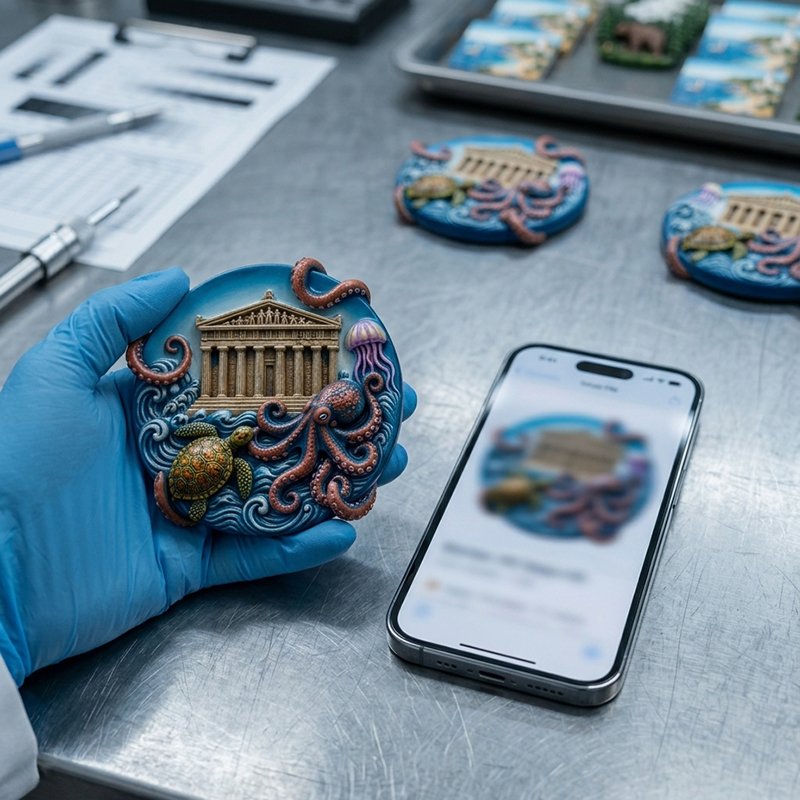
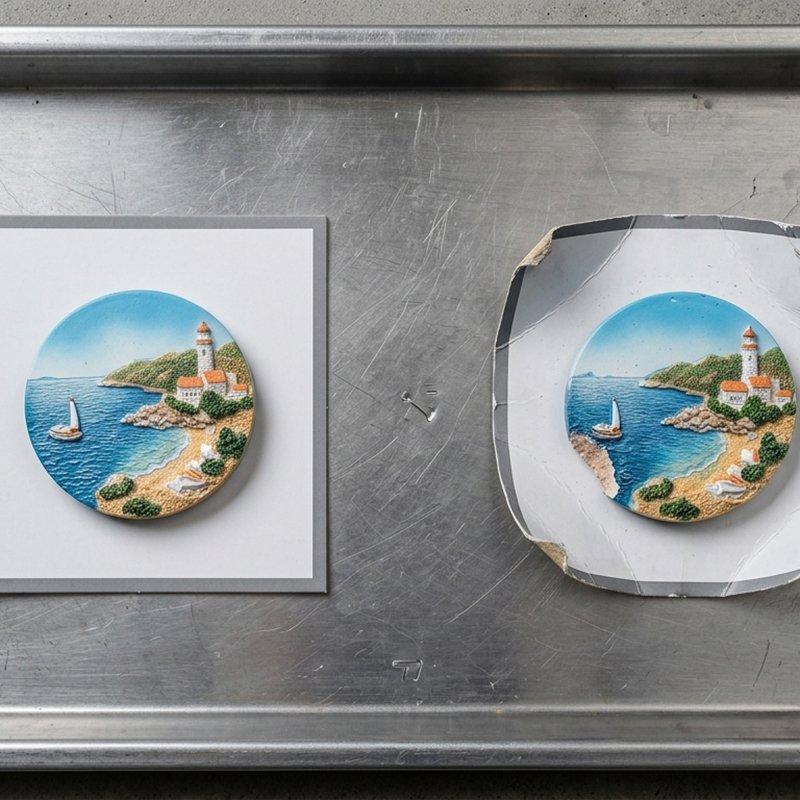
Nothing generates more custom magnet supplier errors than approving a photograph and assuming the bulk will match it. A photo hides weight, surface texture, paint depth, and the real strength of the backing magnet. The only reliable approval is a physical production sample made on the same line that will run your order.
A sample is also your cheapest quality gate. It is where you confirm the 450g pull-force on a steel surface, check the finish under the same light your store uses, verify the back-card alignment, and see whether the piece survives normal handling. We test pull-force on 100% of output and inspect to AQL 2.5, but those numbers mean little to you until you have held the reference piece in your own hand.
One subtle trap: if you approve a sample and then change a color, a pose, or a back-card layout, you have restarted the clock. The production timeline begins at sample approval, not at purchase order. A sample you sit on for two weeks is two weeks of bulk production you will never recover. If you want the full sequence of what to check before approving magnet samples, our sampling and proofing guide walks through it stage by stage.
Sending Artwork That Cannot Go to Production

Poor files are the most common of all custom magnet artwork mistakes. A low-resolution JPG pulled from a website, an RGB file with live text, or a photograph with a shadows-only background will trigger two or three rounds of back-and-forth before the mold is even cut. Each round quietly consumes the buffer you thought you had.
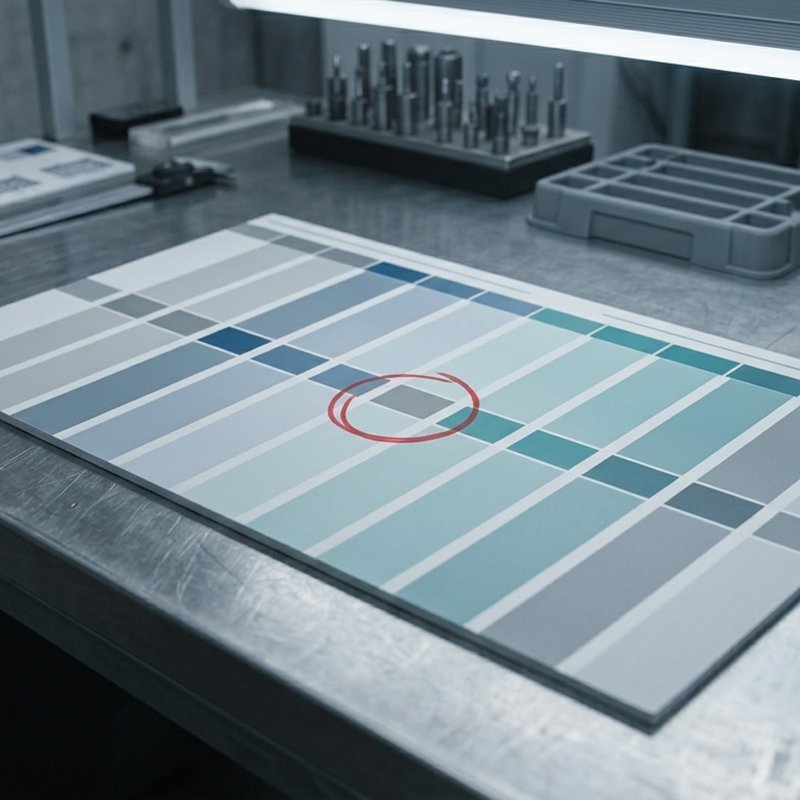
Production-ready artwork means CMYK color, proper bleed, fonts converted to outlines, and Pantone references wherever a brand color matters. It also means accepting a hard truth about resin: color is mixed and cured, not printed onto paper, so a screen value is a starting point rather than a guarantee. One of the most common resin magnet color mismatch causes is approving a digital proof under a monitor that was never calibrated to retail light. Our yellowing test runs 48 hours under 6500K retail light precisely so that what you approve is what arrives.
The fix is boring and effective: keep a print-ready artwork library so the only decision left is a final color sign-off. Our artwork preparation guide lists the exact file specs, and following it turns the approval stage from a multi-week negotiation into a few days.
Underestimating the Real Production Clock
Buyers ordering resin magnets from China routinely plan with a generic promotional-product calendar and then act surprised when the container misses the season. The realistic chain is longer than most people budget for: 7–21 days of sampling, 45–60 days of bulk from approval, and roughly 25–45 days of ocean transit plus customs and drayage. That is about three to four and a half months before a piece reaches a shelf.
A factory’s monthly capacity of 100,000 pieces sounds generous until every buyer in the category wants the same production window. In the weeks before a holiday or a summer opening, capacity is shared and lead times stretch for everyone at once. The buyer who briefs the factory in January for a June opening is not lucky; the buyer who briefs it in April is late. Knowing how to avoid magnet production delays is mostly a matter of treating the calendar as a hard input rather than a soft hope.
The table below puts the cost of the most frequent mistakes side by side, using the real numbers a resin magnet buyer works to. It is the fastest way to see which errors are merely annoying and which ones actually move a launch date.
| Mistake | What it actually costs | The fix before bulk |
|---|---|---|
| Approve from a photo, not a physical sample | Full 45–60 day bulk run at risk; color and pull-force surprises at arrival | Approve a real sample, keep a signed reference piece |
| Send RGB or low-resolution artwork | 2–3 revision rounds that eat the sampling buffer | CMYK, bleed, outlined fonts, Pantone references |
| Assume a 6–12 week promo timeline | Missed peak window; expedited freight that was never budgeted | Plan 3–4.5 months from artwork to shelf |
| Treat MOQ as per order, not per design | Unexpected tooling across designs; broken price tiers | Budget 1,200 pcs per design; consolidate to cross 5,000 |
| Skip the compliance file until shipping | Container held at customs; peak stock stuck at port | Collect REACH / SVHC / SGS / MSDS documents before sailing |
Chasing the Lowest Unit Price and Missing the Factory-Direct Difference
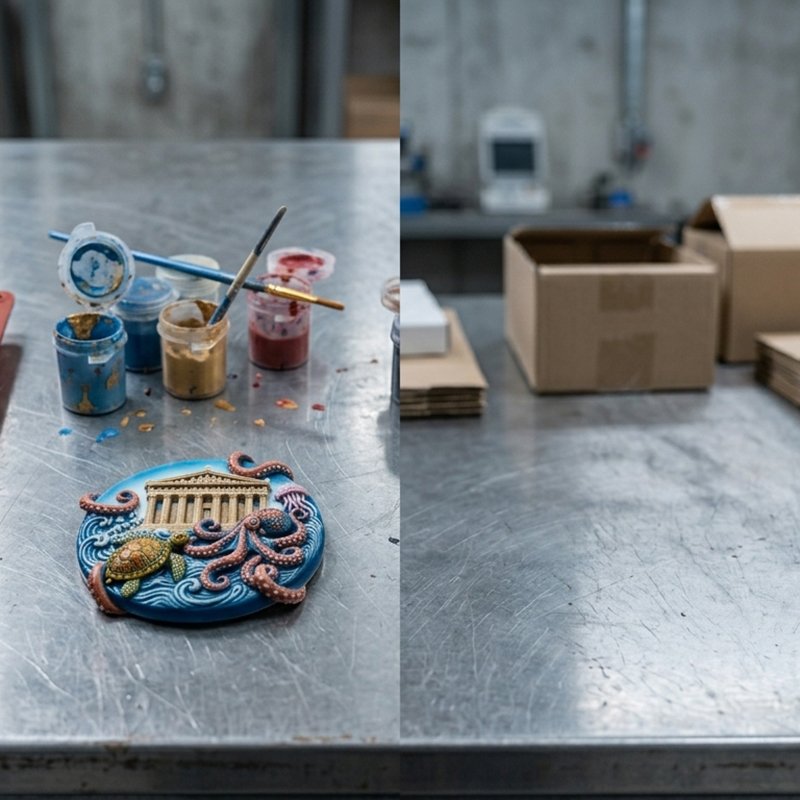
Price matters, but a resin magnet quote is only comparable when the structure behind it is the same. A factory-direct supplier with in-house molding and painting can quote a UV-printed magnet at $0.23–0.25 per piece or a hand-painted one at $0.28–0.35 per piece, with no trading-company markup layered on top. A lower headline number from an intermediary often arrives with a different finish, a vague lead time, and nobody accountable when the batch is wrong.
The useful question is not “who is cheapest?” but “who owns the process?” A supplier that cuts its own molds, paints its own pieces, and tests its own output can answer technical questions without a relay of messages. One that subcontracts the critical stages will answer “yes” to everything and then manage the schedule by explanation rather than execution. These are the custom magnet supplier errors that never show up on a price comparison sheet.
Solid vendor verification is less exotic than people imagine: confirm a real production line, ask who owns each stage, request the test documents, and keep everything in writing. Our supplier-selection guide gives a practical checklist, and it doubles as one of the more useful custom magnet vendor verification tips you can hand to a new purchasing assistant.
Ignoring the Mold Fee and the Question of Who Owns It
New buyers often file the mold fee under “unexpected extras.” It is not an extra; it is the gate. Tooling is a one-time cost per design — $45 for a UV mold or $100 for a hand-painted mold — and it sits entirely outside the per-piece price and the freight math. Until that mold is cut and a sample is approved, there is no bulk run to discuss.
The second half of this mistake is more expensive: paying for a mold without agreeing in writing who owns it. If you switch suppliers a year later and the tooling stays with the first factory, you pay to cut it again. The issue matters most for annual-edition programs, where the whole economics depend on reusing a proven shape with a new decoration. Get ownership, storage, and release terms into the paperwork before the mold exists, not after a dispute begins.
Our mold ownership and design IP guide covers the clauses that matter. Treat it as part of the order, not legal housekeeping you revisit if something goes wrong.
Misreading MOQ as a Single Order Minimum
One of the most expensive bulk magnet order pitfalls is assuming the minimum applies to the whole order. It applies per design. A 1,200-piece minimum means 1,200 of each artwork, so a three-design launch is 3,600 pieces, not 1,200 split three ways. Buyers who plan the smaller number discover the gap after artwork is approved, when changing the plan costs real money.
MOQ exists because mold cutting, color matching, and setup are fixed costs that need a run to amortize. The reward for understanding that is the tiered price structure: breakpoints at 5,000, 20,000, and 50,000 pieces. A first launch of three hero designs at 1,200 each almost always ships as a less-than-container load. Consolidating the second reorder across those designs to cross the 5,000 tier improves the unit price and the freight math in the same move.
These custom magnet MOQ mistakes are easy to avoid once the per-design rule is explicit in your planning sheet. Our bulk ordering guide explains how tooling and volume interact, and it is worth a read before you commit to a hero assortment.
Ignoring the Backing Until a Magnet Falls Off a Door
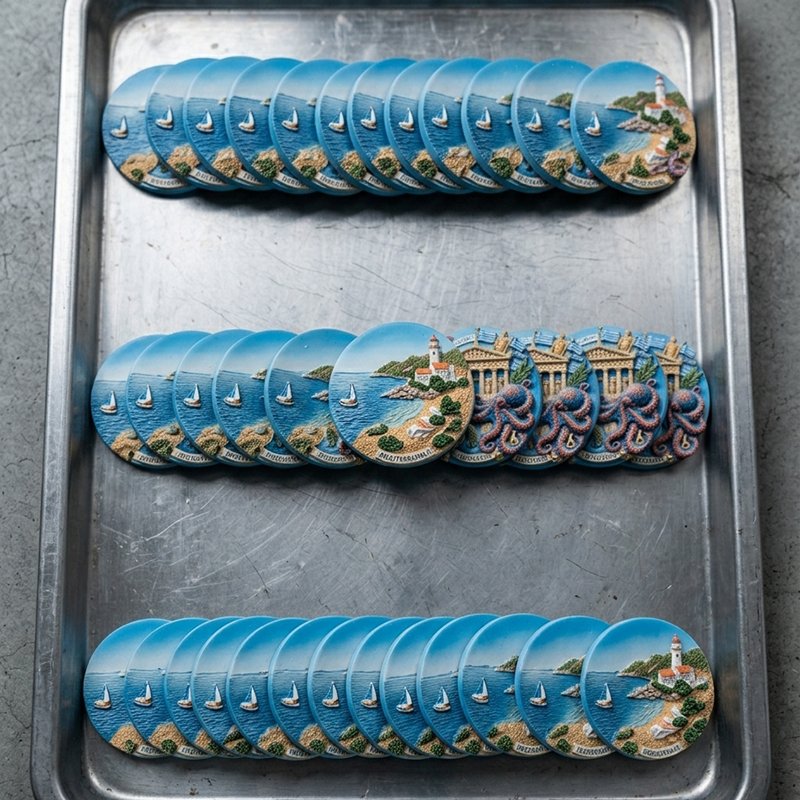
Industrial magnet buyers talk about grade and coercivity; souvenir magnet buyers should talk about pull-force and the surface it has to hold. A decorative resin piece with a weak backing is a return, a bad review, and a brand problem for a museum or park that put its name on it. Our standard is a 450g pull-force tested on 100% of output — a number chosen because it holds on a real steel surface in real use, not just on a test bench.
Backing choice also affects shipping. Magnets that are too strong for their packaging can interfere with adjacent cartons or trip airline screening rules; magnets that are too weak fail in the store. The right answer depends on where the piece is displayed and how it is packed, which is why the decision belongs in the brief rather than at the end of the line. Our backing and pull-force guide covers the trade-offs in detail.
Testing this at the sample stage is straightforward: put the approved piece on the same steel surface your customers will use, let it hang, and check it again after a week. That simple habit catches more field failures than any certificate.
Leaving the Compliance File Until the Container Is Held
A magnet can be finished, packed, and still stuck at customs if the paperwork is missing. The documents that matter are concrete: a REACH 168-item test on the painted finish, an SVHC test, an SGS polyresin material report, and an MSDS for the magnet and paint. For transport, a test report for the UV resin magnet and UN-format SDS keep a broker from asking questions at the worst possible moment.
Certification claims need care. CPSIA and EN71 are per-program third-party lab reports on request, not certificates to assume. TÜV Rheinland verified-supplier status is a real mark a buyer can check; an invented certificate number is a liability. Never render an issuer’s logo or a report number into public artwork — the document’s job is to be available on request, not to be a graphic element.
Build the file into the production calendar instead of chasing it at shipping time. Our safety standards guide lists what a factory-direct supplier should hold and share, so your broker is never waiting on a missing paper while demurrage accrues.
Choosing the Wrong Incoterm and Losing Control of the Clock
An Incoterm does not change how long a magnet takes to make, but it changes who controls the schedule after it is made. Under FOB, you appoint your own forwarder and broker and keep visibility of the ocean booking. Under DDP, the seller handles the whole journey and you trade that visibility for a single delivered number. For a buyer protecting a fixed opening date, the visibility is usually worth more than the convenience.
The related mistake is comparing quotes on unit price while ignoring landed cost. Product, freight, destination duty, inspection, and last-mile delivery are separate lines; a quote that folds them into one figure also folds away your ability to see which line is drifting. Ask for a breakdown before you commit volume. Our shipping and Incoterms guide compares the options and explains which term preserves your ability to react when a carrier slips.
This point is the bridge to timing. If your in-hand-by date is non-negotiable, own the ocean leg so you can rebook or expedite without asking permission. A term that hides freight inside a quote also hides your ability to respond.
Changing the Specification After Bulk Production Starts
A specification change after the bulk run begins is the one mistake that reliably creates cost, delay, and an argument about who pays. It happens for ordinary reasons: a marketing team sees a new color, a regional manager wants a different back-card, someone notices a typo. Each change is small in isolation and expensive in a process where casting, painting, and packaging are already scheduled.
The discipline is to freeze the specification at pre-production approval and treat everything after that as a new order. Write down the full spec before sampling: dimensions, finish, Pantone references, backing, artwork files, packaging, and inspection standard. The agreement should also say how overrun and defects are handled, so a surprise at the end is a clause rather than a dispute. With a monthly capacity of 100,000 pieces, a factory can absorb a planned change between runs; it cannot absorb one mid-run without disturbing other buyers’ slots.
If you need to change something, ask whether it is a decoration change or a geometry change. Repainting an approved shape is a smaller problem than re-cutting a mold, but both are cheaper before bulk than after it.
Underestimating Packaging for a Heavy Little Product
A resin magnet feels harmless in the hand and behaves like a small heavy object in a carton. At roughly 450g per piece before packaging, a poorly packed shipment arrives with chipped paint and bent back-cards even though the magnets themselves survived. The fix is unglamorous: EPE foam insert trays and lot-numbered cartons. The trays stop pieces knocking against each other; the lot numbers make a damaged carton traceable to a batch instead of a mystery.
Packaging also decides how fast a retail partner can put your product out. A display-ready back-card with a clear barcode and a stable stand means a store associate can shelve it in seconds. That matters more than it sounds for a program you want to replicate across many locations. Our packaging and barcode guide covers the specs, including the difference between a carton that protects and a carton that merely contains.
Test the packaging the way you will ship it, not the way it looks on a bench. A drop test from a realistic height and a week in a humid storage area reveal more than a careful visual inspection ever will.
Picking a Material or Format That Cannot Carry the Design
The last of the big custom magnet mistakes is choosing the format before testing the artwork against it. A fine architectural line that reads beautifully on screen may collapse in a 3D resin casting; a bold mascot that works as a relief may lose detail at a small diameter. Resin, metal, PVC, and enamel each have a different ceiling for detail, depth, and color, and the design should follow the ceiling rather than argue with it.
For a tourist or cultural program, resin is usually the strongest default because it holds three-dimensional form and accepts both hand-painted and UV finishes. But the choice is a decision, not an assumption. Compare the options honestly, then match the hero design to the format that renders it best. Our material comparison sets out the trade-offs, and the manufacturing-process guide linked earlier explains which finish suits which detail level.
Test the real thing at sample stage. A design that survives a physical sample in the format you intend to order will survive the bulk run. A design that only works in a digital mockup will not.
Turning the List Into a Habit
You do not need a new department to avoid these problems — you need a short custom magnet ordering checklist that someone actually uses. Before artwork goes out: confirm the design fits the format, the files are print-ready, and the artwork is complete. Before a sample is approved: hold the physical piece, check the pull-force, and freeze the spec. Before bulk starts: confirm the 1,200-per-design minimum, the mold ownership clause, the tiered price you are buying into, and the calendar that runs from approval rather than from purchase order. Before shipping: have the compliance documents in hand and the Incoterm and landed cost agreed in writing.
Run that list on every order and the failures become rare and boring, which is exactly what you want from a supply chain. The buyers who never have a horror story are not luckier than everyone else; they simply decided, early, that how to avoid mistakes when ordering custom magnets is a process question rather than a personality trait. Build the process once and every subsequent program gets cheaper and calmer.
Frequently Asked Questions
How do I avoid mistakes when ordering custom magnets?
Slow down at the three gates where errors start: artwork, sample approval, and the production calendar. Send print-ready files, approve a physical sample rather than a photo, and plan roughly three to four and a half months from artwork to shelf using the real chain of 7–21 days sampling, 45–60 days bulk, and 25–45 days ocean transit. Put mold ownership, MOQ, tiered pricing, and compliance documents in writing before bulk starts.
What should I check before approving magnet samples?
Check the piece against the real use: hold it on the steel surface it will stick to, confirm the 450g pull-force, examine the finish under retail light, verify the back-card and barcode alignment, and confirm the color against a Pantone reference rather than a monitor. Keep a signed reference sample. Once you approve, freeze the specification, because the production clock starts at that moment.
How can I avoid magnet production delays?
Brief the factory earlier than feels necessary and approve decisively. Delays usually come from unfinished artwork, slow sample sign-off, or a specification change after bulk begins — not from the casting line itself. Remember that a factory’s 100,000-piece monthly capacity is shared, so the weeks before a holiday or a summer opening are the worst time to submit a new program.
Is the minimum order quantity per design or per order?
Per design. A 1,200-piece minimum means 1,200 of each approved artwork, so a three-design launch totals 3,600 pieces. Plan your hero assortment around that rule and consolidate reorders to reach the 5,000, 20,000, or 50,000 piece price tiers rather than splitting volume across too many designs.
Do I need to worry about customs paperwork for magnets?
Yes. Keep a REACH 168-item test, an SVHC test, an SGS polyresin material report, and an MSDS for the magnet and paint on file, plus a transport test report for the shipping leg. CPSIA and EN71 are per-program third-party lab reports available on request. Having the file ready before the vessel sails is the difference between a routine clearance and a container held at the port.
Request a Quote
If you are planning a custom souvenir magnet program and want these mistakes designed out before they happen, send your artwork, target quantity, finish preference, and in-hand-by date through the form. We manufacture resin souvenir magnets factory-direct with in-house molding and painting, a 1,200-piece minimum per design, sampling in 7–21 days, and bulk in 45–60 days from approval — and we can quote FOB, CIF, or DDP so you see the landed cost before you commit. Use this custom magnet ordering checklist as your starting point, then: request a quote here.

- Mistakes to Avoid When Ordering Custom Magnets: A B2B Buyer’s Guide - November 19, 2026
- When to Order Custom Magnets: A Seasonal Buying Calendar for Museums, Parks & Tourism Boards - November 4, 2026
- Importing Custom Magnets from China: A Shipping & Incoterms Guide for B2B Buyers - October 29, 2026