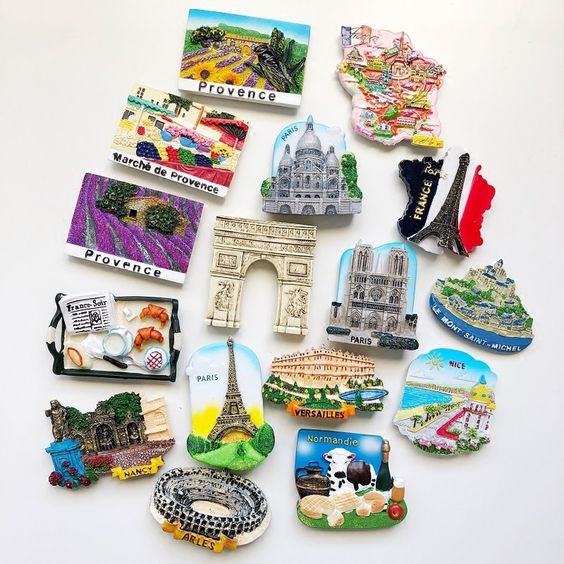
If you are planning a custom souvenir magnet program and sourcing from a factory in China, the product is only half the project. The other half is the part most first-time importers underestimate: getting the finished goods from the factory floor to your store shelf without a surprise invoice, a stuck shipment, or a magnet an airline will not carry. This guide is written for the person who actually owns the purchase order — the museum store manager, the park concession buyer, the tourism-board procurement lead, the gift distributor — and it focuses on importing custom magnets from China the way an experienced sourcing team does: by controlling the Incoterm, the freight mode, and the production clock before the first unit is molded. By the end you will know which term protects you, why a fridge magnet moves differently from a box of mugs, how long the door-to-shelf timeline really runs, and what belongs on your pre-shipment checklist.
What the Top Importing Guides Cover — and Where Magnets Break the Pattern
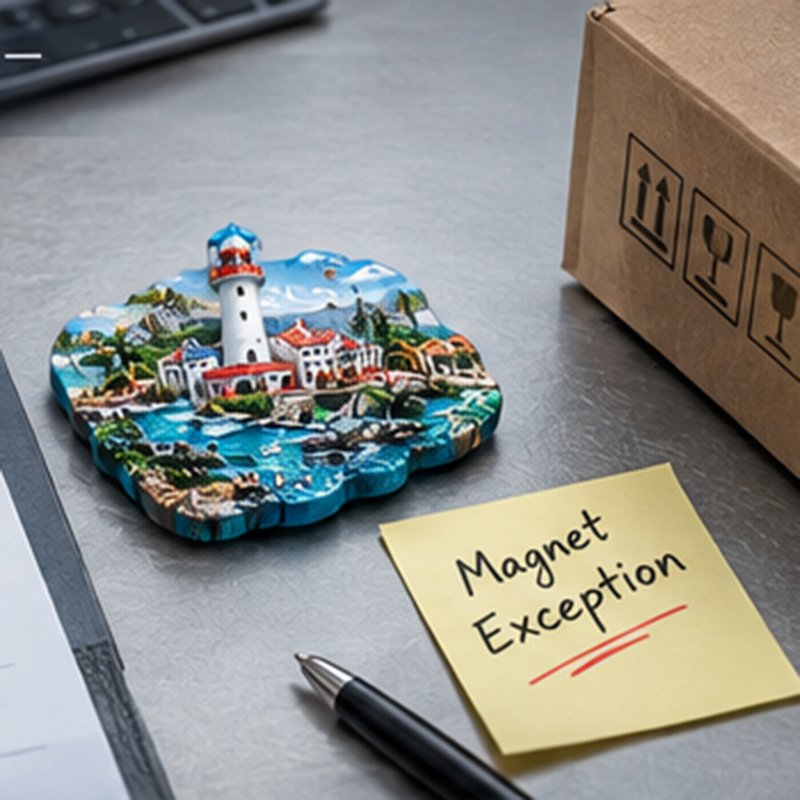
Most high-ranking articles on importing from China follow the same skeleton. They open with a definition of Incoterms, walk through EXW, FOB, CIF, and DDP, compare air and sea freight, touch on LCL versus FCL, and close with a customs-and-duty paragraph. That outline is correct as far as it goes, but it leaves a magnet buyer with three unanswered questions. First, it treats every product as a generic carton, when a resin magnet carries a specific transport classification that affects whether it can fly at all. Second, it rarely connects the Incoterm to the production lead time, so buyers pick a term without realizing the factory clock has already started. Third, it talks about duties in the abstract, while a souvenir magnet has a concrete, predictable trade classification that changes the math. The sections below take that standard outline and extend it specifically to custom resin and 3D magnets, using the real numbers a factory-direct supplier works to.
Incoterms 2020 in Plain Terms: Who Pays, Who Owns the Risk
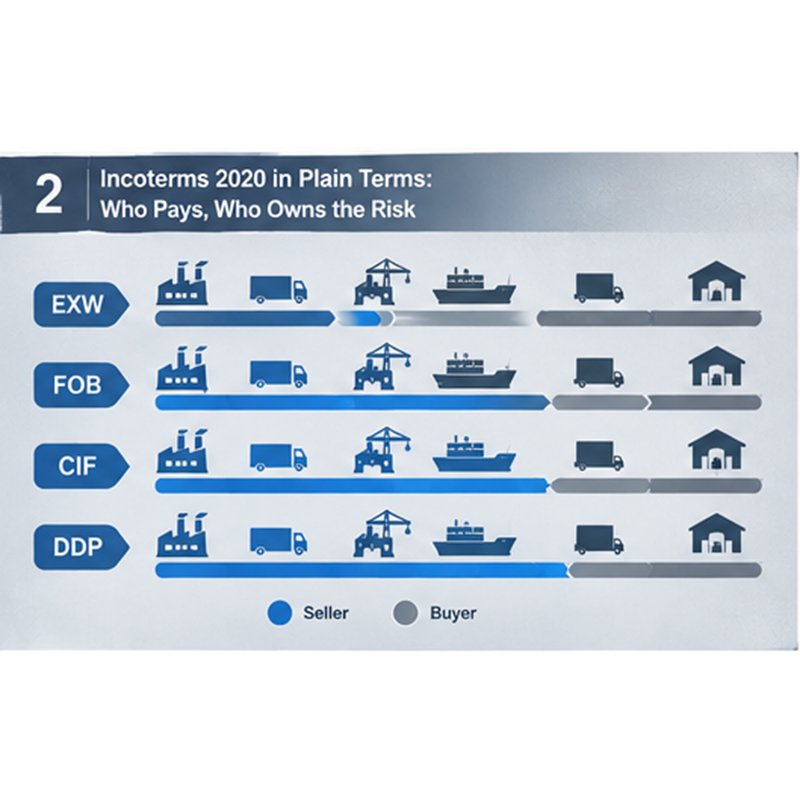
For magnet shipping Incoterms, the single most useful thing to understand is that Incoterms 2020 are not a contract of carriage and they do not set the price — they divide responsibility between the seller and the buyer. Four terms cover almost every magnet order, and the difference between them is entirely about where the risk and the cost transfer. The table below is the comparison that decides which one fits your team.
| Incoterm | Main freight arranged by | Import duty & tax paid by | Risk transfers to buyer at | Best for |
|---|---|---|---|---|
| EXW (Ex Works) | Buyer, from the factory gate | Buyer | When goods are made available at the factory | Buyers with their own freight forwarder in China |
| FOB (Free On Board) | Seller to port; buyer after sailing | Buyer | When goods cross the ship’s rail at the load port | Most small and mid-size importers |
| CIF (Cost, Insurance, Freight) | Seller to destination port | Buyer | Same as FOB; seller adds ocean insurance | Buyers who want the seller to book the ocean leg |
| DDP (Delivered Duty Paid) | Seller door-to-door | Seller | At the buyer’s door, duty already paid | Buyers who want one all-in landed price |
The practical read: under EXW you save nothing on freight but inherit every step, including Chinese domestic trucking and export documentation, which is risky if you have no entity in China. FOB is the workhorse for a museum or park buyer because the factory handles export clearance and loading, and you control the ocean booking and the import broker — you keep visibility without owning the whole chain. CIF simply adds seller-arranged insurance to FOB. DDP hands the entire journey to the seller, which is convenient but means you are quoted a single price that hides the freight and duty inside it, so you lose leverage to negotiate those legs later.
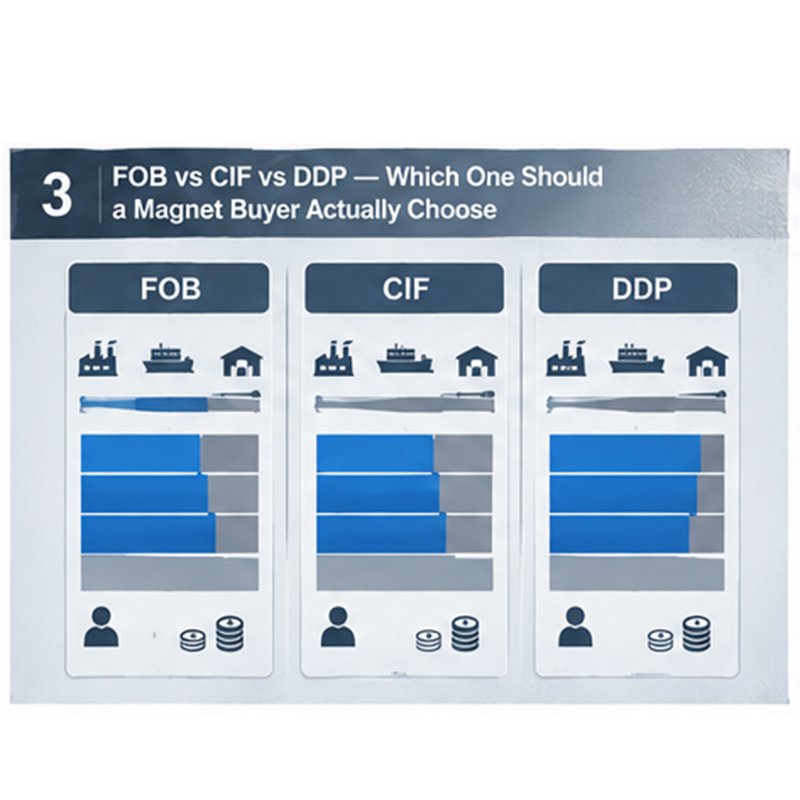
FOB vs CIF vs DDP — Which One Should a Magnet Buyer Actually Choose
Incoterms 2020 responsibilities for importers come down to one question: how much of the chain do you want to own? For a first-time souvenir program, FOB is usually the cleanest because it forces you to engage a freight forwarder and a customs broker early, which is exactly the relationship you will lean on for every reorder. CIF looks easier but quietly removes your control of the ocean booking, and a forwarder chosen by the factory is not working for you. DDP shipping for promotional products is the simplest on paper — one price, delivered to your dock — but it concentrates all the margin in the shipping leg, where a factory has no special buying power, and it removes your ability to claim the import duty as a cost separately if your accounting needs that split.
Whatever term you pick, keep the product cost separate in your head. A factory-direct resin magnet costs $0.23–0.25 per piece UV or $0.28–0.35 hand-painted, before freight. The one-time tooling — a $45 UV mold or $100 hand-painted mold — sits outside the Incoterm entirely: it is a product cost, not a shipping cost, and it is paid whether you ship EXW or DDP. Under FOB you add ocean freight, insurance, and import duty on top of the unit price; under DDP those are already inside the quoted number. The term changes who books the truck, not what the magnet costs to make.
Air vs Sea Freight for Magnets
The freight-mode decision is where shipping magnets from China splits from the generic playbook. Sea is almost always cheaper per unit and is the right default for a few thousand pieces, while air only makes sense for a small urgent top-up or a lightweight sample run. The trade-off is not just price — it is the magnet classification itself, which we cover in the next section. The comparison below is the one to show your finance lead.
| Factor | Air freight | Sea freight |
|---|---|---|
| Typical transit time | 3–10 days to the destination airport | 25–45 days to the destination port, plus drayage |
| Cost profile | High per kilogram; tolerable only on small, urgent loads | Low per cubic meter; the standard for bulk magnet orders |
| Best order size | Sample runs, event top-ups under a few hundred pieces | Anything at or above the 1,200-piece minimum per design |
| Magnet handling | Carrier magnetic-field rules apply at the airport | No airborne magnetic limit; simpler to book |
| Risk exposure | Lower transit damage; higher cost if misbooked | Longer in transit; pack for moisture and stacking |
For a national park or museum, sea is the default and air is the exception you reserve for a missed deadline. The decoration method on the piece — UV, screen, or hand-paint — does not change the freight math, but it does change the value density: a hand-finished keepsake justifies a faster lane sooner than a flat impulse piece. Our manufacturing processes guide covers how those decoration routes are chosen on the production side.
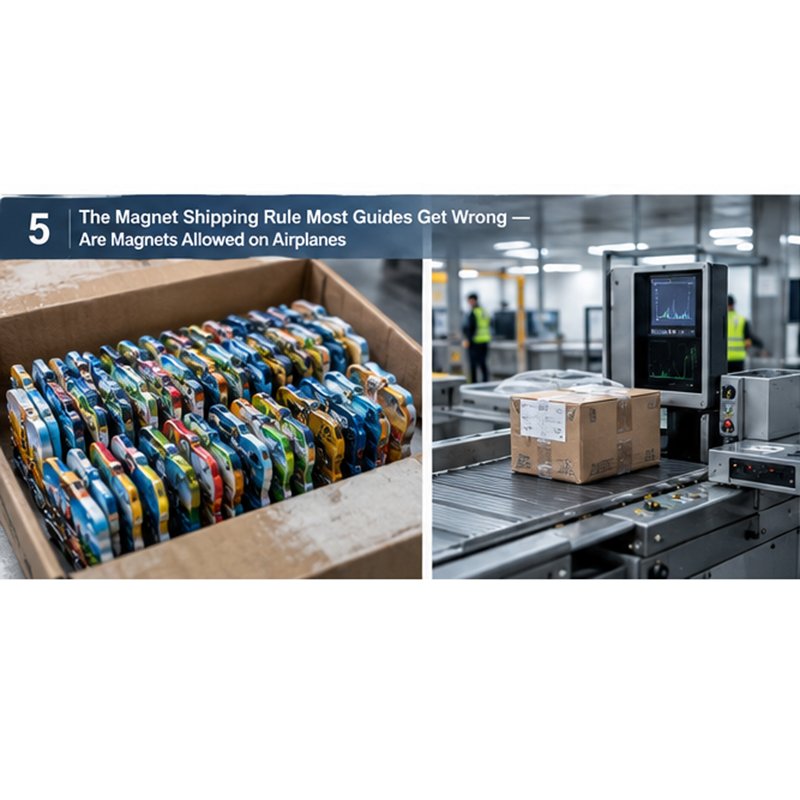
The Magnet Shipping Rule Most Guides Get Wrong — Are Magnets Allowed on Airplanes
The question every buyer eventually asks is the one most generic import guides answer wrong: are magnets allowed on airplanes? The short answer is yes, with a condition. Air carriers treat strong magnets as “magnetic material” and apply a field-strength rule — if the magnetic field at a set distance (commonly cited as roughly 2.1 meters, or about 7 feet, from the package) exceeds a defined threshold, the shipment must be documented and labeled as dangerous goods. A small souvenir fridge magnet, including a resin piece that holds at least 450g on a steel surface, sits far below that threshold in normal packaging and moves as general cargo. The mistake is letting a forwarder reject the carton by reflex instead of measuring it.
The follow-up is just as common: do magnets need to be demagnetized for shipping? No. Demagnetizing would destroy the product you paid for. The correct practice is to pack magnets so their fields cancel at the carton surface — place them back-to-back with opposite poles facing, or in close-packed layers — which keeps the external field low without touching the magnetism itself. For sea freight this is a non-issue; for air it is the difference between a routine booking and a refused shipment. If you ever ship by air, ask the factory for the carton’s measured field reading and hand it to the carrier upfront rather than waiting for a gate rejection.
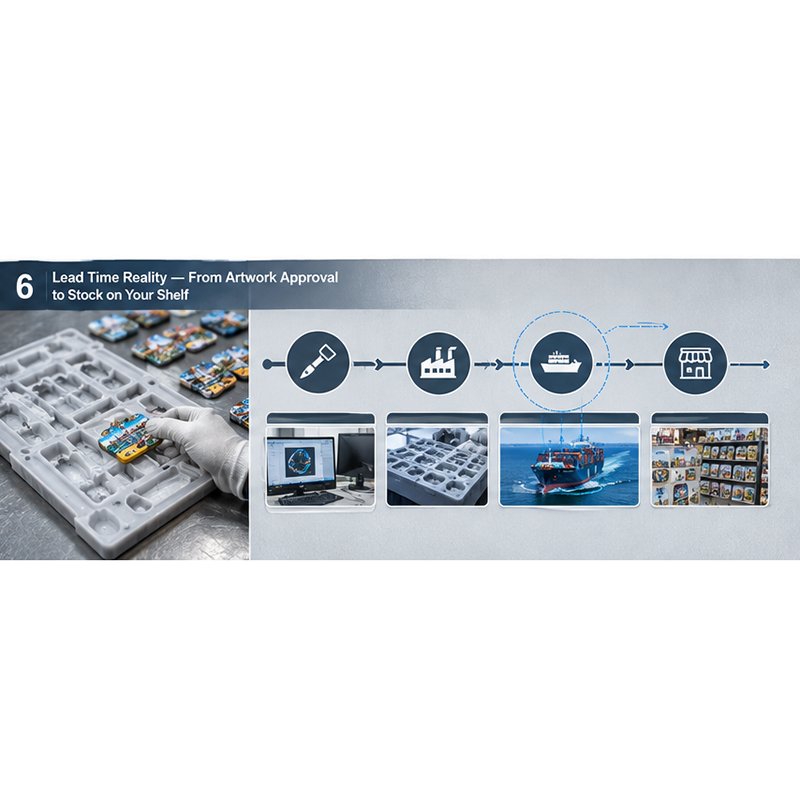
Lead Time Reality — From Artwork Approval to Stock on Your Shelf
The number that breaks a magnet import is almost never the freight — it is the production clock treated as flexible when it is not. A custom resin magnet program runs on a fixed factory timeline: sampling takes 7–21 days from approved artwork, then bulk production takes 45–60 days from sample approval. That is 52–81 days of unavoidable production before a ship ever leaves the port, and ocean transit on top of that. With a monthly capacity of 100,000 pieces, the plant is not the bottleneck — the calendar is. A buyer who sends artwork in May for a July peak is not unlucky; they are late by the calendar.
The production clock starts only after sample approval, so the artwork and approval step belongs in your timeline, not after it. Our sampling and proofing guide walks through that approval stage in detail, and our souvenir magnet program planning guide shows how to set the in-hand-by date backward from your peak season before you ever brief the factory. For a park with a six-week summer window, the mold and first sample should be approved no later than four months before opening weekend, because the bulk run plus ocean transit will consume the rest.
Customs Clearance and Duties for Promotional Magnets
Magnet customs clearance is more predictable than buyers expect because magnets fall into a stable trade classification and rarely attract punitive rates. A permanent magnet typically sits under the HS heading for permanent magnets, and the customs duty rate for promotional magnets depends on your destination country rather than on the product’s story — a museum logo magnet and a tourist-city magnet clear the same way. The work is documentation, not negotiation: a clean commercial invoice with the correct HS code, a packing list that matches the cartons, and a certificate of origin if your market rewards it.
Use a licensed customs broker for the first shipment and reuse their filing for reorders. The documents that smooth clearance are the same ones that prove compliance: a REACH 168-item test on the painted finish, an SVHC test, an SGS polyresin material report, and an MSDS for the magnet and paint. These are real files a factory-direct supplier should hold and share on request, and they answer the broker’s questions before they become holds. Our safety standards guide lists the full set we maintain, so your broker is never waiting on a missing paper.
Packaging That Survives the Trip
Magnet shipping packaging requirements start with the fact that a magnet is durable but its paint and backing are not forgiving in a container. The spec that protects both is EPE foam insert trays inside lot-numbered cartons, so a damaged carton traces to a batch rather than a mystery. Lot numbering also protects consistency across the ocean: when a reorder comes back a shade off, the lot number tells you whether it is a material shift or a one-off, and it lets your quality team confirm the piece still holds at least 450g and was inspected to AQL 2.5 before it left the plant. Before shipment, color and yellowing are verified under controlled light — a yellowing test runs 48 hours under 6500K retail light — so what arrives matches what you approved.
Good transit packaging is also display-ready packaging. For a tourism board distributing across many locations, backing cards and consistent cartons turn a warehouse box into something a front-line clerk can put on a peg in seconds. Our packaging guide details the EPE foam and lot-numbering spec we use, and it is worth reading before you finalize the carton size, because carton dimensions drive both the freight cube and the shelf setup.
LCL vs FCL for Small Importers
LCL vs FCL for small importers is the freight decision that follows directly from your minimums. The minimum order quantity on a custom resin magnet is 1,200 pieces per design, so a launch line of three hero designs is 3,600 pieces — almost always a less-than-container load (LCL) for a first test, and a full container (FCL) once reorders consolidate. LCL is priced per cubic meter and adds a destination consolidation fee, but it lets a small venue test a line without paying for empty container space. FCL drops the per-unit freight sharply and removes the risk of another shipper’s goods delaying your cartons at the consolidator.
The per-piece rate also steps down as the program deepens: tiered pricing breakpoints sit at 5,000, 20,000, and 50,000 pieces, so consolidating reorders across your heroes into one combined shipment almost always prices better than four separate ones. That same consolidation is what moves you from LCL to FCL, and it protects you from the lead-time crunch that hits every buyer at once in the weeks before a holiday season. Our bulk ordering guide covers how those tiers and the tooling cost amortize across reorders.
A Practical Pre-Shipment Checklist
Before you release the balance payment and the factory books the vessel, run this checklist. It is short on purpose — the goal is to catch the one item that quietly breaks the shipment:
- Confirm the Incoterm in writing and name the freight forwarder and customs broker who own each leg.
- Lock the in-hand-by date backward from your peak, allowing 7–21 days sampling, 45–60 days bulk, and full transit plus customs.
- Verify the HS code and duty rate with your broker before the commercial invoice is cut.
- For any air leg, request the carton magnetic-field reading and clear it with the carrier in advance.
- Confirm cartons are EPE-foam trayed and lot-numbered, matching the packing list exactly.
- Hold the compliance file — REACH, SVHC, SGS, MSDS — ready to send the broker on request.
- Reconcile the packed cube against your LCL or FCL booking so the container is neither short nor over.
Frequently Asked Questions
Are magnets allowed on airplanes?
Yes, with a condition. Carriers apply a magnetic-field limit measured at a distance from the package; a typical souvenir fridge magnet sits well below that limit in normal close-packed packaging and moves as general cargo. The risk is a forwarder rejecting by reflex, so for any air shipment ask the factory for the carton’s measured field and clear it with the carrier before booking.
Do magnets need to be demagnetized for shipping?
No. Demagnetizing would destroy the product. The correct method is to pack magnets so their fields cancel at the carton surface — back-to-back with opposite poles facing or in close-packed layers — which keeps the external field low without weakening the magnet itself. Sea freight has no airborne magnetic limit, so this only matters for air.
How long does sea freight from China take?
Typically 25–45 days to the destination port depending on routing and whether you land on the US West Coast, the US East Coast, or a European port, plus drayage and customs. That transit sits on top of the production clock — 7–21 days sampling and 45–60 days bulk — so plan the whole door-to-shelf window, not just the ocean leg.
What is the customs duty rate for promotional magnets?
It depends on your destination country, not on the magnet’s design, because magnets fall under a stable trade classification. The work is documentation: a correct HS code, a matching packing list, and a certificate of origin if applicable. A licensed broker handles the first filing and reuses it for reorders, so the rate itself is rarely the obstacle — missing paperwork is.
Should a small museum choose FOB or DDP?
For a first program, FOB is usually better because it puts you in contact with your own freight forwarder and customs broker early, which you will rely on for every reorder. DDP is convenient — one delivered price — but it hides the freight and duty inside the quote and removes your leverage to negotiate those legs later. Choose DDP only if you have no importing infrastructure at all.
Is LCL or FCL better for a first magnet order?
A first launch line of three designs at the 1,200-piece minimum is 3,600 pieces, which typically ships LCL. As reorders consolidate and your volume crosses into the 5,000, 20,000, and 50,000 piece tiers, a combined FCL shipment drops the per-unit freight and removes the consolidator delay risk. Start with LCL to test the line, move to FCL once sell-through proves the heroes.
Request a Quote
If you are planning a custom souvenir magnet program and want the shipping math applied to your specific designs, send your artwork, target retail price, and in-hand-by date through the form. We manufacture resin souvenir magnets factory-direct with in-house molding and painting, a 1,200-piece minimum per design, sampling in 7–21 days, and bulk in 45–60 days from approval — and we can quote FOB, CIF, or DDP so you see the landed cost before you commit. Plan the Incoterm and the production clock together, not separately: request a quote here.

- Importing Custom Magnets from China: A Shipping & Incoterms Guide for B2B Buyers - October 29, 2026
- Souvenir Magnet Program Planning: What Actually Sells for Museums, Parks & Tourism Boards - October 20, 2026
- Custom Fridge Magnet Sampling and Proofing: The B2B Guide to Approving a Sample (2026) - October 15, 2026