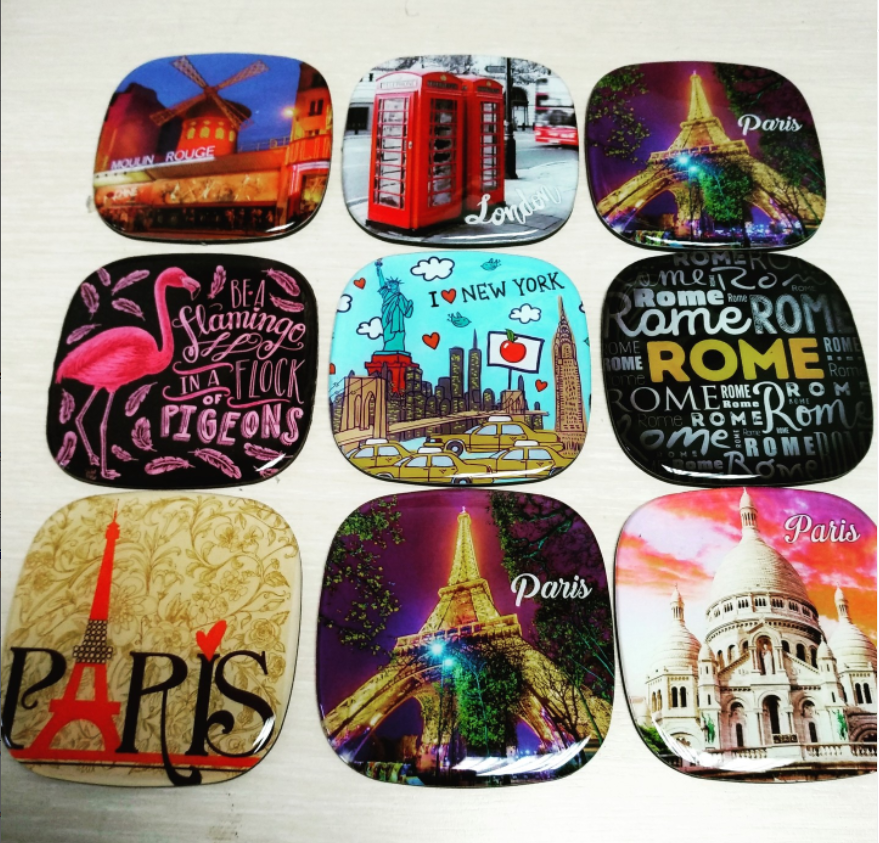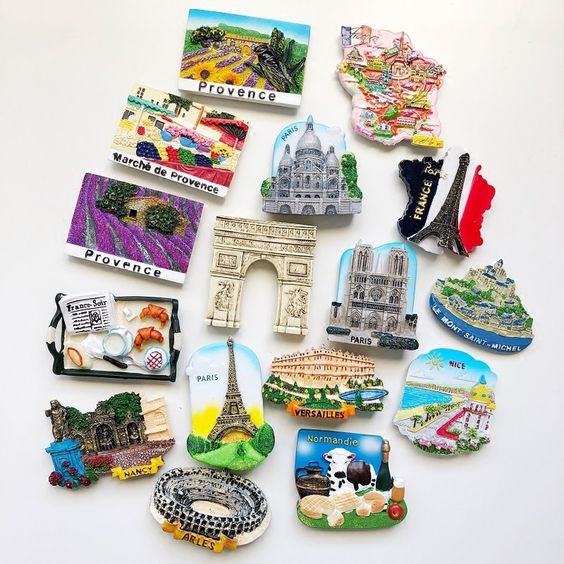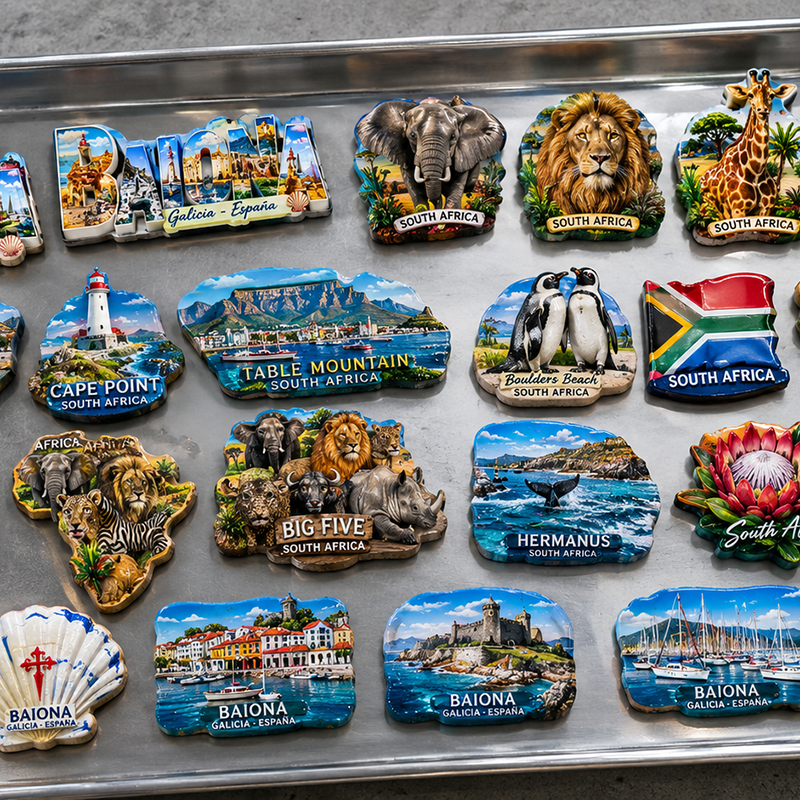
A souvenir magnet is the cheapest item in your store and the one most likely to walk out the door with a visitor. That combination is exactly why it is also the easiest program to get wrong. Most museums, national parks, and city tourism boards do not have a magnet program — they have a peg full of designs bought on a hunch, half of which never earn their shelf space back. This guide is a planning document, not a catalog. It is written for the person who actually owns the buy: the museum store buyer, the park concession product manager, the tourism-board creative procurement lead. If you are building or fixing a custom souvenir magnet program, the goal here is to plan it on the numbers that matter — sell-through, landed cost, minimum order quantity, and the production clock — instead of on taste alone. A custom souvenir magnet program is the most defensible impulse category you can run, and the difference between a winner and dead stock is almost always decided before the first unit is ordered.
What the Research Says Buyers Actually Plan Around
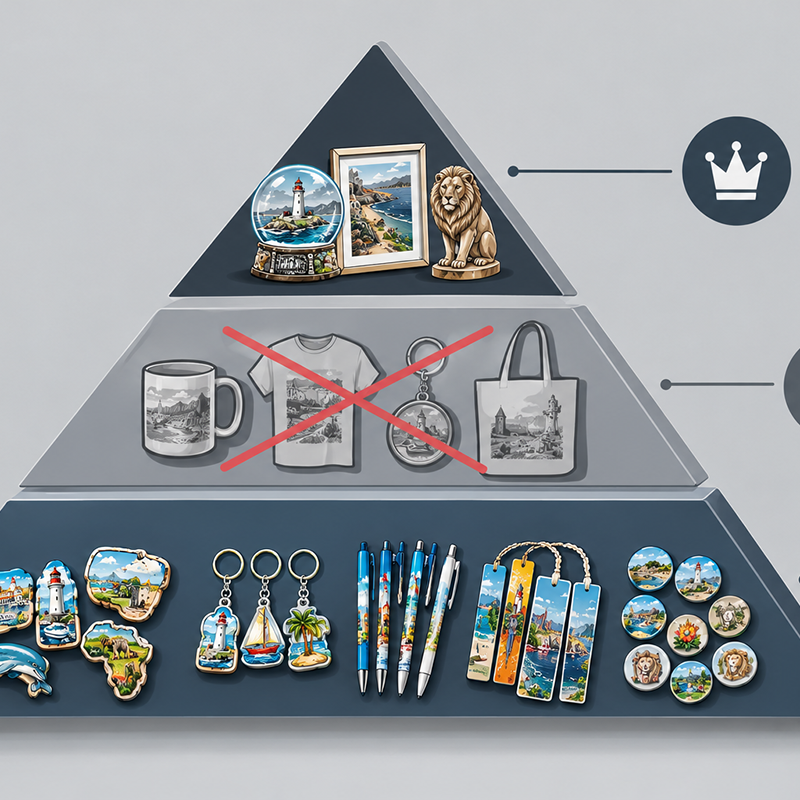
Before building anything, look at how the buyers who already run strong magnet sections think. Good souvenir magnet planning starts with this pattern, which shows up again and again across museum, zoo, and attraction retail: low-price items drive unit volume, high-price items drive dollars, and the category most buyers under-order is the dependable middle — a well-made cast or resin piece that carries a real margin and still feels like an easy purchase for a family. Magnets sit at the velocity end: highest unit turnover, thinnest dollar contribution per sale, and the item most likely to sell out during peak. Keychains are a step up in price with similar velocity. Ornaments are seasonal but collectible year over year. Cast figurines are the keepsake tier with the highest dollar per sale. The lesson is not which item to add. It is which item to cut. Shelf space is finite, and every slow design is capital sitting still.
The strongest single habit among experienced gift-store buyers is to order fewer designs deeper and let sell-through pick the winners. One deep run of a proven hero design beats three shallow runs of designs nobody has shelf-tested. That instinct directly shapes how you should approach a custom program: commit to a small number of heroes, then expand the line only after real data tells you which image your visitors actually reach for.
Start With the Constraint That Breaks Most Programs: the Production Clock
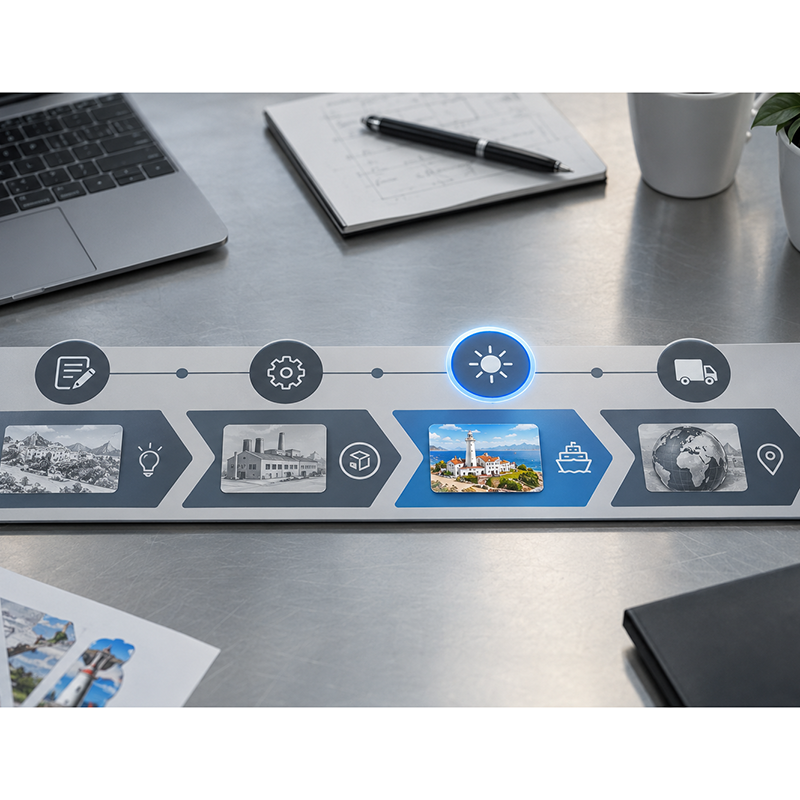
The number that breaks a bulk magnet order is almost never the artwork. It is lead time treated as flexible when it is not. A custom resin magnet program runs on a fixed factory clock: sampling takes 7–21 days from approved artwork, then bulk production takes 45–60 days from sample approval. That is 52–81 days of unavoidable production time before a ship ever leaves port, and ocean freight on top of that. Buyers who order in May for a July peak are not unlucky. They are late by the calendar. A factory-direct workshop that serves tourism retail gives you that window as a fixed fact, not a vague promise. Plan backward from your peak selling week, not forward from the day you finally send artwork, and most season-miss disasters disappear before they start.
For a national park concession or a museum with a six-week summer window, that clock is the whole game. The mold and first sample should be approved no later than four months before your opening weekend, because the bulk run plus transit will consume the rest. A tourism board running a regional campaign has the same exposure: the artwork is the fun part, but the clock is the part that decides whether your launch lands in stores or in a warehouse.
Choosing the Right Format: Flat, 3D, or Interactive
One idea can usually become several souvenir formats, and the format decides both the price point and the manufacturing path. A landmark can become a flat printed magnet, a 3D resin relief, a metal layered piece, or an interactive kinetic magnet. The best choice depends on your target customer, your retail price, and your expected order quantity. A small flat magnet works well as an affordable impulse buy under the price where a visitor stops to think. A detailed 3D resin magnet can be positioned as a higher-value collectible and carries more perceived worth on the peg.
For a custom souvenir magnet program aimed at museums and parks, the 3D resin route is the workhorse: it reproduces architecture, mascots, and cultural symbols with real depth, and it scales from a single hero design to a full collectible series. Interactive formats — spinning elements, sliding trams, hinged openings — are growing fast at the premium end and can lift average order value, but they add complexity and cost, so they belong in a line after the hero has proven itself, not in a first test assortment.
The Data Every Buyer Should See Before Pricing
The table below is the comparison that decides whether a magnet program is profitable. It is built from industry-typical wholesale bands at gift store quantities, set against the documented factory-direct resin numbers a buyer can actually lock in. Use it to see where a resin magnet sits versus the other core souvenir formats, and where your retail price needs to land.
| Format | Typical wholesale cost | Decoration route on a resin magnet | Role in the program |
|---|---|---|---|
| Flat printed magnet | $2–$4 per unit | UV print at $0.23–0.25 per piece | Highest velocity, thinnest margin, the impulse anchor |
| 3D resin magnet (hand-finished) | $0.28–0.35 per piece at factory direct | Hand-painted at $0.28–0.35 per piece | Keepsake tier, higher perceived value, stronger story |
| Keychain | $2–$5 per unit | Same mold family, different backing | Slightly higher price, similar velocity, durable |
| Cast figurine | $8–$18 per unit | Resin body, display only | Highest dollar contribution, lower volume |
The practical read for a buyer: a factory-direct resin magnet at $0.23–0.25 for UV or $0.28–0.35 for hand-painted leaves far more room than a generic $2–$4 wholesale band, because you are removing the trading-company markup. The resin magnet wholesale math is simple — a factory-direct line drops the trading-company layer, so more of the price stays with you. The gap between magnet wholesale cost vs retail price is where your margin lives, and most attraction retail prices at keystone or better — retail at least double the landed wholesale cost. On a resin magnet that means a clean $0.99–$1.99 retail on the impulse tier and $3–$6 on a hand-finished keepsake, both with healthy margin. Watch landed cost, not unit cost: freight and the amortized mold charge belong in the number you double.
Minimum Order Quantity: What 1,200 Pieces Really Means
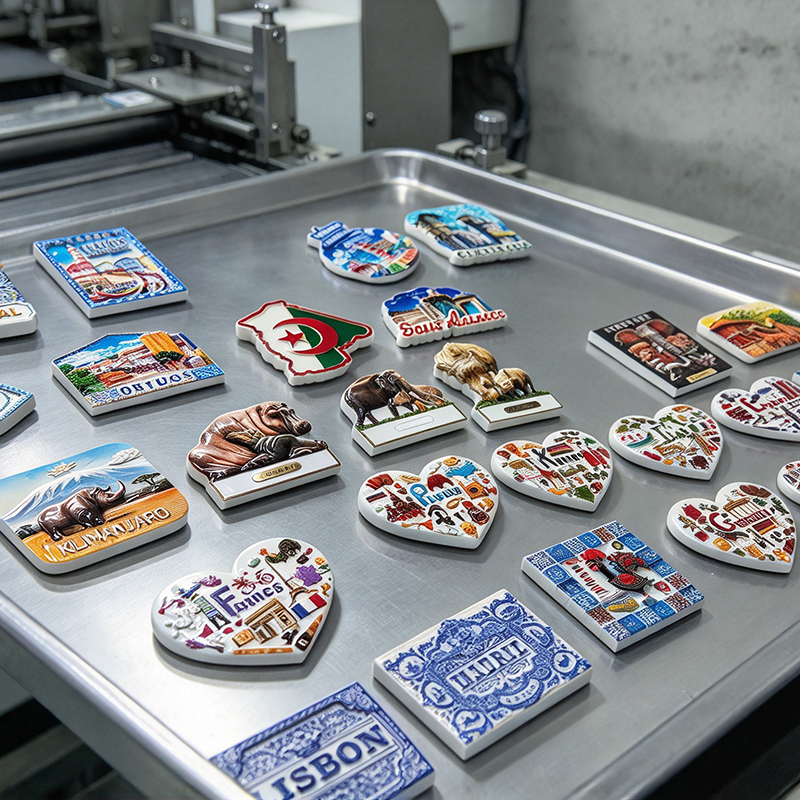
The minimum order quantity on a custom resin magnet is usually stated as a single number, and on a factory-direct line it is 1,200 pieces per design. Two things hide inside that sentence that buyers miss. First, the minimum is per design, not per order. You can run a UV skyline at 1,200, a hand-painted mascot at 1,200, and a screen-printed logo at 1,200 in the same program and ship them in one container. The factory cares about reaching its economic run size on each artwork, not about how many SKUs share the truck. Second, 1,200 exists for a reason. Below that, mold setup, color matching, and sampling overhead per piece outweigh the resin and labor. Set the floor at 1,200 and a small museum can launch a real test assortment without committing to 10,000 of a design it has never shelf-tested. Push a factory below its floor and you usually pay for it somewhere else — a higher per-piece rate, or a weaker quality sample.
For a small venue, that means a launch line of three to four hero designs at 1,200 each is a realistic, affordable test. The custom magnet MOQ for small museum buyers is exactly the same 1,200 per design — not a higher gate for ordering less — which is what makes a first assortment possible without a warehouse of debt. For a tourism board covering a region, it means one shared mold family across locations, reordered in depth once sell-through proves the heroes.
Tooling Cost and Why the Second Run Is the Profitable One
A custom magnet carries a one-time tooling charge that does not come back, because the mold physically exists afterward and stays in the program. On a factory-direct resin line that is $45 for a UV design and $100 for a hand-painted design, per design, charged once. That cost spreads across every reorder afterward, which is why the second run is always the profitable one. A program of three designs at 5,000 pieces each, hand-painted, means $300 of tooling spread over 15,000 units — a rounding error in the total program, and the difference between a piece with hand-finished depth and a flat print. The useful question is never “how do I get the sample for free.” It is “how do I avoid needing a second round of tooling,” which is a brief-quality question, not a price question.
Tiered pricing breakpoints reward depth: the per-piece rate steps down at 5,000, 20,000, and 50,000 pieces. Consolidating reorders across several designs into one combined order almost always prices better than four separate ones, and it protects you from the lead-time crunch that hits everyone at once in the weeks before a holiday season.
What Sells: Designing for the Shelf, Not the Screen
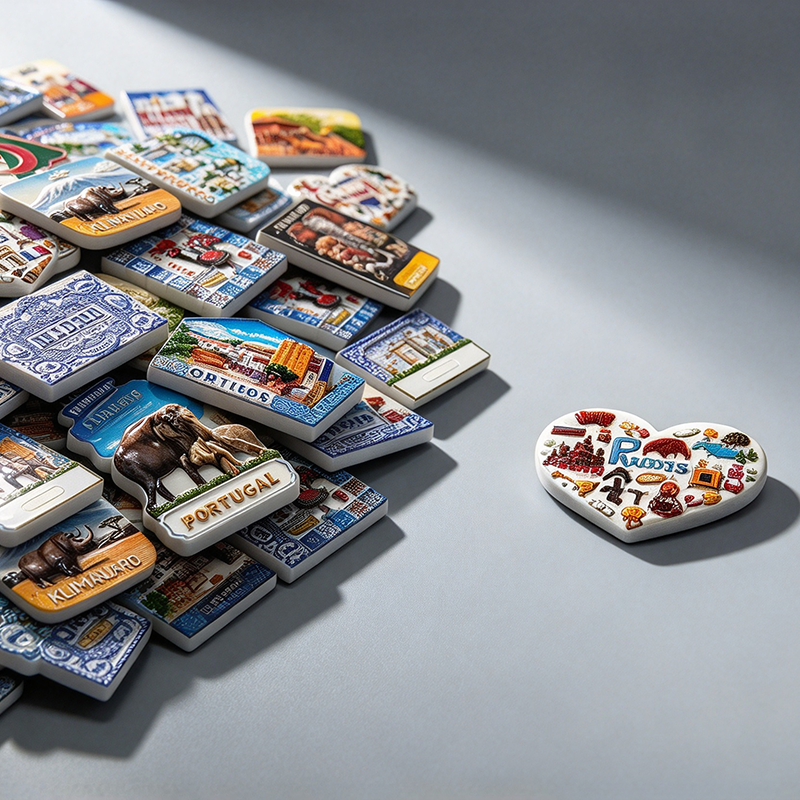
The biggest planning mistake is treating a flat design file as a production file. Cartoon gradients and fine shadows that look perfect on a monitor do not survive a mold or an enamel line. What sells in a museum or park store is specific, not generic: a particular artifact, a real building profile, an iconic view, a local animal. Museum souvenir magnets and the best selling tourist magnet designs all share that one trait — they are unmistakably from your place, not from a stock library. Avoid stock imagery. Lean on what makes your location special, and translate it into shapes a mold can actually hold — simplify complex linework, thicken fine lettering, and confirm the silhouette reads at three inches across a crowded peg. A magnet that tells a micro-story of your place outperforms a generic landmark silhouette every time.
A quiet win that experienced gift store buyers use is the annual edition: the same mold with a new year or a new event date turns one product into a returning collector item. Visitors who bought last year’s piece come back for this year’s. That single habit turns a per-design mold into a multi-year asset and keeps reorder math clean, because the geometry is already proven and only the artwork or date changes.
Quality and Compliance: The Checks That Protect Your Brand
A poorly made magnet does not just fail to sell — it reflects on your institution. Quality control on a resin program should run to AQL 2.5, and the magnet backing should be tested for real holding duty: a finished piece should hold at least 450g on a steel surface, verified across 100% of output rather than sampled. For color, the practical move is to approve the color as photographed beside a reference and state that in writing, because memory is a terrible standard and color is the largest source of reorder disputes. For longevity, request a yellowing test — 48 hours under 6500K retail light is the standard that predicts how a piece ages under warm display lighting.
On compliance, ask what documents travel with your order. A documented file can include a REACH 168-item test on the painted finish, an SVHC test, an SGS polyresin material report, a CSDS for the paint, an MSDS for the magnet, a transport test report for the resin magnet, and supplier verification such as TÜV Rheinland. For CPSIA and EN71, the correct answer is a program-specific third-party lab report confirmed before you approve, not a generic certificate — frame any unconfirmed requirement as available on request.
Capacity and Reorder Timing: Stock to Attendance
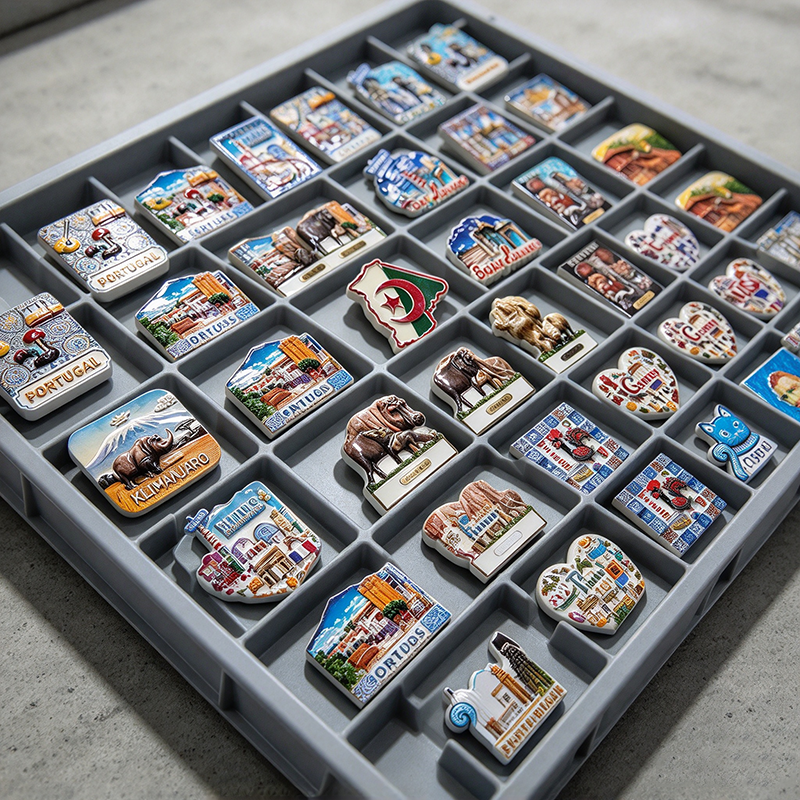
Order depth should follow your visitor count for the season, not your enthusiasm. A useful starting rule from attraction retail is to stock roughly one unit of an impulse item for every fifty to eighty visitors in your season, then adjust after one full cycle of real sell-through. Set a reorder trigger: when a design drops below thirty percent of the original run, reorder — do not wait for the empty peg. Reorder before the peak, not during it, because lead times stretch for everyone at once before a holiday. Track by design, not by category: one strong hero can hide three weak ones in a category-level report. A factory with a monthly capacity of 100,000 pieces can absorb a consolidated reorder across your heroes without crowding your slot, as long as you give it the clock it needs.
For a national park gift store, the same attendance math applies, and a magnet for national park concession counters runs on the identical reorder logic — order depth by visitors, trigger at thirty percent, reorder before peak. Tourism board souvenirs should be planned against a regional event calendar so the heroes land in every location at once. Knowing how to plan a souvenir magnet line for a small venue is mostly a discipline problem, not a budget one: three or four heroes, one mold family, and the patience to let sell-through decide the rest. Annual edition souvenir magnet ideas start with one proven hero mold and a new date each season, which keeps tooling amortized and builds a collector habit. Your souvenir magnet reorder quantity should follow attendance, never enthusiasm.
Packaging and the Last Mile
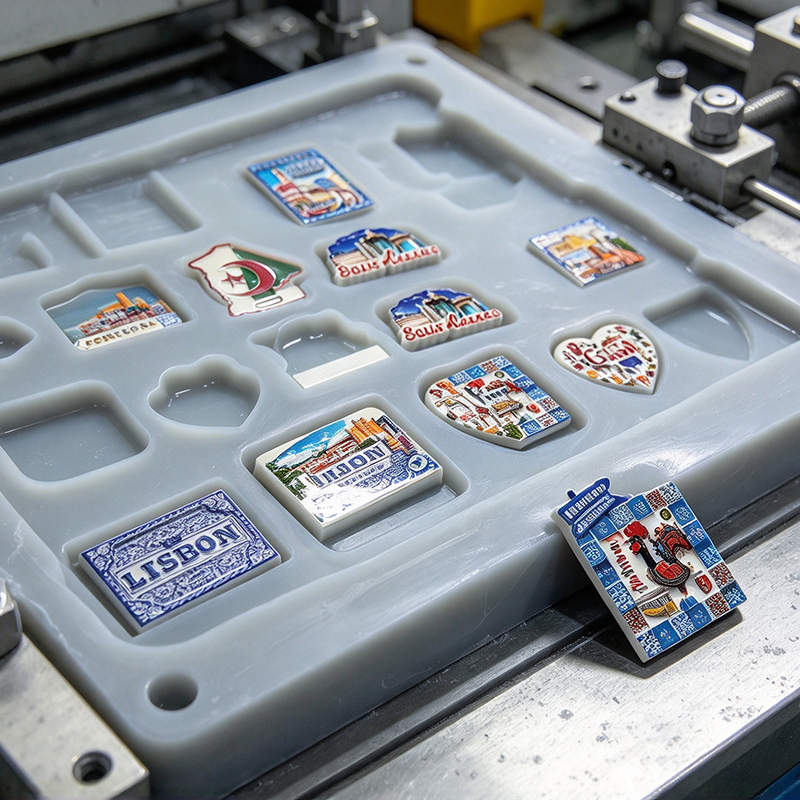
Magnets are durable but the paint and the magnet backing are not forgiving in transit. Plan for EPE foam insert trays and lot-numbered cartons so a damaged shipment is traceable to a batch, not a mystery. Lot numbering also protects your reorder consistency: when a hero comes back a shade off, the lot number tells you whether it is a material shift or a one-off. For a tourism board distributing across many locations, display-ready backing cards and consistent packaging turn a warehouse box into something a front-line clerk can put on a peg in seconds, which is the difference between a program that scales and one that stalls at the loading dock.
Frequently Asked Questions
What sells in a museum gift store?
The highest-velocity sellers are specific, place-based designs — a real artifact, building profile, or local animal — priced as an easy impulse buy, usually under the point where a visitor stops to think. A well-made 3D resin version of the same hero, positioned as a collectible, sells at a higher price to the same visitor who bought the flat one. Generic stock imagery is the item most likely to gather dust.
How do I plan a souvenir magnet line for a small venue?
Start with three to four hero designs at the 1,200-piece minimum per design, all from one mold family so tooling stays cheap, and let one season of real sell-through tell you which hero to reorder in depth. Plan backward from your peak week by at least four months to clear sampling, bulk production, and transit. Do not launch ten designs hoping one works — launch four you believe in and cut the losers fast.
What is the real wholesale cost versus retail price for a custom magnet?
Typical wholesale bands for cast and decorated souvenir magnets run about $2–$4 per unit, but a factory-direct resin magnet lands far lower — $0.23–0.25 per piece UV or $0.28–0.35 hand-painted — because there is no trading-company markup. Most attraction retail prices at keystone or better, so retail is at least double the landed cost. Always double the landed number, which includes freight and the amortized mold charge, not just the unit price.
Can a small museum afford the custom magnet MOQ?
Yes. The 1,200-piece minimum is per design, not per order, so a small museum can run three or four designs at 1,200 each in one shipment and still launch a credible test line. Below that floor, setup and sampling overhead per piece outweigh material and labor, so the rate creeps up or quality slips — 1,200 is the economic run size, not an arbitrary gate.
What is an annual edition souvenir magnet and why use one?
It is the same approved mold produced with a new year or event date each season. Because the geometry is already proven, only the artwork or date changes, which keeps tooling cost amortized and reorder math clean. It also builds a collector habit: visitors who bought last year return for this year’s piece, turning a one-time mold into a multi-year asset.
How much should I reorder and when for a national park concession?
Stock roughly one impulse unit per fifty to eighty seasonal visitors, set a reorder trigger at thirty percent remaining, and reorder before the peak rather than during it. Lead times compress for every buyer at once before a holiday, so the park that orders in January for a June opening beats the park that orders in April and misses July.
Request a Quote
If you are planning a custom souvenir magnet program for a museum, park, or tourism board and want the numbers applied to your specific designs, send your artwork, target retail price, and in-hand-by date through the form. We manufacture resin souvenir magnets factory-direct with in-house molding and painting, a 1,200-piece minimum per design, sampling in 7–21 days, and bulk in 45–60 days from approval. Start your program with a quote that plans backward from your season, not forward from a hope: request a quote here.

- Souvenir Magnet Program Planning: What Actually Sells for Museums, Parks & Tourism Boards - October 20, 2026
- Custom Fridge Magnet Sampling and Proofing: The B2B Guide to Approving a Sample (2026) - October 15, 2026
- Custom Mold Ownership & Design IP Protection for Souvenir Magnets: A B2B Buyer’s Guide (2026) - October 9, 2026