If you have ever opened a bulk order for custom resin fridge magnets and watched the pieces arrive a week after your peak season ended, you already know the painful part is not the artwork. The artwork is fun. The painful part is everything underneath it: the minimum order quantity that decides how small you can launch, the tooling charge that shows up once and then haunts your reorder math, the lead time that quietly eats your best selling weeks, and the shipping line that turns a $0.25 magnet into a $0.42 magnet by the time it reaches your dock.
This guide is written for the people who actually place those orders — the buyer for a museum store, the owner of a national park concession, the product manager at a city tourism chain, the promo distributor quoting a corporate client, the gift-brand founder scaling a hero SKU. It uses the real production numbers from a factory-direct resin magnet workshop, the same specs we quote every day, so you can plan a bulk program on facts instead of hope. No filler. Just the numbers that decide whether your shelf is full or empty in July.
We already covered how UV, screen, epoxy dome, and hand-painting compare. This piece picks up where that one stops: once you know the process, here is how you actually buy it in volume without losing the season or the margin.
Who This Guide Is For
Bulk resin magnet programs look the same from the outside — a box of printed souvenirs — but the buyer behind each box has a different constraint. Naming yours up front changes which parts of this guide matter most.
- Museum and park retail buyers live and die by season. Your peak is a six-week window, not a year. Lead time is your enemy number one.
- Tourism and destination chains reorder the same hero designs across dozens of locations. Tooling reuse and batch consistency matter more than first-unit price.
- Promo and corporate gift distributors quote clients who want low per-piece cost and a logo that survives a trade show. Volume tiers and print durability are your levers.
- Gift-brand founders are launching small and betting on a repeat purchase. A low minimum order quantity is the difference between a test and a warehouse of debt.
If you sit in any of those seats, the sections below walk from the smallest commitment (MOQ) to the largest (a full container landed at your door), with the math shown in plain numbers.
The Number That Breaks Most Bulk Orders
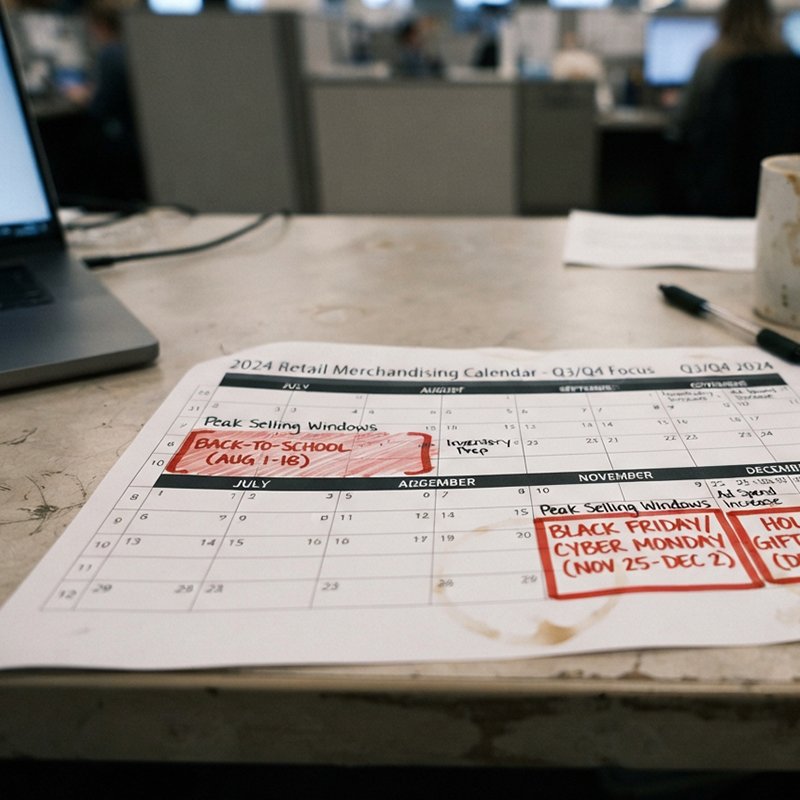
Before MOQ, before price, before anything else: the single number that breaks a bulk magnet order is lead time treated as flexible. It is not flexible. A custom resin magnet program runs on a fixed clock — sampling in 7–21 days from approved artwork, then bulk production in 45–60 days from sample approval. That is 52–81 days of unavoidable factory time, before a ship ever leaves port.
Buyers who order in May for a July peak are not unlucky. They are late by the calendar. The factories that understand tourism retail give you that window as a fixed fact, not a vague “we will try.” Plan backward from your peak selling week, not forward from the day you finally send artwork, and most bulk-order disasters disappear before they start.
Minimum Order Quantity — What 1,200 Pieces Really Means
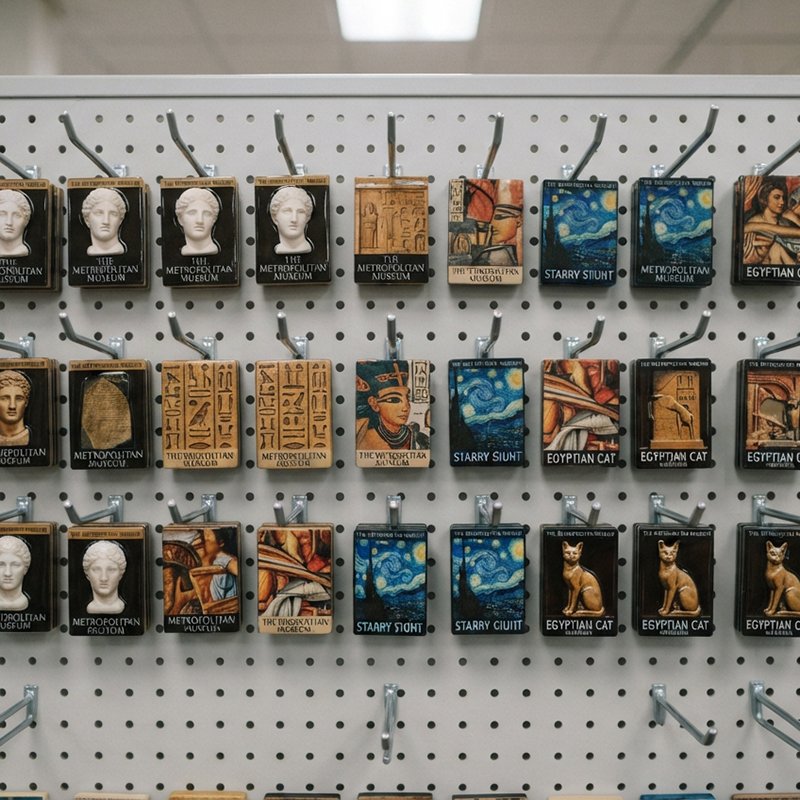
The minimum order quantity on a custom resin magnet is usually stated as a single number. On a factory-direct line it is 1,200 pieces per design. Two things hide inside that sentence that buyers miss.
First, the minimum is per design, not per order. You can run a UV skyline at 1,200, a hand-painted mascot at 1,200, and a screen-printed logo at 1,200 in the same program, and ship them in one container. The factory cares about reaching its economic run size on each artwork, not about how many SKUs share the truck.
Second, 1,200 exists for a reason. Below that, the mold setup, color matching, and sampling overhead per piece outweigh the resin and labor. Set the floor at 1,200 and a buyer can launch a real test assortment without committing to 10,000 of a design they have never shelf-tested. Push a factory below its floor and you usually pay for it somewhere else — a higher per-piece rate, or a weaker QC sample.
| Process | MOQ per design | Why that floor | Can you mix designs in one shipment? |
|---|---|---|---|
| UV printing | 1,200 pcs | Mold + color profile setup cost spread across the run | Yes — ship together, MOQ applies per artwork |
| Screen printing | 1,200 pcs | Screen preparation cost per color | Yes |
| Epoxy dome | 1,200 pcs | Doming jig and resin batch minimum | Yes |
| Hand-painting | 1,200 pcs | Artisan queue and sample reference set | Yes |
The practical reading: launch at 1,200 per hero design, prove the seller, then scale the winners on reorder. That is how a regional park grows a magnet wall from three SKUs to thirty without betting the season on untested art.
Tooling and Mold Costs — The One-Time Math
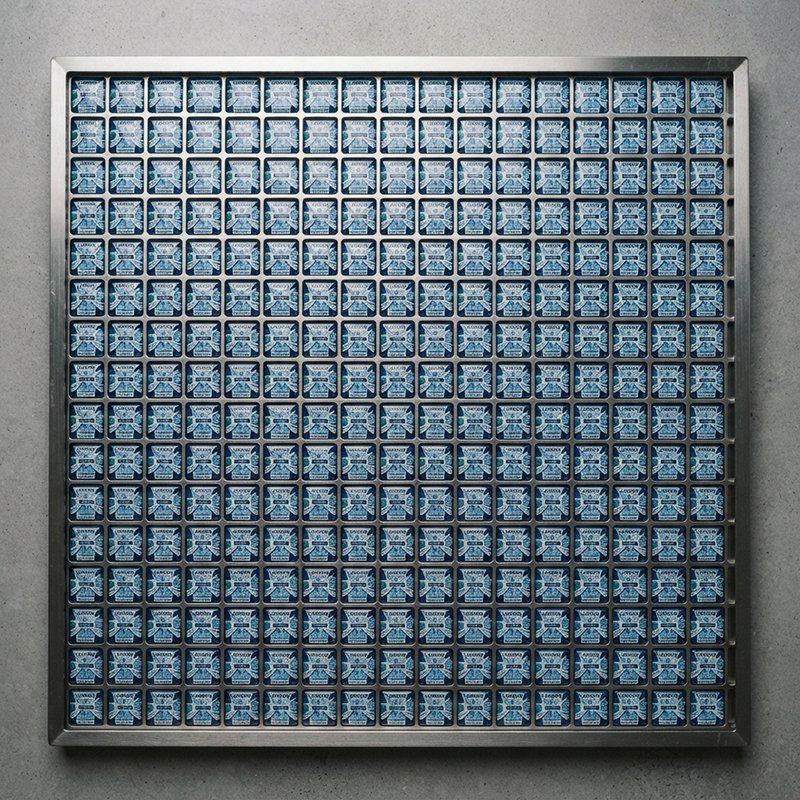
The mold charge is the line item buyers forget to carry into their reorder math, because it shows up once. On a factory-direct resin line it runs about $45 for a UV or screen mold and $100 for a hand-painted mold. Here is the part that saves money over a year: the mold is kept on file, and reorders of the same design do not pay it again.
What that means in practice. A museum launches a UV lighthouse magnet at 1,200 pieces and pays the $45 mold. The design sells through. The reorder at 3,000 pieces pays $0 mold. The magnet that cost $0.25 with tooling in the first run effectively costs less on the second, because the one-time charge is now spread over more units in your own accounting — even though the factory quote per piece barely moved. Buyers who track landed cost per season, not per order, are the ones who see this.
Two cautions. If you change the artwork even slightly — new text, resized shape, different backing — it is a new mold, not a free reorder. And if a supplier “lost” your mold between orders, that is a red flag about their file control, not a cost you should accept twice. Ask whether the mold is retained and for how long before you place the first run.
| Process | One-time mold charge | Reorder same design | Minor artwork change |
|---|---|---|---|
| UV printing | ~$45 | No new mold | New mold required |
| Screen printing | ~$45 (per screen) | No new screen for same art | New screen per changed color |
| Epoxy dome | ~$45 | No new mold | New mold required |
| Hand-painting | ~$100 | No new mold | New mold required |
Per-Piece Pricing at Volume — The Real Cost Curve
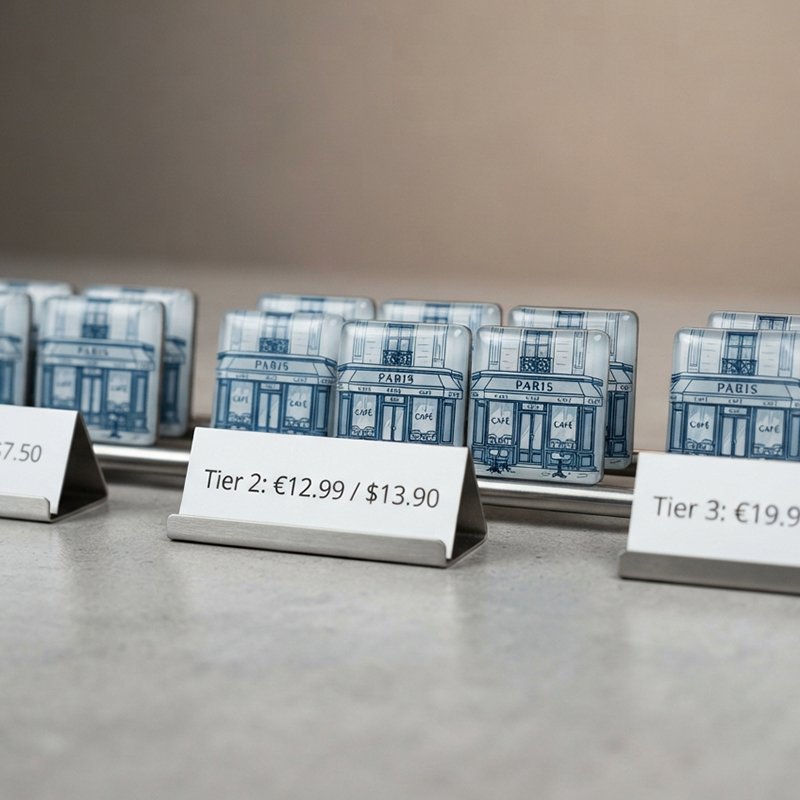
Per-piece price is where every bulk quote starts, and where most buyers stop reading. The honest curve on a factory-direct line, at the 1,200-piece minimum, is about $0.23–0.25 per piece for UV printing and $0.28–0.35 for hand-painting. Screen printing can come in lower on dead-simple one-color art at high volume; epoxy dome adds a layer on top of whichever base it covers.
Volume does bend the curve, but not as hard as a trading company’s brochure implies. Resin magnet production is partly automated and partly labor, so the discount from 1,200 to 10,000 pieces is real, and the discount from 10,000 to 50,000 is smaller. Past a full container you are mostly negotiating freight and packaging, not the resin.
| Order size (UV, per design) | Indicative per-piece | What drives the move |
|---|---|---|
| 1,200 pcs | ~$0.25 | Floor run; mold and setup amortized thin |
| 5,000 pcs | ~$0.23 | Setup cost spread, labor efficiency up |
| 10,000 pcs | ~$0.21–0.23 | Full production batch, less changeover |
| 30,000+ pcs | ~$0.20 | Material buy-in and line dedication |
| Full container (100k+) | Best tier | Negotiate freight and carton, not resin |
Notice the trap: a quote of $0.18 at 1,200 pieces is almost always a weaker magnet or a thinner coat, not a better factory. The 450g pull-force minimum and the 48-hour yellowing test cost real material. Price the total cost of ownership — returns, reputation, reorders — not the sticker. A $0.25 magnet that lasts the season beats a $0.18 magnet that comes back as a complaint.
Total Landed Cost — What the Quote Does Not Show
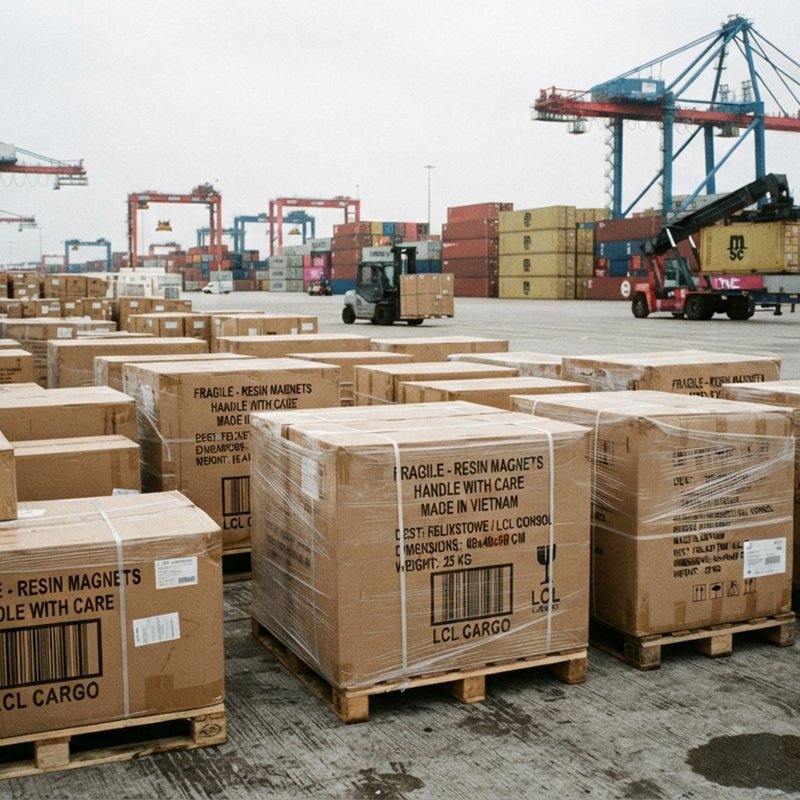
The factory quote is almost never your cost. It is the cost of the magnet leaving the workshop. Between that door and your shelf sit packaging, freight, customs, and a broker — and together they decide whether your “cheap” bulk order was actually cheap. The way to see it is a worked example.
Take a real order: 10,000 UV printed resin magnets, a city skyline for a tourism chain, shipped to a US West Coast warehouse.
- Unit cost (factory, EXW): $0.25 × 10,000 = $2,500
- Retail packaging: polybag plus a printed header card at ~$0.04/pc = $400
- Cartons: 1,000 pcs per carton = 10 cartons at ~$3 each = $30
- Ocean freight (LCL share): the order is light, about 0.3 CBM, roughly $220 to the US West Coast
- Customs broker + ISF filing: ~$85 flat
- Import duty: most promotional resin magnets enter the US at a low or zero MFN rate, but always confirm your HTS code with a broker — do not assume
Add it up and the landed cost is about $3,235, or ~$0.32 per piece at your dock. The factory quote said $0.25. The number that matters said $0.32. That gap is where bulk programs win or lose, and it is why asking only for the ex-factory price is the most expensive habit in souvenir buying.
| Cost layer | Amount (10k UV order) | Who controls it |
|---|---|---|
| Factory unit cost (EXW) | $2,500 ($0.25/pc) | Supplier + your volume tier |
| Retail packaging | $400 | You — design the pack |
| Cartons | $30 | Supplier, minor |
| Ocean freight | ~$220 | Freight market + Incoterm |
| Broker + ISF | ~$85 | Your broker |
| Landed total | ~$3,235 (~$0.32/pc) | — |
Incoterms decide who carries each layer. EXW means you collect from the factory gate and own everything after. FOB means the supplier gets it on the ship at the origin port, and your risk starts at sea. DDP means it lands at your door duty-paid, simplest for you but priced with the supplier’s freight markup baked in. For a first bulk program, FOB with your own freight forwarder is usually the cleanest balance of control and cost — you see the real ocean rate instead of a padded one.
Lead Time Math — Build Backward from Your Peak
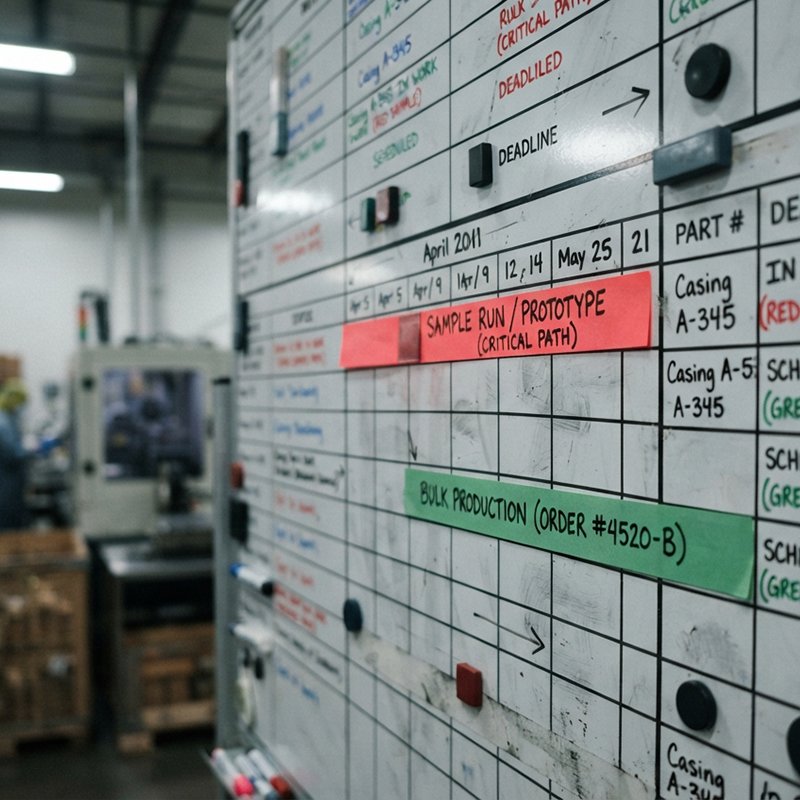
We said lead time is the number that breaks orders. Here is how to make it work for you instead of against you. The clock has two segments: sampling (7–21 days) and bulk (45–60 days). The bulk clock starts only after you approve the sample. So the date that matters is your sample approval date, not your order date.
Work it backward from a US retail calendar:
| Peak window | Stock landed by | Sample approve by | Artwork send by |
|---|---|---|---|
| Memorial Day push | Early May | Late February | Early February |
| Summer tourism (July) | Early June | Late March | Early March |
| Q4 holiday (Nov–Dec) | Early October | Late July | Early July |
The pattern is the same every year: approve hero designs in the quiet quarter, lock the 45–60 day window, and have stock landed before the first bus of the season. Buyers who treat the window as fixed — not as a hope — are the ones with full pegs in July. Buyers who send art in April for a July peak are not behind by a little. They are behind by a season.
Container Loading and Packaging
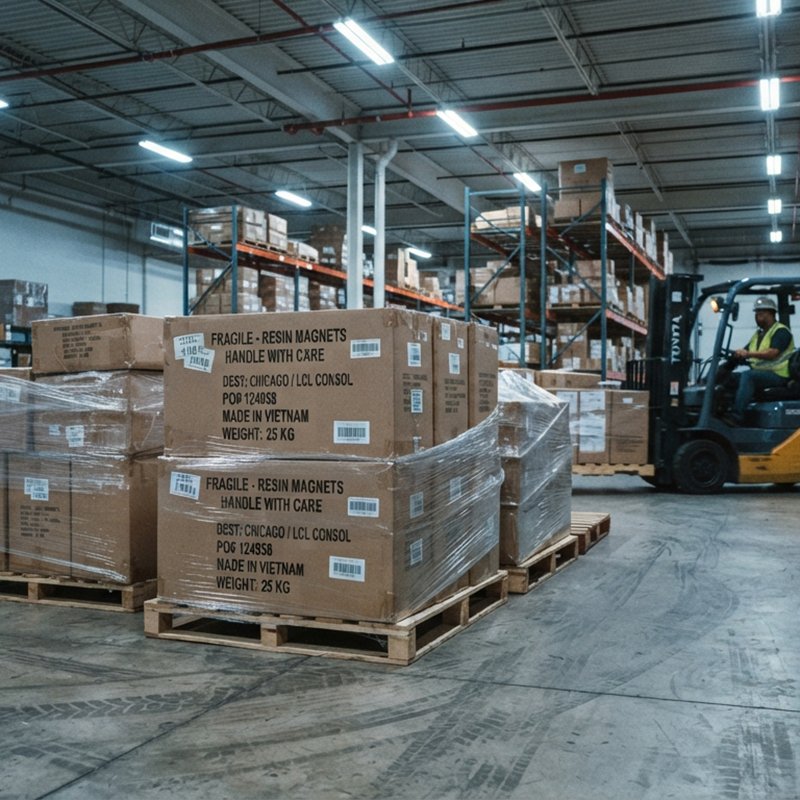
Bulk means boxes, and boxes mean you should know how many fit. A UV resin magnet runs roughly 10–14 grams with packaging; a carton of 1,000 pieces is about 12–15 kg and under 0.05 CBM. That math tells you a 20-foot container — about 28 CBM and 10,000 kg safe load — holds a very large magnet program, well into the six figures of pieces, once you are past the test order.
| Order size | Cartons (~1k pc) | Approx. CBM | Shipping mode |
|---|---|---|---|
| 1,200–5,000 pcs | 2–5 | 0.1–0.25 | LCL or air for rush |
| 10,000 pcs | 10 | ~0.3 | LCL shared container |
| 50,000 pcs | 50 | ~1.5 | FCL partial |
| 100,000+ pcs | 100+ | 3–6 | Full container |
Mixed-SKU programs ship fine in one container — the cartons are just labeled by design. The one thing to spec is protective packaging for the print face: a header card or a clear clamshell that stops pieces rubbing in transit is cheaper than a defect claim on arrival. For domed magnets especially, the dome scratches if cartons are stacked past the safe height, so confirm the carton fill and pallet pattern with the supplier before bulk runs.
Quality Control at Scale
A perfect process still fails on a loose line, and bulk is where loose lines show. The specs below are what a serious resin magnet buyer should ask for by name, and what a real factory-direct workshop should state without hesitation. They are the difference between a magnet that comes back as a return and one that comes back as a reorder.
| Quality check | What it protects | Buyer-ready spec |
|---|---|---|
| Pull-force test | Magnet stays on the fridge, not the floor | Minimum 450g on every single piece |
| Yellowing test | Color does not fade under shop light | 48 hours at 6500K retail lighting |
| Final inspection | Batch consistency | AQL 2.5 random inspection |
| Defect tracking | Long-term reliability | Defect rate held under 1.2% across a full year |
| Pre-shipment check | You do not pay for a bad container | Third-party or inline inspection before loading |
At bulk volume, ask for the inspection result in writing with the shipment, not as a promise in the quote. A supplier who runs AQL 2.5 and tracks defects under 1.2% across the year is running a system, not a vibe — and a system is what protects a 50,000-piece order the same way it protected the 1,200-piece test.
Reordering Without Missing a Season
The first bulk order is the easy one. The second is where programs live or die, because the second order has to land before the shelf empties, not after. Two habits keep it smooth.
First, carry safety stock on hero designs. A skyline that sells through in June should have a reorder in motion in April, not a panic order in July. Second, keep the mold on file and confirm it before you reorder, so the second run matches the first run exactly — travelers notice when the magnet they bought last year is a different shade this year, and a museum brand feels it first.
A single workshop running both UV and hand-painted lines can sustain roughly 100,000 pieces per month, which covers most regional museum and park programs with room to reorder. Size your safety stock against that capacity, not against a hope, and your reorder calendar stops being a fire drill.
Five Bulk-Ordering Mistakes That Cost Real Money
After watching hundreds of custom souvenir programs, the same avoidable errors show up again and again. None are exotic. All are expensive.
- Quoting only the ex-factory price. The $0.25 magnet becomes $0.32 landed. Plan the landed number or plan a surprise.
- Ordering in the peak quarter. April art for a July peak is a season late, not a week late. Build backward from the shelf, not forward from the order.
- Chasing the lowest per-piece quote. A $0.18 magnet that fades or drops costs more in returns than a $0.25 magnet that lasts. Total cost of ownership wins.
- Forgetting the mold on reorder. A “small” artwork change is a new mold. Confirm the retained mold before you commit, or pay twice.
- Skipping the pre-shipment inspection. At 50,000 pieces, a 2% miss is 1,000 bad magnets on your dock. A written AQL 2.5 result is cheaper than the claim.
Every one of these is decided before production starts, at the ordering stage. The factories that flag them for you — by name, in the quote — are the ones worth a second order.
Frequently Asked Questions
What is the minimum order for custom resin fridge magnets?
The standard factory-direct minimum is 1,200 pieces per design. You can mix multiple designs in one shipment; the minimum applies to each artwork, not to the total order.
Do I pay the mold charge every time I reorder?
No. The mold is retained on file, and reorders of the same design do not pay it again. A changed artwork — new text, resized shape, or different backing — is a new mold.
How long does a bulk order actually take?
Sampling is 7–21 days from approved artwork, and bulk production is 45–60 days from sample approval. Build your calendar backward from your peak selling week, not forward from the order date.
What Incoterm should I use for my first bulk order?
FOB with your own freight forwarder is usually the cleanest balance — you see the real ocean rate instead of a padded one. EXW puts all logistics on you; DDP is simplest but priced with the supplier’s freight margin inside.
Can I mix UV and hand-painted magnets in one container?
Yes. A factory running multiple lines can produce a UV skyline and a hand-painted mascot in the same program, with the 1,200-piece minimum applied per design and all cartons shipped together.
What magnet strength should I specify for bulk?
Spec a minimum pull force of 450g per piece. Anything lower risks the magnet sliding off a steel fridge door, which turns a souvenir into a return faster than any other defect.
How much capacity can one factory support?
A workshop running both UV and hand-painted lines can sustain about 100,000 pieces per month, enough for most regional museum, park, and tourism programs with room to reorder.
Get a Bulk Quote That Lists Every Number
The right partner quotes the process, the mold charge, the per-piece cost at your volume tier, the packaging, and the lead time — in plain numbers, not adjectives. Look for factory-direct pricing with no trading-company markup, a 1,200-piece minimum that lets you launch small, sampling in 7–21 days, bulk in 45–60 days, and a quality line that states pull force, yellowing resistance, and inspection level by name.
If you are planning a museum, park, airport, or city tourism magnet line and want a bulk quote that shows the real landed cost instead of a teaser price, send us your artwork. We quote within 24 hours, and we will tell you — straight — whether UV, screen, dome, or hand-painting is the right call for each design, and exactly what the container will cost by the time it reaches your dock.

- Souvenir Magnet Program Planning: What Actually Sells for Museums, Parks & Tourism Boards - October 20, 2026
- Custom Fridge Magnet Sampling and Proofing: The B2B Guide to Approving a Sample (2026) - October 15, 2026
- Custom Mold Ownership & Design IP Protection for Souvenir Magnets: A B2B Buyer’s Guide (2026) - October 9, 2026