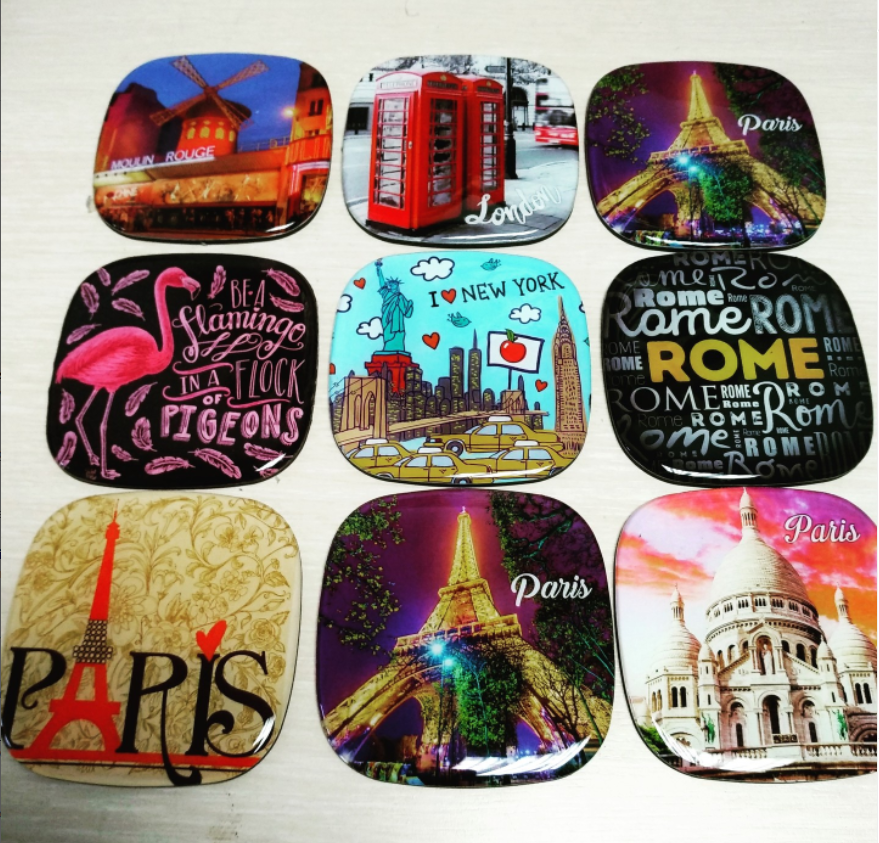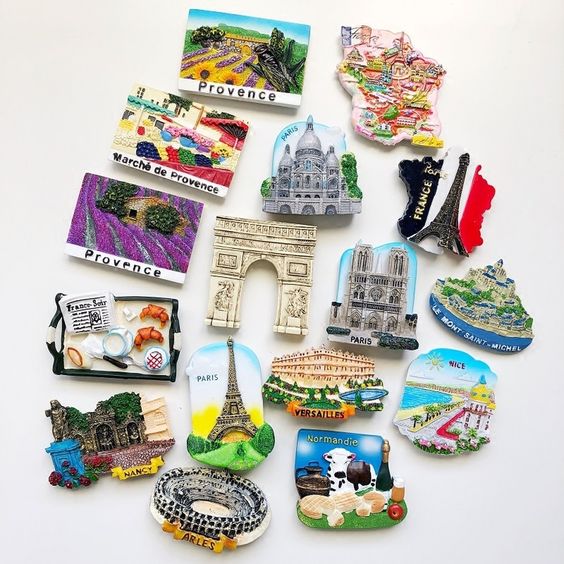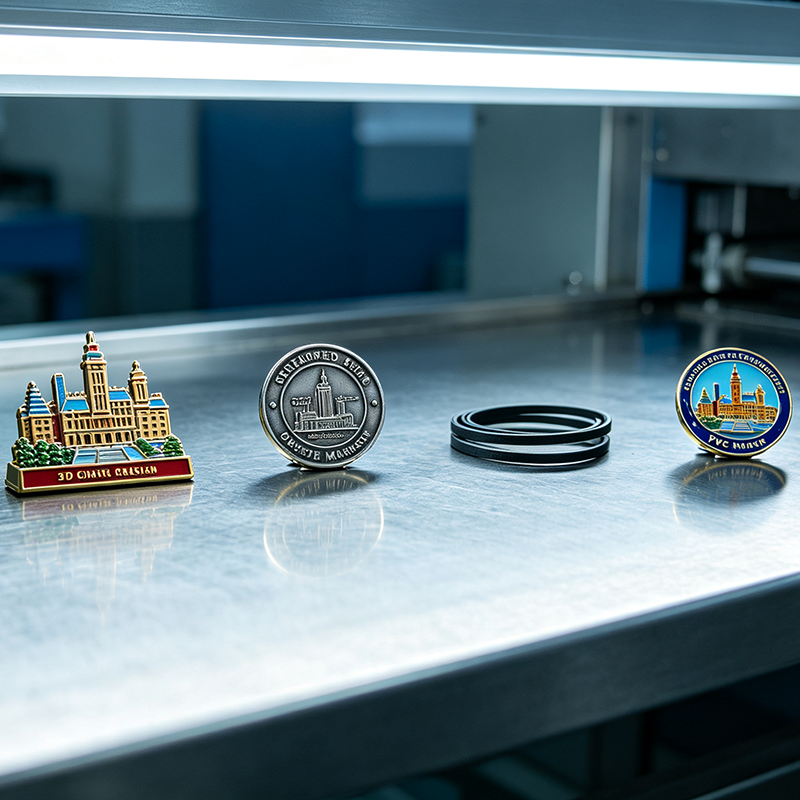
When a museum store, a national park, an airport gift shop, or a city tourism board sits down to plan a magnet program, the conversation almost always starts with the artwork. The landmark. The mascot. The color. Those matter, but they are not the decision that quietly controls your freight bill, your breakage rate, and how long the piece survives on a customer’s fridge. That decision is the base material.
Resin, metal, and PVC are the three materials you will actually choose between for a souvenir magnet line — the classic resin vs metal vs PVC fridge magnets decision — with enamel and ceramic sitting in a smaller heritage niche. Buyers who pick on price per piece alone usually regret it by the second container: a material that yellows under shop light becomes a return, a material that weighs too much quietly eats your margin in freight, and a material that ships brittle turns a peak season into a damage claim. This guide compares the materials the way a working factory sees them — with the numbers a buyer negotiates on, not a brochure’s adjectives.
If you only take one thing away: there is no single “best” material, only the most suitable one for your retail context and volume. The job below is to help you choose it with evidence instead of a guess.
Why the Base Material Quietly Decides Your Whole Program

A souvenir magnet is a low-ticket, repeat-purchase item. Your profit hides in three places — unit cost, freight, and returns — and all three trace back to what the magnet is made of.
- Freight follows weight. Solid metal is roughly two to three times heavier than an equivalent resin piece. At a 20,000-piece sea shipment, that weight difference is the difference between one container and a second.
- Returns follow stability. A material that yellows, cracks, or loses its magnet backing fails on the customer’s fridge, not in the warehouse — and that failure shows up as a bad review, not a refund you can see coming.
- Margin follows process fit. The right material lets you decorate with the cheapest suitable method (UV print vs hand-paint vs enamel fill), which is where per-piece cost is really set.
Material is also where compliance lives. A museum or airport buyer increasingly asks for documented REACH, CPSIA, or EN71 conformity, and the base resin or metal you specify decides whether that paperwork is a formality or a blocker. Choose before you quote, not after.
The Materials You Will Actually Choose Between
For a B2B souvenir program, the realistic shortlist is four materials, each with a clear job as a custom fridge magnet material:
- Resin — molded, high-relief, detailed; the flexible workhorse for landmarks and mascots.
- Metal (zinc alloy, iron, stainless) — premium weight and perceived value; best for heritage and commemorative pieces.
- PVC (soft rubber) — cheap, flexible, colorful; best for high-volume cartoon and promotional designs.
- Enamel / ceramic — fired, glossy, heritage feel; a smaller niche for cultural and art-focused retail.
The rest — wood, acrylic, glass, paper — appear in niche programs and are worth a line in your range, but they are not the materials most buyers standardize a souvenir line on. The comparison that follows focuses on the four that move volume.
Resin Fridge Magnets — The B2B Workhorse for Detailed Souvenirs
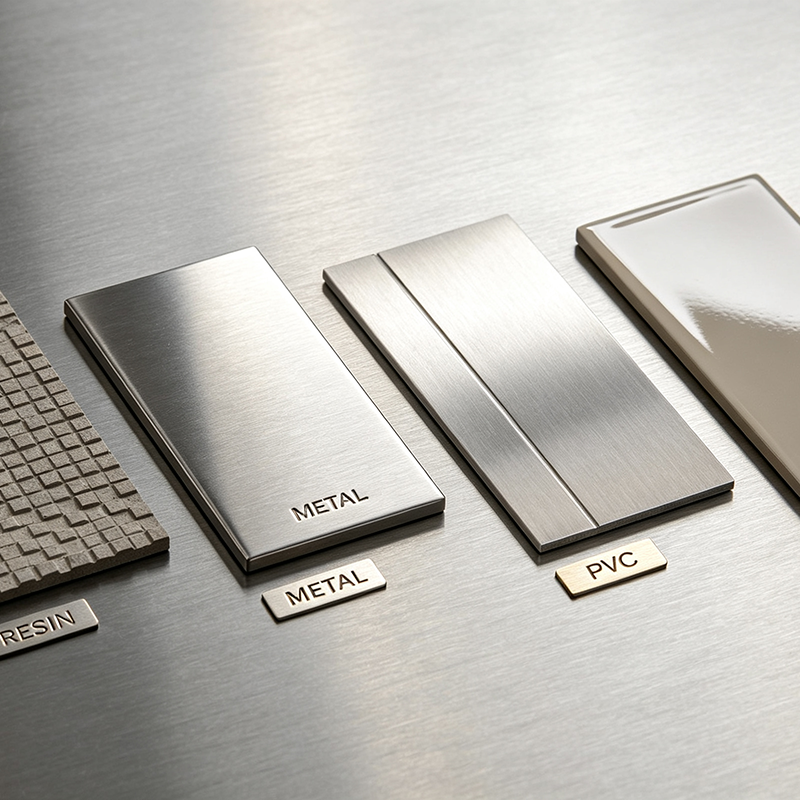
Resin is the material most modern souvenir factories lead with for resin souvenir magnets, and for a B2B buyer it hits an unusual sweet spot: it carries true 3D relief, it takes both photo-real UV printing and artisan hand-painting, and it ships lighter than metal. A molded resin magnet can reproduce a landmark’s contour or a mascot’s expression in a way flat materials cannot.
What Resin Is Best For
- Landmark replicas and figurines where sculptural depth sells the place.
- Mascots and character souvenirs that benefit from a hand-painted, artisan finish.
- Cultural and heritage pieces where texture reads as “real,” not printed.
- Programs that launch small and reorder often, because tooling is modest.
The Real Numbers Behind a Resin Magnet Line
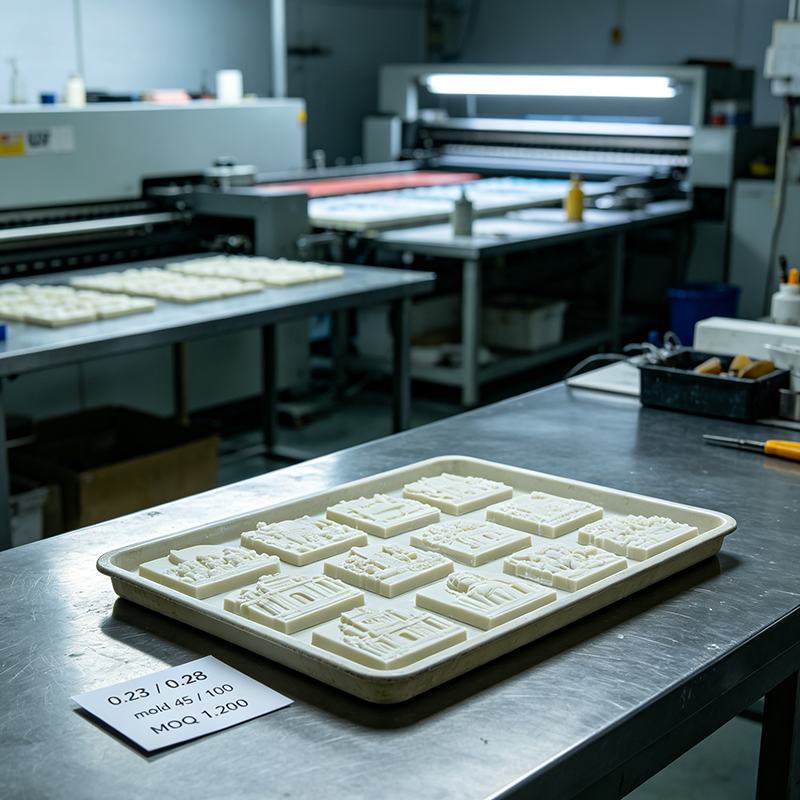
This is where a factory-direct resin workshop separates from a catalog reseller. At a typical integrated plant, resin pricing lands at $0.23–0.25 per piece for UV-decorated magnets and $0.28–0.35 per piece for hand-painted magnets, each at a 1,200-piece minimum per design. The one-time mold charge is about $45 for a UV tool and about $100 for a hand-painted tool. Sampling runs 7–21 days and bulk production is locked at 45–60 days from sample approval, with a single workshop sustaining roughly 100,000 pieces per month across both decoration lines.
Quality is stated in numbers, not adjectives: every piece is pull-force tested to a minimum of 450g, printed color is verified under a 48-hour yellowing test at 6500K retail lighting, and the lot passes an AQL 2.5 random inspection before it ships. For a buyer, that combination — light freight, detailed relief, predictable window, and a stated spec — is why resin is the default for tourism retail that launches small and reorders on a fixed cycle.
Metal Fridge Magnets — Premium Weight, Higher Cost
Metal magnets (usually zinc alloy, iron, or stainless steel, with an enamel, epoxy, or printed surface) sit at the top of the perceived-value tier. They feel permanent, they survive drops, and they read as “collectible” rather than “trinket.” That premium is real, and so is its cost.
What Metal Is Best For
- Museum shops and cultural landmarks where a heavier, badge-grade piece fits the brand.
- Commemorative and collectible series where resale value and longevity matter more than unit price.
- Logo and crest work where a clean enamel fill looks sharper than a printed edge.
The Trade-Offs a Buyer Should Plan For
Metal costs more per piece than resin or PVC, and tooling (die casting, stamping, enamel filling) is more expensive and slower to revise. Weight is the silent freight tax: a metal magnet of the same footprint can weigh two to three times a resin one, which compounds across a bulk container. Metal also needs an anti-rust finish for humid retail environments, and child-safe paint conformity (EN71 / ASTM F963) should be confirmed in writing for any market that requires it. Metal is the right call when brand image and durability outweigh price; it is the wrong call when you are shipping 50,000 impulse-buy pieces.
PVC Fridge Magnets — Cheap and Flexible, but Watch the Light
Soft PVC (and silicone) magnets are the volume play: flexible, colorful, virtually unbreakable in transit, and cheap to tool. They dominate cartoon mascots, promotional giveaways, and price-sensitive tourist markets where a bright shape matters more than relief or permanence.
What PVC Is Best For
- High-volume souvenir programs where unit cost is the deciding factor.
- Playful, cartoon, or child-friendly designs that benefit from a rubbery, safe feel.
- Promotional campaigns where the magnet is a logo carrier, not a keepsake.
The Pitfall Competitors Understate
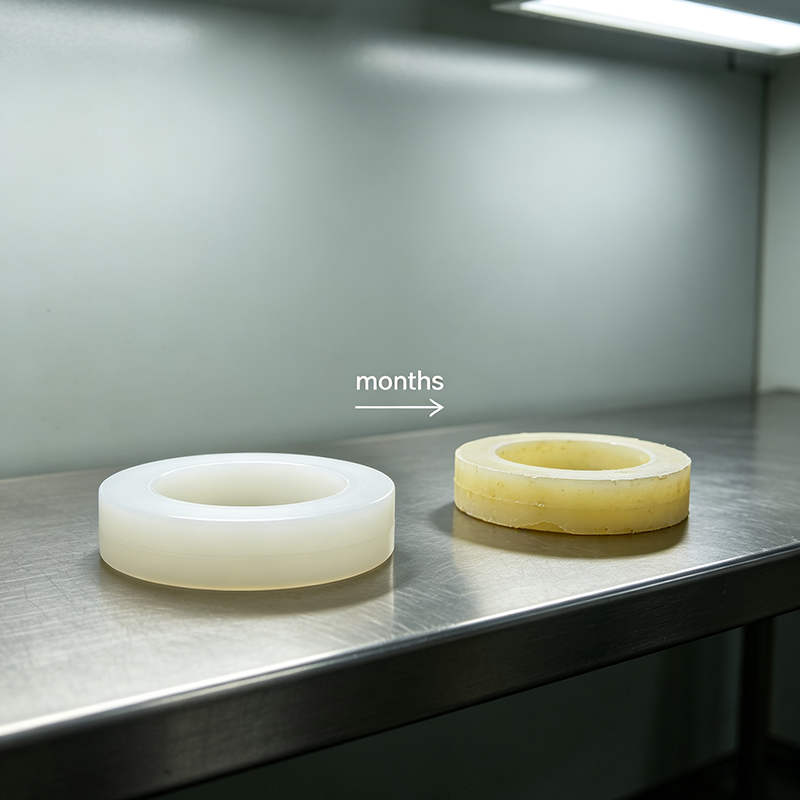
PVC’s weakness is color stability under retail light. Lower-grade PVC yellows and goes brittle within months of display under the same 6500K shelf lighting a resin piece is tested against, and thin prints rub off because the color sits on the surface rather than bonding into it. The honest framing: PVC wins on upfront price and transit survival, but it loses on long-term appearance and on the “premium souvenir” story a museum or airport buyer is usually telling. If you specify PVC, spec UV-stable compound and a thick printed layer, and accept that it is a volume item, not a heritage one.
Enamel and Ceramic — Heritage Feel, Fragile Shipping
Enamel (on metal) and ceramic (kiln-fired clay) magnets carry a traditional, artisanal charm that plastic simply cannot copy. They suit cultural heritage sites, art galleries, and historical locations where the material itself is part of the story.
The cost is fragility. Ceramic cracks in a dropped carton far more readily than resin or PVC, which pushes your damage rate up unless packaging is engineered for it, and both materials sit at the higher end of per-piece cost. Use enamel and ceramic where the heritage narrative justifies the price and the breakage risk — not as your default volume line.
Resin vs Metal vs PVC vs Enamel: The Comparison Table
The table below puts the four materials side by side on the dimensions a B2B buyer actually negotiates. The resin column uses the locked factory-direct specs from a working resin workshop; metal, PVC, and enamel are given as typical industry ranges because they depend on the specialist you source from — always confirm exact numbers in writing.
| Dimension | Resin (UV / hand-painted) | Metal (zinc / iron) | PVC (soft rubber) | Enamel / Ceramic |
|---|---|---|---|---|
| Relief / detail | High 3D, sculptural | Medium (relief by die) | Medium 2D/3D, molded | Flat glossy / fired |
| Relative weight | Light (lighter than metal) | Heavy (2–3x resin) | Light, flexible | Medium / fragile |
| Color stability | UV-stable, 48h yellowing test | Stable (enamel fill) | Yellows in months if low-grade | Stable but glaze can chip |
| Durability in transit | Good with foam inserts | Excellent, dent-prone fixtures | Excellent (unbreakable) | Poor (cracks if dropped) |
| Indicative cost | $0.23–0.35/pc + $45–$100 mold | Higher; per-piece + tooling | Lowest; low tooling | Higher; kiln + finish |
| MOQ per design | 1,200 pcs | Varies by specialist | Varies; often low | Varies; often higher |
| Sampling / bulk | 7–21 / 45–60 days | Longer (casting + finish) | Fast to tool | Longer (firing cycle) |
| Best for | Landmarks, mascots, tourism | Museum, heritage, collectible | Volume, promo, cartoon | Cultural, art, gallery |
Read the table as a map, not a ranking. Resin wins on the combination of detail, light freight, and a stated spec at a 1,200-piece entry. Metal wins on perceived value and survival. PVC wins on price and transit toughness. Enamel and ceramic win on story. Your assortment usually needs more than one.
How Material Choice Drives Freight and Breakage
This is the angle most buyer guides skip, and it is where material silently eats margin. Freight scales with weight, so a resin line protects your container budget versus an all-metal line. Breakage scales with fragility, so ceramic and thin metal need engineered packaging — EPE foam insert trays and lot-numbered cartons — to arrive at an AQL 2.5 standard with near-zero damage. A 20,000-piece resin bulk order in foam inserts and lot cartons arrives clean; the same count in loosely packed ceramic arrives as a damage claim.
The practical rule: match the packaging investment to the material’s fragility, and let a factory-direct workshop state the packing spec up front rather than discovering it at the receiving dock. Lighter, tougher materials (resin, PVC) are where you protect margin; heavier, fragile materials (metal, ceramic) are where you protect the shipment.
Matching Material to Your Buyer Persona
The right material depends on who is buying at the counter:
- Museum stores — resin for landmark depth and hand-painted mascots; metal or enamel for commemorative premium pieces.
- National parks and scenic retail — resin for the “I was here” skyline; PVC only for the lowest-price impulse item.
- Airport duty-free — resin and metal, where perceived value and durability justify the shelf; avoid fragile ceramic near conveyor handling.
- City tourism boards — a coordinated resin series (landmarks + mascots) launched as one program at a 1,200-piece-per-design minimum.
- Gift distributors — mix resin (margin via craft) with PVC (volume) across the souvenir magnet wholesale line to cover both price tiers.
Most strong programs are not one material. They are a resin hero line plus a metal or enamel premium tier plus, sometimes, a PVC volume item — each spec’d for its job.
Compliance Applies to Every Material
Whatever you choose, document the safety story. A phthalate-free resin formulation with REACH, CPSIA, and EN71 lab reports covers the European and North American retail base a museum or airport buyer sells into. Metal needs child-safe paint conformity (EN71 / ASTM F963) confirmed in writing. PVC needs a UV-stable, low-migration compound statement. Ask the supplier for the report per program, not a verbal promise, and treat “on request” as a red flag if it never arrives.
How to Spec Your Material in the RFQ
When you request a quote, do not just send artwork and hope. State the material, the relief level, the decoration method, and the magnet backing you expect:
- Material: resin (UV or hand-painted), metal, PVC, or enamel — named, not “something nice.”
- Relief: flat print vs 3D molded, because it changes tooling and cost.
- Magnet backing: spec a minimum 450g pull force per piece so the magnet stays on the door, not the floor.
- Finish: UV-stable dome, enamel fill, or matte — matched to the retail light it will sit under.
- Packaging: foam inserts and lot-numbered cartons if the material is fragile.
A supplier that answers each line with a number — not a adjective — is the one you can plan a season around. For the decoration side of the same decision, our manufacturing process comparison breaks down UV, screen, dome, and hand-painting, and our bulk ordering guide covers volume tiers and lead time.
Common Material Mistakes Buyers Make
- Choosing on sticker price alone. A $0.10 PVC piece that yellows in a season costs more in returns than a $0.25 resin piece that lasts. Price total cost of ownership.
- Forcing one material across the whole line. A skyline wants resin relief; a premium crest wants metal. Running everything through the cheapest material flattens your best seller.
- Ignoring weight until the freight invoice. An all-metal line can need a second container. Mix in lighter resin to protect the budget.
- Skipping the magnet backing spec. A 450g minimum pull is a one-line request that prevents floor-drop returns. Buyers who omit it learn the hard way.
- Assuming “premium” means “fragile-friendly.” Metal and ceramic survive drops differently; pack each for what it actually is.
Frequently Asked Questions
Which material is best for souvenir fridge magnets?
For most museum, park, airport, and tourism programs, resin is the best all-round material: it carries 3D detail, ships light, and can be UV-printed or hand-painted. Metal wins for premium and commemorative pieces; PVC wins for low-cost volume. The “best” is the one matched to your retail tier and volume.
Are resin or metal fridge magnets better?
Neither is universally better. Resin is lighter, cheaper to tool, and more detailed for landmarks and mascots. Metal feels premium and survives drops but costs more and ships heavier. Many programs use both: resin for the hero line, metal for the collectible tier.
Do PVC or resin magnets last longer?
Resin lasts longer in appearance. A UV-stable resin piece passes a 48-hour yellowing test at 6500K retail light and keeps its color for years; low-grade PVC yellows and brittles within months of shelf display. PVC is tougher in transit but weaker on long-term looks.
What is the lightest material for fridge magnets in shipping?
Resin and PVC are the lightest; solid metal is roughly two to three times heavier at the same footprint. If freight is a concern on a large bulk order, lean on resin and PVC and reserve metal for a smaller premium tier.
What magnet backing should I specify?
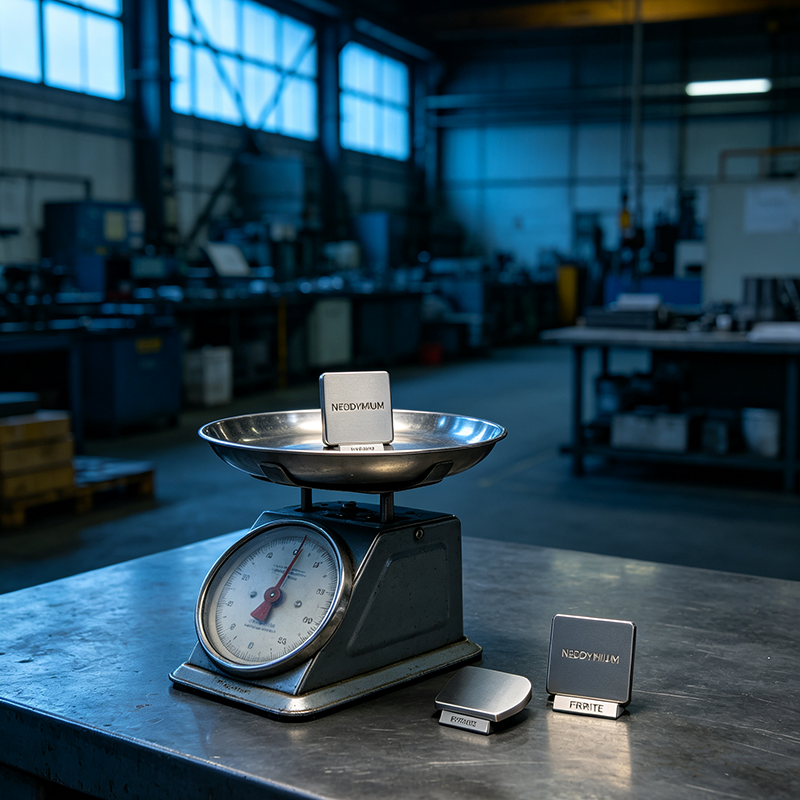
Spec a minimum pull force of 450g per piece, using ferrite for most resin and metal shapes and neodymium or ferrite for heavier or irregular pieces so the magnet sits flush and does not slide when the door closes.
Are resin magnets REACH and CPSIA compliant?
A phthalate-free resin formulation with third-party REACH, CPSIA, and EN71 reports is compliant for European and North American retail. Ask the supplier for the lab report per program and confirm it in writing before you commit a bulk order.
Request a Quote From a Factory That States Every Number
The right partner tells you — honestly — which material fits your artwork and your retail tier, then proves it with specs instead of adjectives. Look for factory direct magnets with no trading-company markup, a 1,200-piece minimum that lets you launch small, sampling in 7–21 days, bulk in 45–60 days, and a quality line that states pull force, yellowing resistance, and inspection level by name. For a resin line specifically, those numbers are $0.23–0.25 per piece UV or $0.28–0.35 hand-painted, a $45 or $100 mold, AQL 2.5, and a 450g pull test on every piece.
If you are planning a museum, park, airport, or city tourism magnet line and want a quote that lists the material, the mold charge, the per-piece cost, and the lead time in plain numbers, send us your artwork. We quote within 24 hours, and we will tell you — straight — whether resin, metal, or PVC is the right call for each design in your range.

- Souvenir Magnet Program Planning: What Actually Sells for Museums, Parks & Tourism Boards - October 20, 2026
- Custom Fridge Magnet Sampling and Proofing: The B2B Guide to Approving a Sample (2026) - October 15, 2026
- Custom Mold Ownership & Design IP Protection for Souvenir Magnets: A B2B Buyer’s Guide (2026) - October 9, 2026