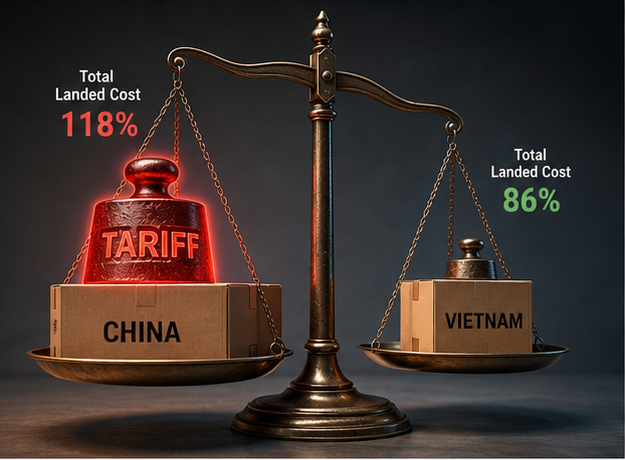
For North American brand retailers, the procurement landscape in 2026 has become less about “finding the lowest price” and more about “managing geopolitical exposure.” As the U.S. tariff environment evolves—with shifting Section 301 investigations and new duty structures—the traditional binary choice between China and Vietnam has reached a critical inflection point.
For Category Managers and Procurement Directors, the stakes have never been higher. With average effective tariff rates on Chinese-origin goods hovering at approximately 33.4% compared to roughly 12.87% for Vietnamese goods, the “tariff math” appears to favor Southeast Asia. However, savvy retailers know that landing a product on the shelf is about more than just the HTS code. At Craftmgf.com, we help our partners look beyond the headline rates to analyze the Total Landed Cost (TLC) and supply chain resilience required for the 2026 market.
The Competitor Landscape: Why Standard Sourcing Advice is Obsolete
A quick search for “China vs. Vietnam sourcing” reveals a glut of superficial, outdated advice. The typical competitor outline is:
- The Basics: China is big; Vietnam is the “new” China.
- The Pro/Con List: China has better infrastructure; Vietnam has cheaper labor.
- The Simplistic Conclusion: “Diversify your supply chain to save on tariffs.”
The Skyscraper Expansion: Strategic Tariff Resilience
This approach is inadequate for enterprise-level retail. Our “Ferris Wheel” expansion elevates the discourse into strategic financial engineering:
- The Transshipment Trap: How U.S. Customs and Border Protection (CBP) is aggressively targeting “origin washing” in 2026.
- The “China-Plus-One” Complexity: Why Vietnam’s infrastructure bottleneck is impacting lead times for complex resin and plastic souvenirs.
- Regulatory Hedging: Navigating the Section 301 investigative landscape and how to conduct a “Tariff Stress Test” on your current SKU list.
- The True Cost of Reliability: Why a higher tariff rate in China might be cheaper than a “tariff-free” product stuck in a Vietnamese port congestion.
1. The 2026 Tariff Reality: A Forensic Look

Tariffs are the most significant cost differentiator, but they are not static. In 2026, we are operating in a multi-polar tariff environment where Section 301 duties are layered over standard Most Favored Nation (MFN) rates.
While Vietnam offers a clear tariff advantage, it is critical to recognize that it is not a “drop-in” replacement for China. For complex souvenir manufacturing, China’s supplier ecosystem—tooling, component sourcing, and packaging—remains unmatched. When sourcing from Vietnam, many retailers find themselves importing the same raw materials from China anyway, which adds cost and complexity, potentially negating the tariff savings.
Data Comparison: The Real Cost of Sourcing
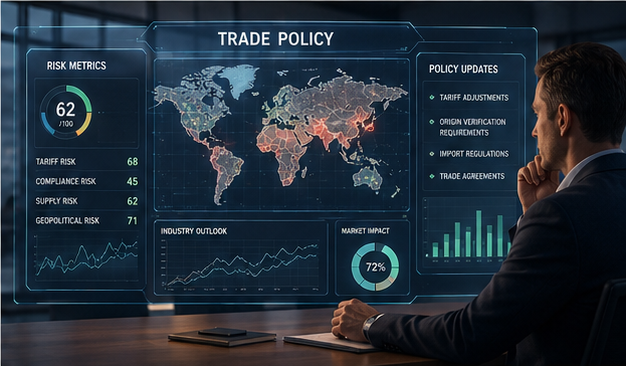
To illustrate the stakes, let’s look at a hypothetical 12-month supply contract for custom resin souvenirs.
| Cost Factor | China-Based Production | Vietnam-Based Production | The “Tariff” Reality |
| Ex-Works Unit Price | $0.75 | $0.85 | China is still more efficient. |
| Effective Tariff Rate | 33.4% | 12.87% | Vietnam holds a clear duty edge. |
| Logistics/Inbound Freight | $0.05 | $0.09 | China benefits from deeper port density. |
| Total Landed Cost (TLC) | $1.05 | $1.04 | Negligible difference. |
| Risk/Compliance Factor | High Duty Exposure | Moderate (Subject to scrutiny) | Compliance is key in both. |
2. Navigating the Transshipment Crackdown
In 2026, the U.S. Trade Representative (USTR) and CBP are focusing intensely on “Country of Origin” verification. If your product is substantially manufactured in China and merely assembled or routed through Vietnam, you are at high risk of a customs seizure and heavy penalties.
To stay compliant, your manufacturing partnership must be built on real, verifiable production. At Craftmgf.com, we prioritize transparency. Whether we are producing in Quanzhou or facilitating Vietnam-based production, we ensure your product meets the “Substantial Transformation” test. Do not build your retail margin on a flimsy “Made in Vietnam” sticker; build it on a legitimate, audited supply chain.
3. The “China-Plus-One” Strategy for Souvenirs
Many brand retailers are moving toward a multi-polar strategy. The goal is not to leave China, but to hedge against localized disruption.
- China for Complexity: For custom, high-detail resin products requiring complex molds, high-quality hand-painting, and fast-turnaround prototyping, China remains the global leader. The density of its supplier ecosystem—where you can find a packaging box provider and a custom-molded parts factory within a 50-mile radius—cannot be replicated yet in Vietnam.
- Vietnam for Stability: For simpler, labor-intensive products where tariff costs are the primary margin killer, Vietnam is an excellent choice.
The smartest experienced souvenir importer splits their catalog: keep the complex, high-margin artistry in China, and move the volume-heavy, price-sensitive staples to Vietnam.
4. The 2026 Regulatory Outlook: What to Expect
The U.S. tariff environment remains fluid. With USTR currently initiating investigations into various trade practices, retailers must maintain a Tariff Stress Test as part of their quarterly procurement review.
We advise our clients to keep their Bills of Materials (BOM) modular. If a tariff hike hits a specific material category, having a modular supply chain allows you to shift components between markets or adjust your product design without re-engineering the entire SKU.
5. Strategic Advice: Why Reliability Outweighs Tariffs

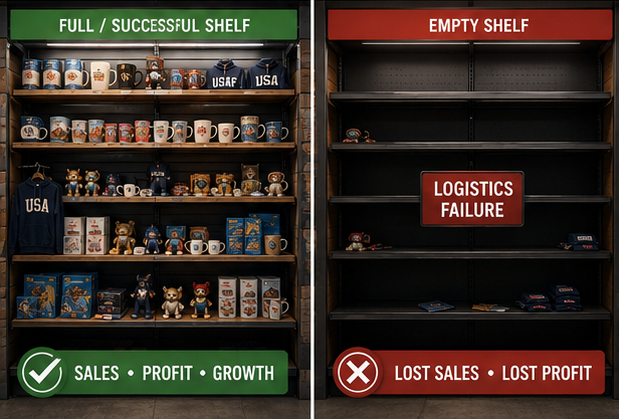
When you are a Category Manager for a major retailer, an out-of-stock item is far more expensive than a 10% tariff. If your Vietnam-based factory is waiting on components from China, or if your port infrastructure cannot handle a sudden spike in demand, your shelf space will remain empty.
Reliability is the foundation of profit. An experienced souvenir importer understands that a “tariff-free” strategy is worthless if the factory cannot meet your AQL 2.5 quality control standards or provide fixed, predictable lead times.
6. Conclusion: The Path Forward for North American Retailers
The choice between China and Vietnam is not a decision you make once; it is an ongoing negotiation with the global market. In 2026, the brands that win are those that treat their supply chain as a flexible, intelligent asset rather than a static cost.
Whether you are looking to optimize your tariff exposure or expand your production capacity, the key is partnering with a factory that provides total visibility. Sourcing is a memories business; manufacturing is a data business. Don’t let a fluctuating tariff code dictate the success of your brand.
Is your current supply chain protected against the next shift in global trade policy? Contact Craftmgf.com today to discuss our “Strategic Sourcing Models” and how we protect the margins of North America’s leading retailers.

- Tariff Navigation 2026: Sourcing from China vs. Vietnam for North American Brand Retailers - June 10, 2026
- The Minimalism Shift: Why “Less is More” is Driving Higher SRP in Museum Gift Shops - June 3, 2026
- Biophilic Design Trends: Integrating Natural Elements into Traditional Souvenir Formats - May 27, 2026