Tourist gift shops face a unique challenge.
Unlike traditional retail stores, they are not simply selling products. They are selling memories.
Every year, millions of travelers visit museums, aquariums, national parks, historic sites, theme parks, cruise destinations, and cultural attractions. Most of these visitors want to bring home a tangible reminder of their experience.
Among all souvenir categories, custom fridge magnets continue to be one of the most successful products in the travel retail industry.
They are affordable, easy to display, simple to transport, and highly collectible. More importantly, they create a daily visual reminder of a memorable destination.
However, not all souvenir magnets perform equally well.
Some designs become top-selling products that visitors actively collect. Others remain on shelves despite attractive pricing and good craftsmanship.
The difference usually comes down to design strategy.
This guide explains how tourist gift shops, souvenir importers, distributors, museums, and tourism attractions can design custom fridge magnets that attract attention, strengthen destination branding, and generate stronger retail sales.
Why Fridge Magnets Remain One of the Best-Selling Tourist Souvenirs
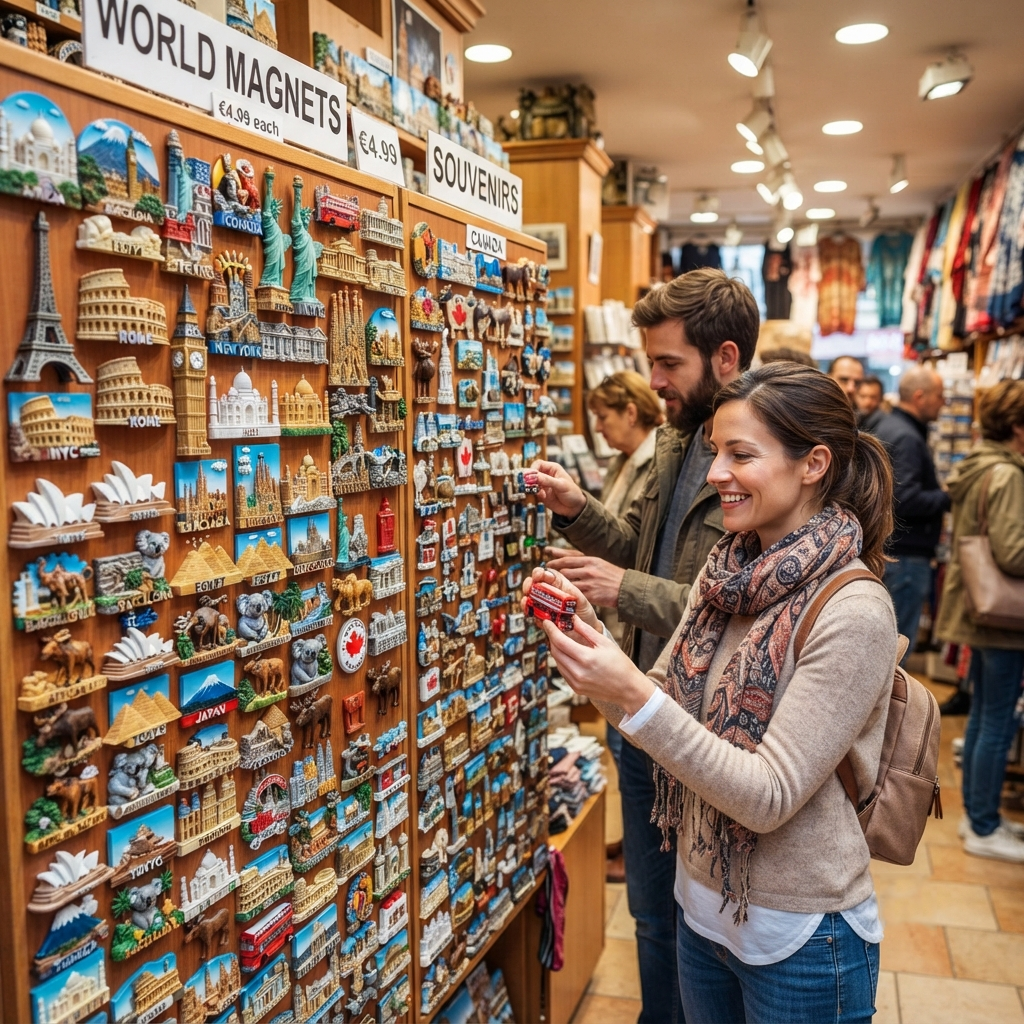
Fridge magnets have been a cornerstone of the souvenir industry for decades.
Their popularity is not accidental.
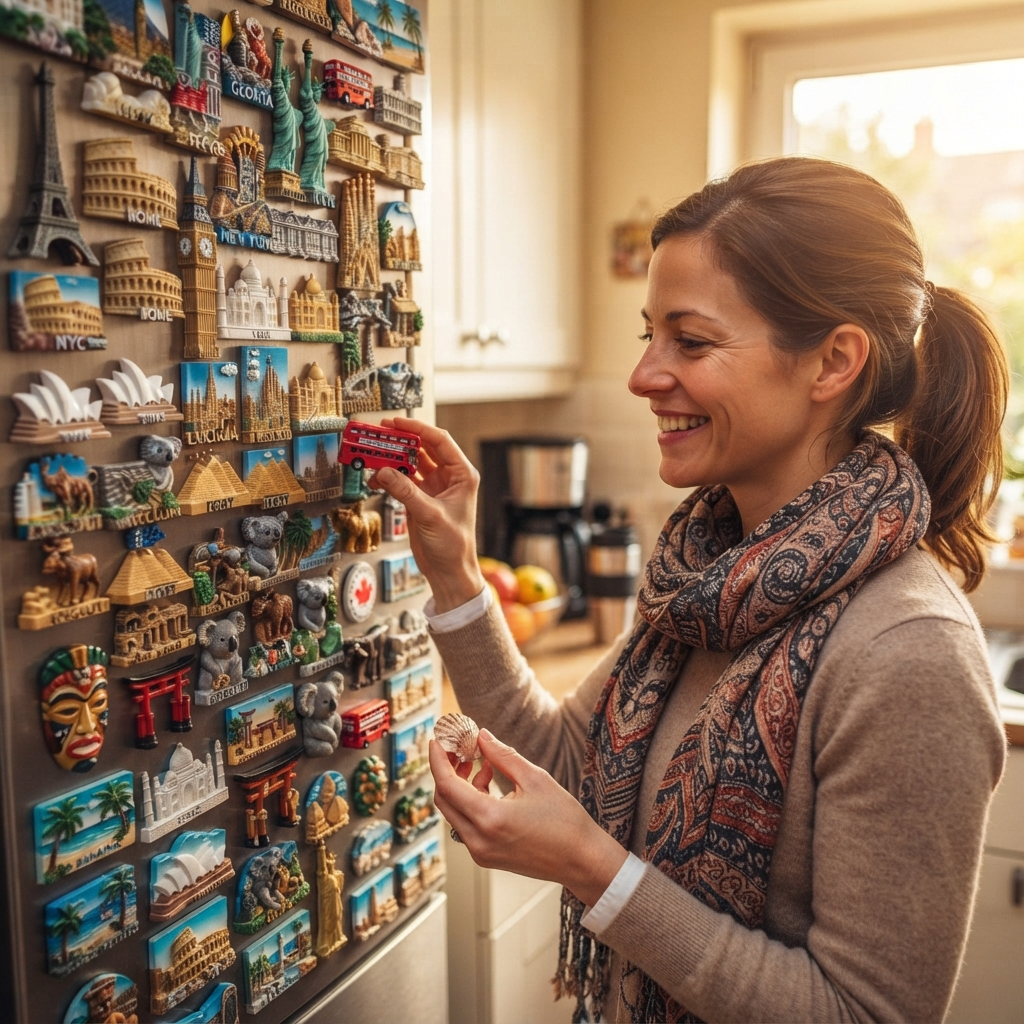
Unlike many souvenir products that are stored away after purchase, magnets become part of a visitor’s daily environment. Every time a traveler sees a magnet on their refrigerator, they reconnect with a travel memory.
This emotional connection creates lasting value.
For gift shops, custom fridge magnets offer several advantages:
- Low retail price point
- Strong profit margins
- Minimal display space requirements
- Excellent collectability
- Broad customer appeal
- Easy international transportation
Travelers often purchase multiple magnets during a single trip, making them one of the highest-performing impulse-purchase products in souvenir retail.
Understanding What Travelers Actually Want to Remember
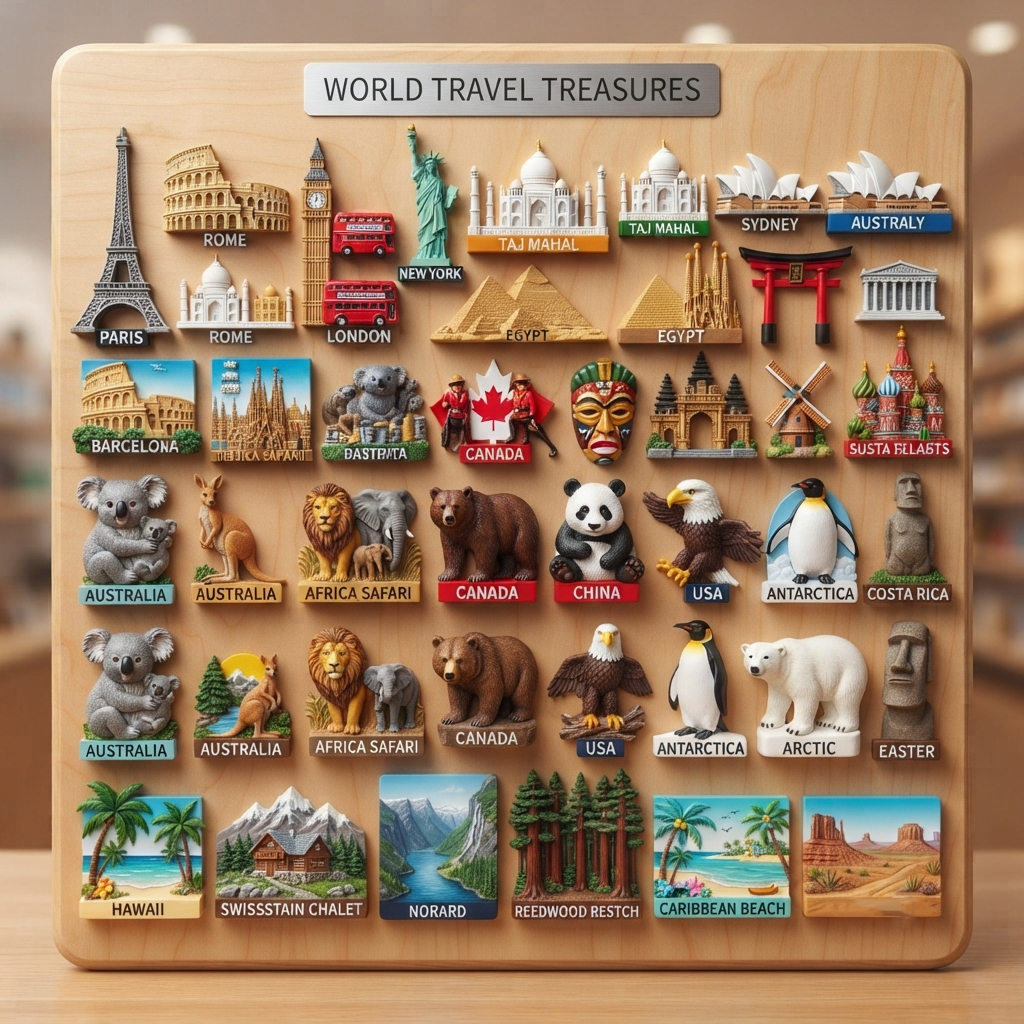
One of the most common mistakes in souvenir product development is designing products around what the destination wants to promote rather than what visitors want to remember.
Successful souvenir magnets focus on memorable experiences.
Visitors rarely become emotionally attached to a logo.
They become attached to:
- A famous landmark
- A breathtaking view
- A unique animal encounter
- A cultural experience
- A historical attraction
- A memorable family trip
For example, a visitor to an aquarium may feel a stronger connection to a magnet featuring a sea turtle or dolphin than a magnet displaying only the aquarium’s logo.
Similarly, visitors to a historic city often prefer magnets showcasing iconic architecture rather than generic promotional artwork.
When developing custom fridge magnets, start by identifying the emotional highlights of the visitor experience.
The strongest souvenir designs capture moments, not marketing messages.
Start with Destination Identity
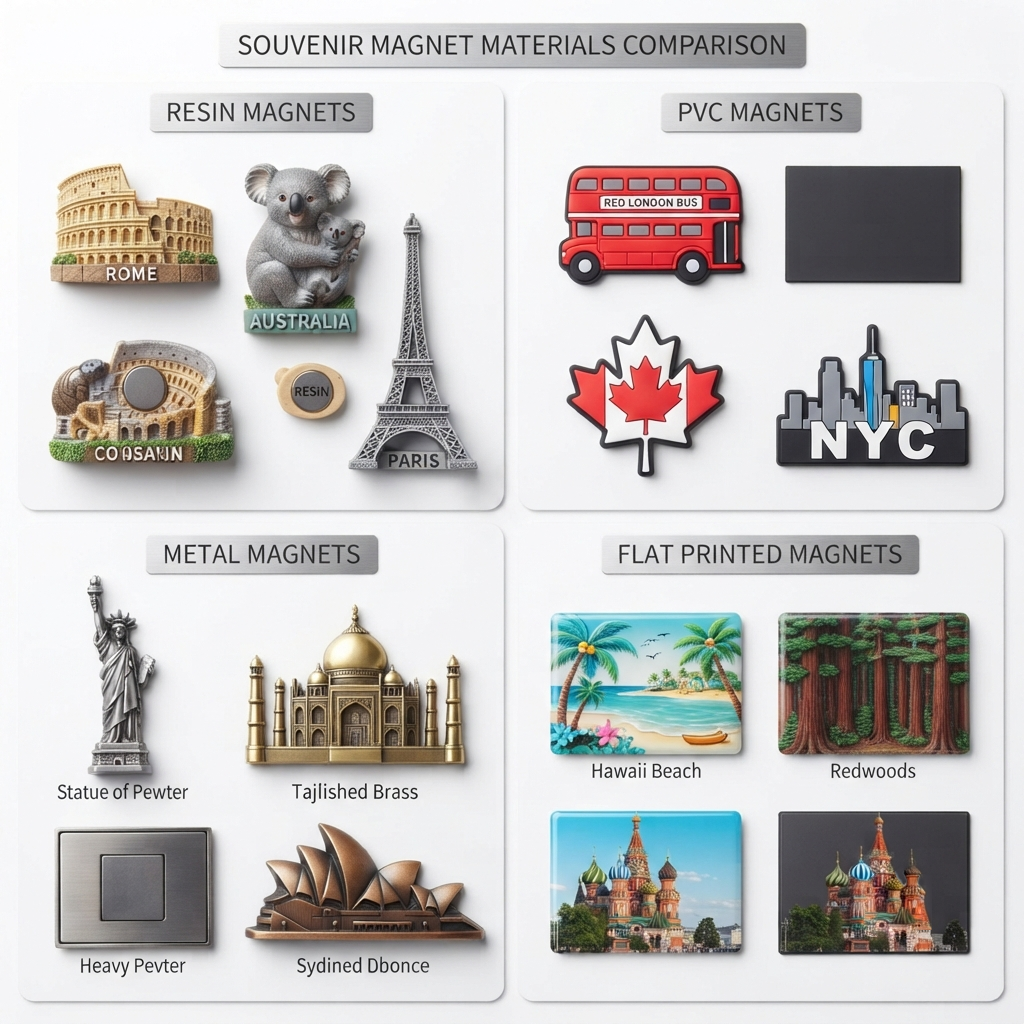
Every successful souvenir magnet should immediately communicate where it comes from.
If a traveler removes the destination name from the design, the product should still feel connected to that location.
Strong destination branding often includes:
- Famous landmarks
- Historic buildings
- Local wildlife
- Cultural symbols
- Regional landscapes
- Traditional architecture
- Transportation icons
- Local food culture
For example:
A souvenir magnet for Canada may incorporate maple leaves, wildlife, mountain landscapes, or famous landmarks.
A Bermuda souvenir magnet might feature colorful island houses, tropical fish, beaches, and cruise tourism elements.
A museum gift shop magnet may highlight signature exhibits, historical artifacts, or architectural details unique to the museum.
The goal is to create instant recognition.
When visitors see the product, they should immediately remember their experience.
Choosing the Right Magnet Style
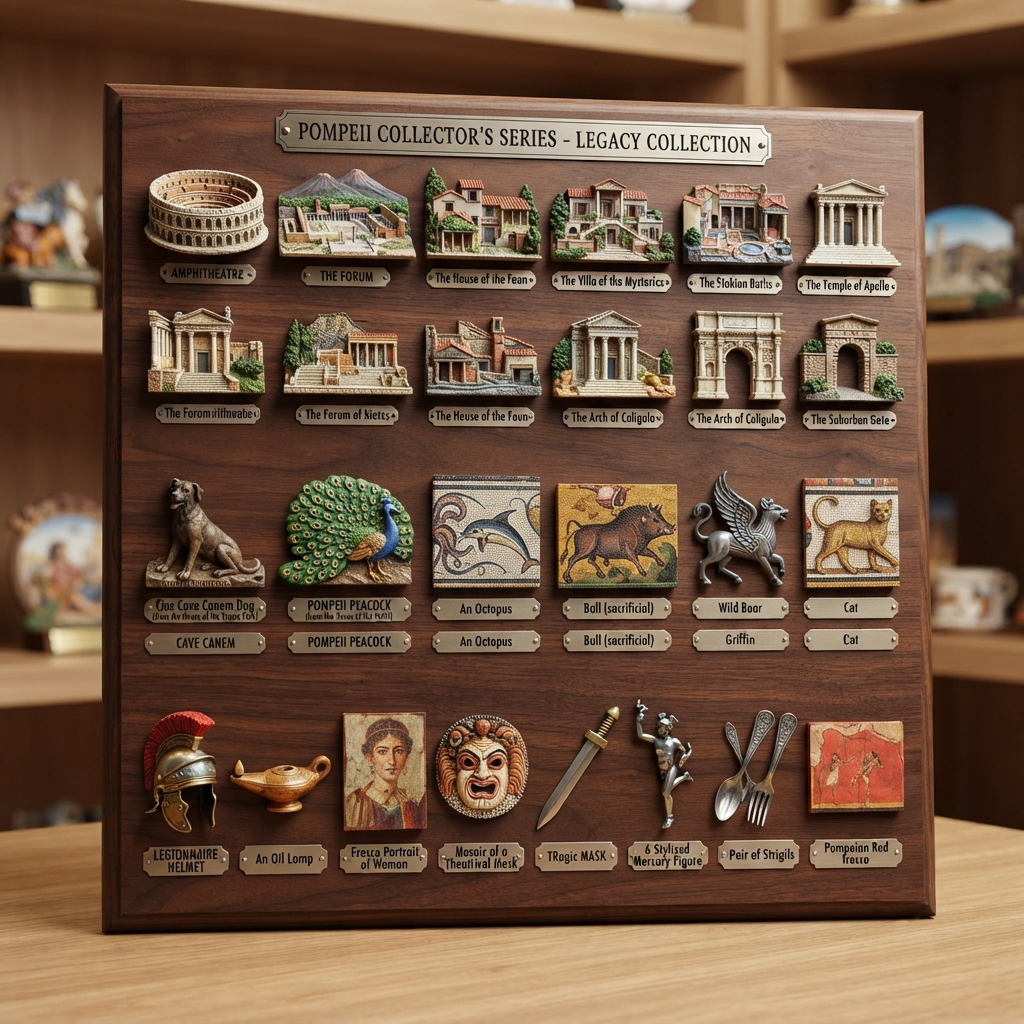
Different magnet styles serve different retail objectives.
Selecting the right style is one of the most important decisions during souvenir product development.
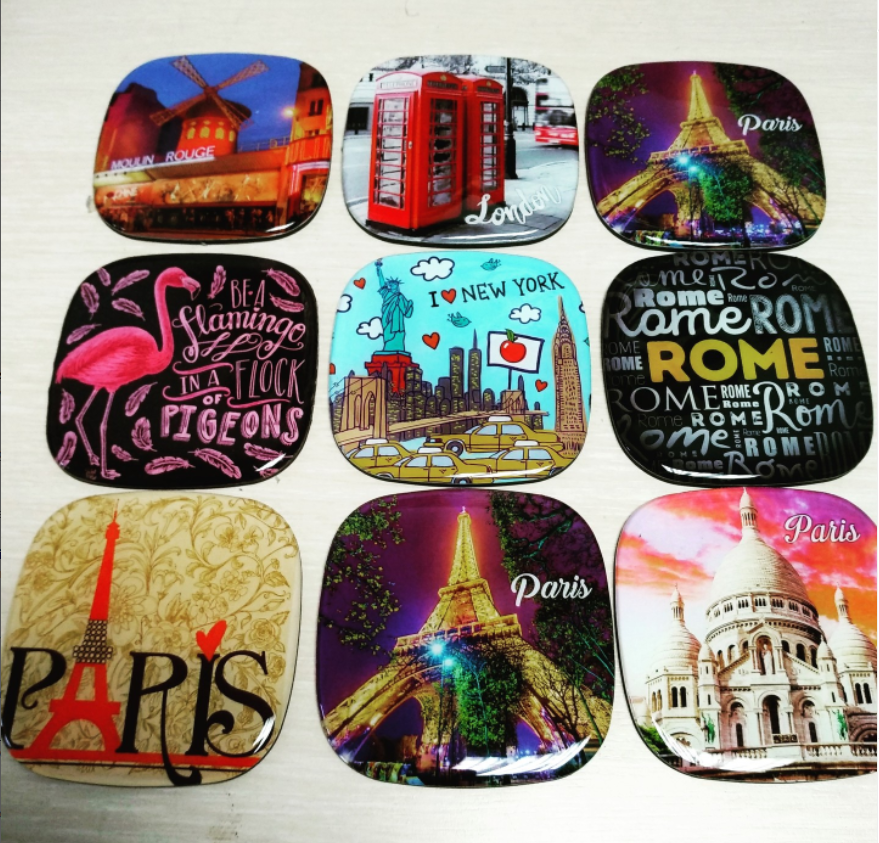
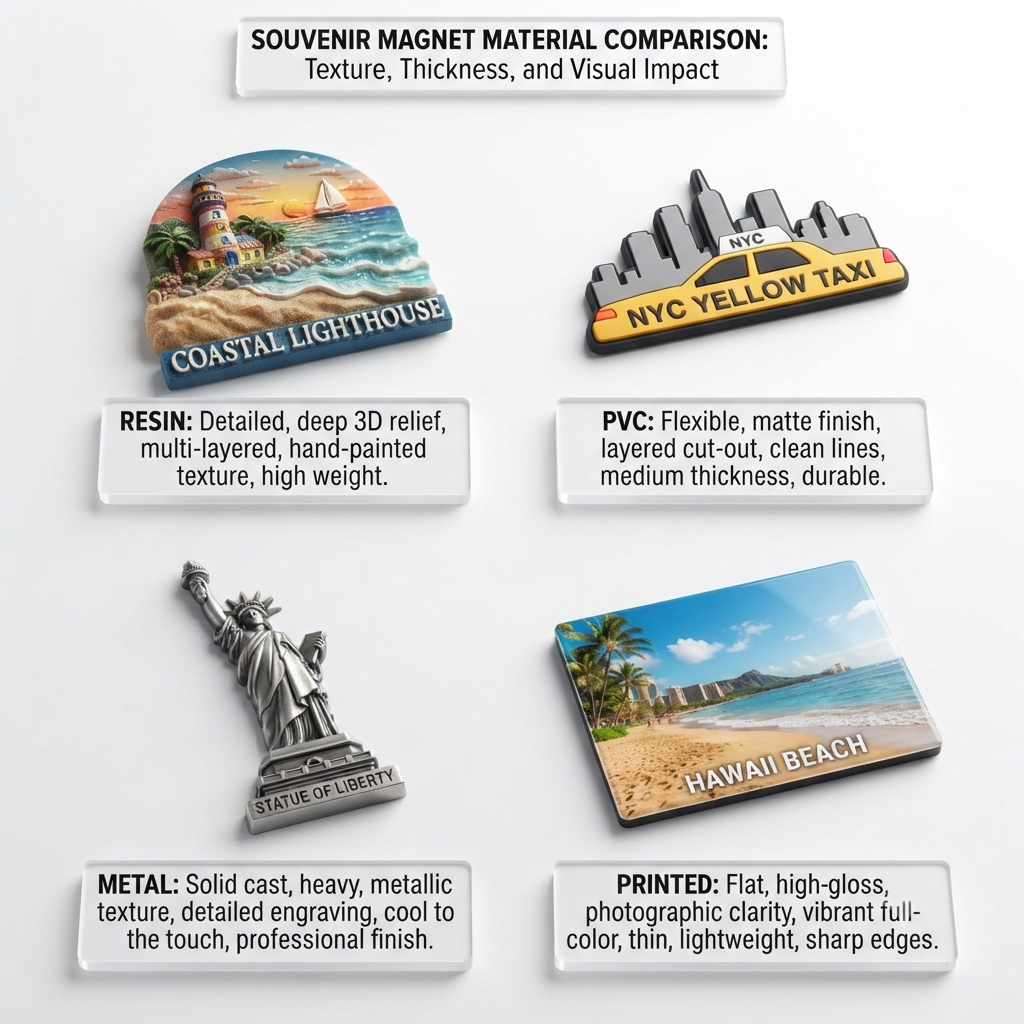
Flat Printed Magnets
Flat magnets are often used for budget-friendly souvenir programs.
Advantages include:
- Lower production costs
- Lightweight shipping
- Fast manufacturing
However, they generally offer lower perceived value and weaker collectability.
Resin Fridge Magnets
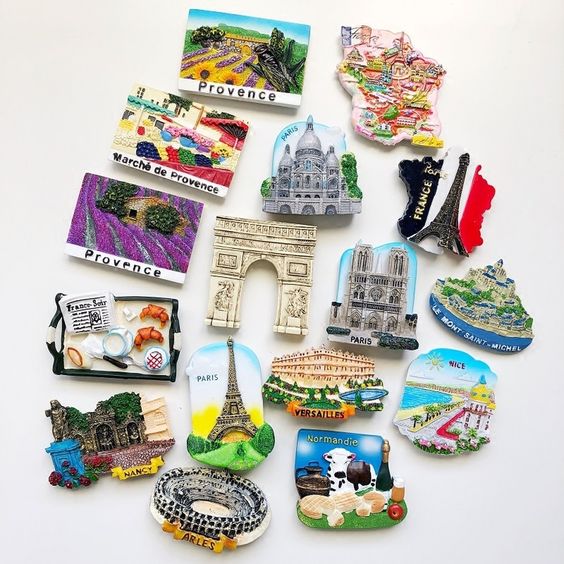
Resin fridge magnets remain one of the most popular options for tourist gift shops.
Advantages include:
- Detailed 3D sculpting
- Hand-painted finishes
- Premium appearance
- Strong destination storytelling
- High collectability
Because of their dimensional appearance, resin magnets often command higher retail prices while creating a stronger emotional connection.
PVC Magnets
PVC magnets provide flexibility and vibrant colors.
They are frequently used for:
- Family attractions
- Theme parks
- Event souvenirs
- Children’s gift shops
Metal Magnets
Metal magnets offer a more sophisticated appearance and are commonly used by:
- Museums
- Historical attractions
- Cultural institutions
Choosing the correct material should align with both visitor expectations and retail positioning.
Designing for Collectability
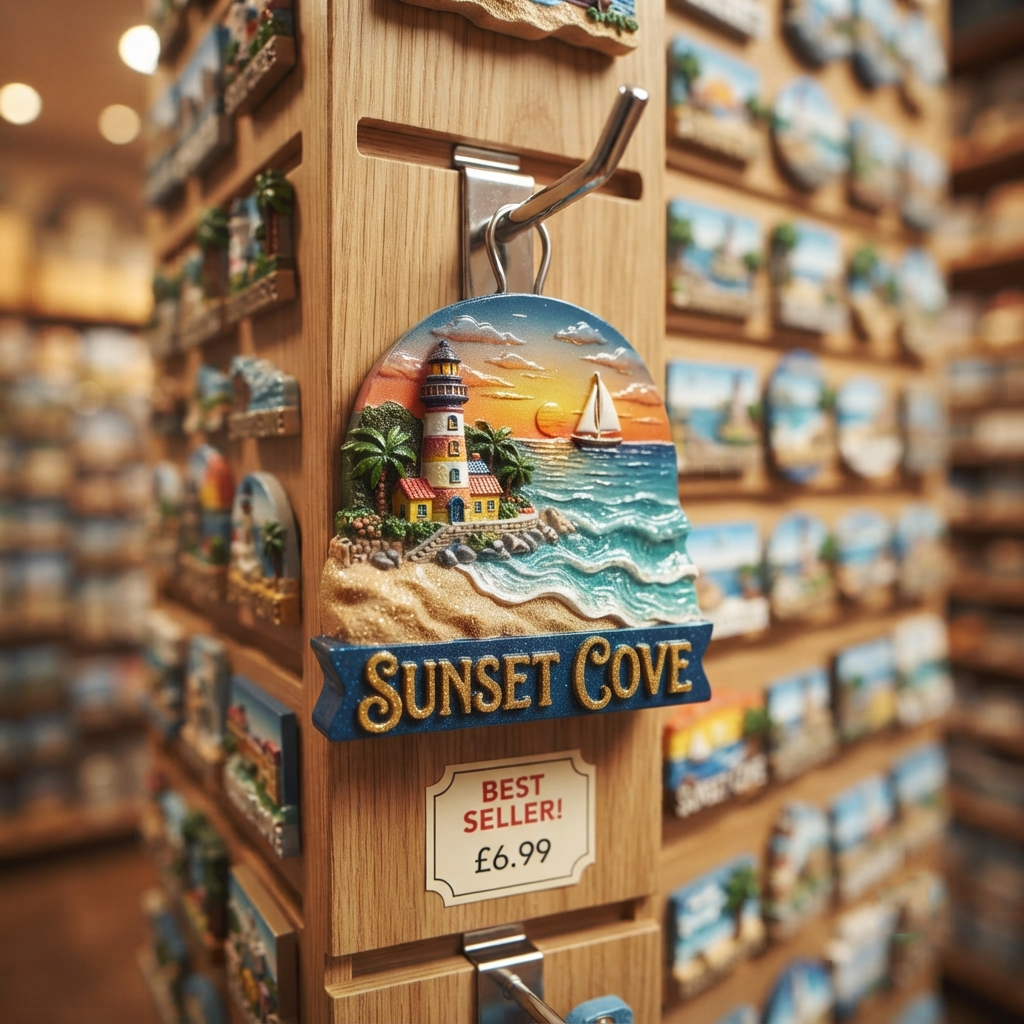
One reason souvenir magnets outperform many other travel products is their collectability.
Many travelers enjoy building collections from destinations they visit.
Rather than creating a single design, successful gift shops often develop entire magnet series.
Examples include:
Landmark Series
Each magnet highlights a different landmark within the destination.
Wildlife Series
Each design features a local animal species.
Historical Series
Magnets celebrate historical events, people, or architecture.
Seasonal Collections
Limited-edition magnets encourage repeat purchases and collector interest.
Collection-based merchandising often increases average transaction value because visitors purchase multiple designs instead of a single item.
Design Elements That Increase Retail Sales
Certain design characteristics consistently perform well in souvenir retail environments.
Strong Focal Point
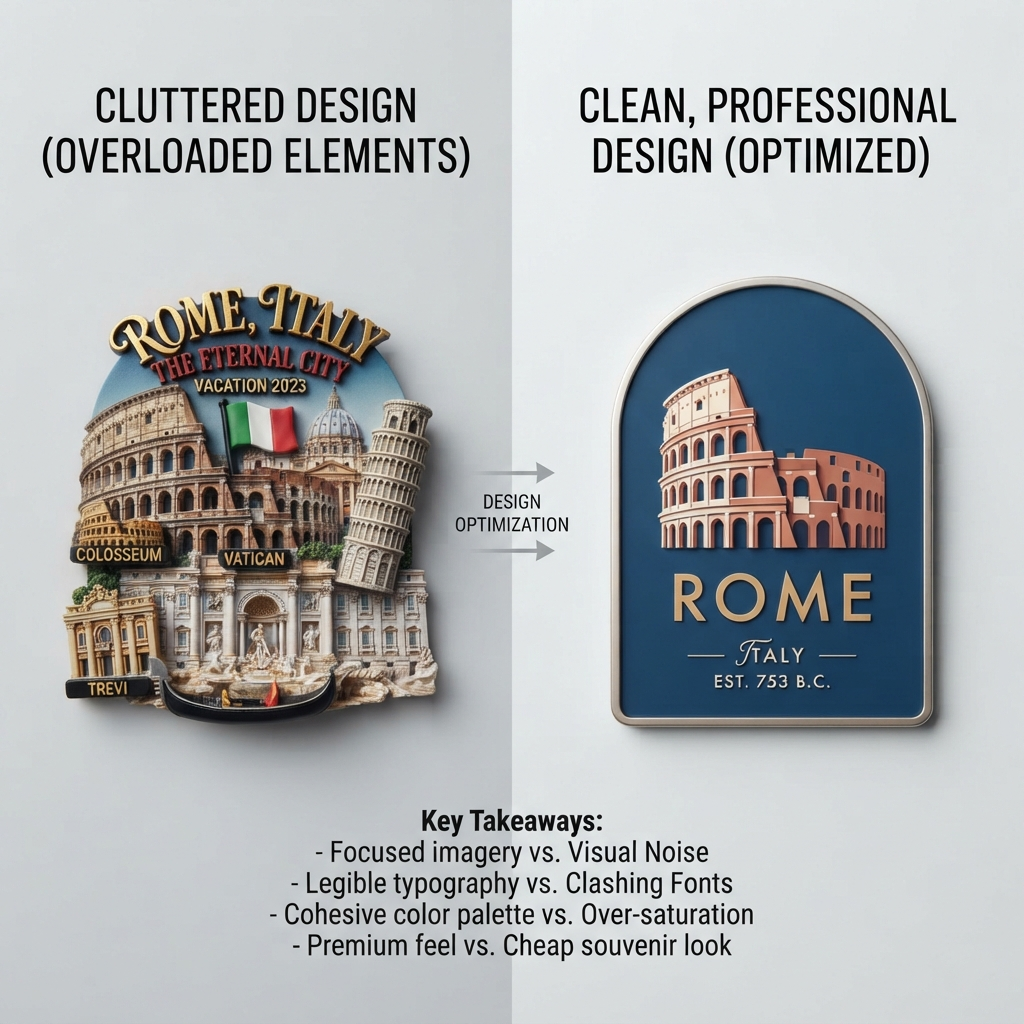
Every magnet should have a clear visual centerpiece.
Avoid overcrowding designs with excessive details.
A recognizable landmark often creates more impact than multiple smaller elements competing for attention.
Vibrant Colors
Bright, attractive colors increase shelf visibility.
Colors should reflect the destination while maintaining visual harmony.
Layered Depth
Three-dimensional elements often attract attention more effectively than flat artwork.
This is one reason resin fridge magnets continue to perform strongly in tourist gift shops worldwide.
Clear Destination Name
Visitors should not need to search for the destination name.
The location should be easy to identify at a glance.
Durable Construction
Travel souvenirs are expected to last for years.
Durability contributes to customer satisfaction and long-term brand perception.
Comparing Popular Magnet Styles
The following comparison illustrates how different magnet styles perform in typical souvenir retail environments.
| Magnet Type | Perceived Value | Collectability | Visual Impact | Retail Margin Potential |
|---|---|---|---|---|
| Resin Fridge Magnets | High | High | High | High |
| PVC Magnets | Medium | Medium | Medium | Medium |
| Flat Printed Magnets | Low | Low | Low | Medium |
| Metal Magnets | High | Medium | Medium | High |
For destinations seeking premium souvenir products with strong emotional appeal, resin fridge magnets frequently provide the best balance between collectability, visual impact, and retail profitability.
Common Design Mistakes Tourist Gift Shops Should Avoid
Even attractive designs can underperform if key principles are overlooked.
Trying to Include Everything
Many first-time buyers attempt to include every landmark and attraction in a single magnet.
This often creates visual clutter.
Simpler designs typically achieve stronger results.
Overusing Logos
Visitors purchase memories, not advertisements.
While branding is important, logos should support the design rather than dominate it.
Ignoring Target Customers
A magnet designed for children will likely differ from one intended for museum visitors or luxury tourists.
Understanding the audience improves design decisions.
Following Trends Instead of Destination Identity
Trendy graphics may generate short-term attention, but destination-focused designs often deliver stronger long-term sales performance.
Packaging Considerations for Tourist Gift Shops
Packaging can significantly influence purchasing decisions.
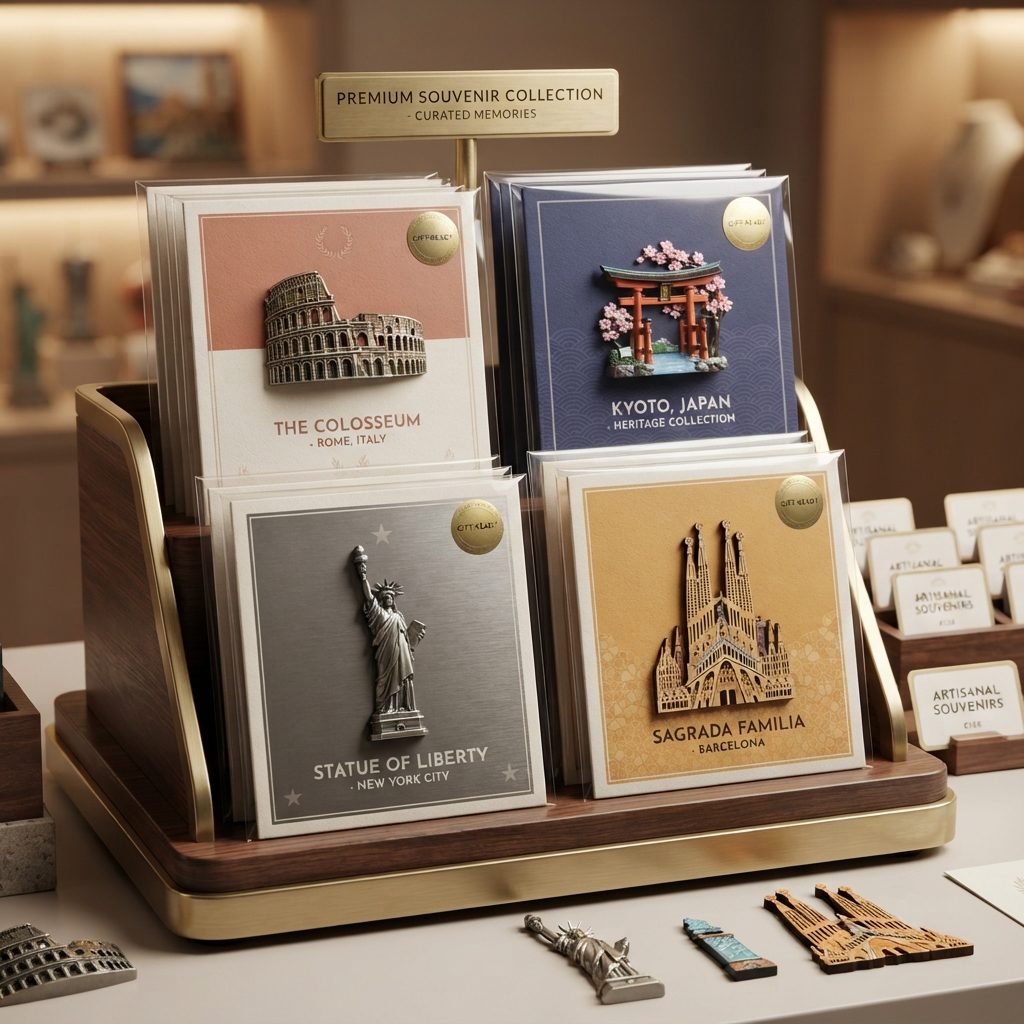
Effective packaging should:
- Protect the product
- Support destination branding
- Improve shelf presentation
- Enhance perceived value
Many museums and premium attractions use custom backing cards that include destination information, attraction history, or educational content.
This additional storytelling often strengthens customer engagement.
Working with a Custom Magnet Manufacturer
An experienced custom magnet manufacturer can contribute much more than production capabilities.
The best manufacturing partners assist with:
- Product development
- Material recommendations
- Design optimization
- Packaging solutions
- Retail display considerations
Collaboration during the design phase often leads to stronger products and better retail outcomes.
When evaluating suppliers, look beyond price.
Consider their experience with tourism souvenirs, destination merchandise, museum gift shop products, and custom souvenir collections.
Industry-specific expertise frequently leads to better product decisions.
Future Trends in Custom Fridge Magnet Design
The souvenir industry continues to evolve.
Several trends are influencing modern fridge magnet design.
Story-Driven Souvenirs
Travelers increasingly value products that communicate meaningful stories.
Premium Collectible Products
Higher-quality collectibles are becoming more popular than low-cost generic souvenirs.
Sustainable Souvenir Development
Many destinations are exploring environmentally responsible materials and packaging solutions.
Limited-Edition Collections
Exclusive designs encourage urgency and repeat purchases.
While trends change, the most successful souvenir magnets continue to focus on authenticity, emotional connection, and destination identity.
Final Thoughts
Designing custom fridge magnets for tourist gift shops requires more than artistic creativity.
The most successful products combine destination branding, visitor psychology, collectability, material selection, and retail strategy.
Travelers do not purchase magnets simply because they are inexpensive.
They purchase them because they represent meaningful experiences.
By focusing on memorable moments, recognizable destination identity, high-quality materials, and collection-based merchandising, gift shops can develop custom fridge magnets that increase sales, strengthen destination branding, and create lasting customer connections.
Whether you are a souvenir importer, museum buyer, tourism attraction operator, distributor, or gift shop owner, investing in thoughtful custom fridge magnet design can transform a simple souvenir into one of your most profitable retail products.

- Resin Fridge Magnet Manufacturing Processes Compared: UV Printing, Screen Printing, Epoxy Dome & Hand-Painting (2026 Buyer’s Guide) - August 11, 2026
- How to Choose a Reliable Resin Souvenir Factory in China: A Comprehensive Audit Guide for B2B Buyers - August 5, 2026
- The Ultimate Guide to Sourcing Custom Resin Souvenirs: From Factory Design to Global Wholesale (2026 Edition) - July 29, 2026