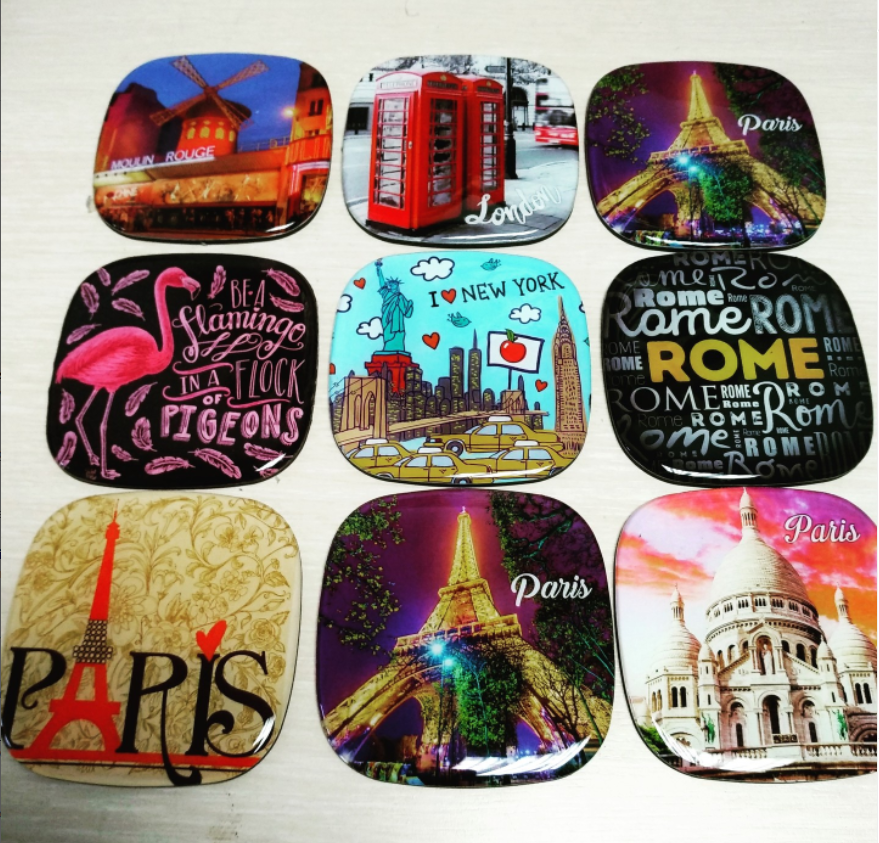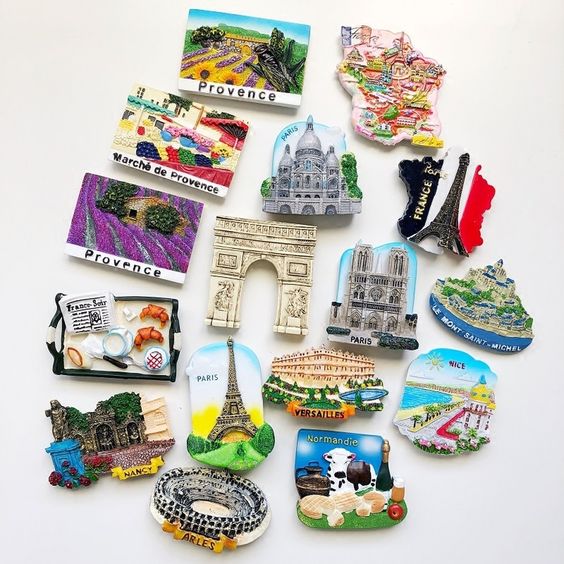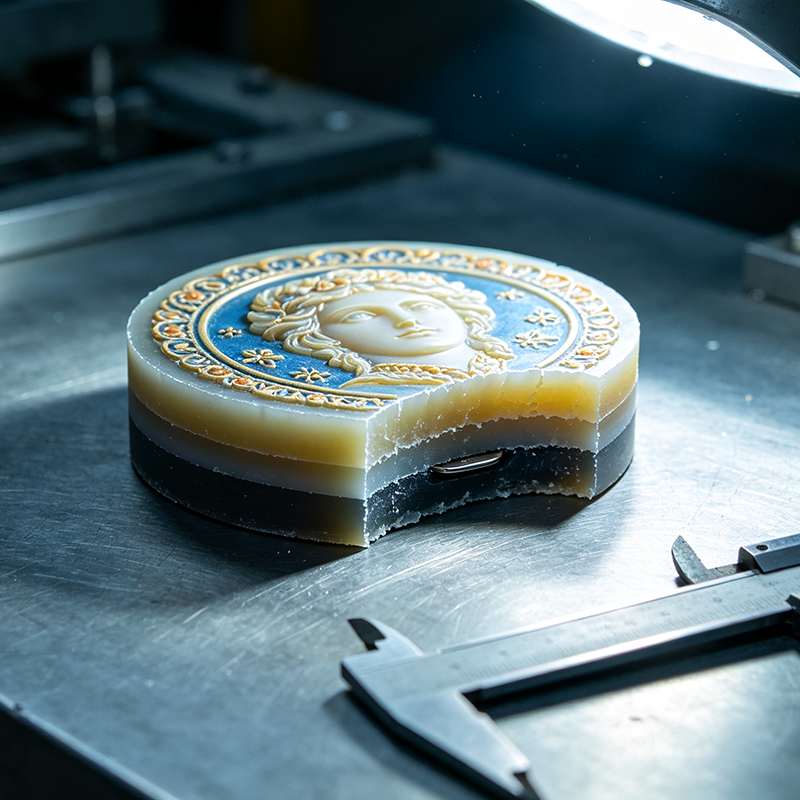
If you source custom souvenir magnets for a museum store, a national park, an airport gift store, or a city tourism board, the most overlooked line on your quote is the one that decides whether the magnet stays on the fridge or ends up on the floor. It is not the artwork. It is the fridge magnet backing — the magnetic layer bonded to the back of the piece — and the pull force it actually delivers. A beautiful resin landmark that drops the first time a customer opens the door is not a souvenir. It is a return, a complaint, and a dent in your reorder rate.
This guide walks through the backing types you will choose between, how pull force is measured (and why the number on a spec sheet lies without the right test conditions), how the backing must match the decorative face, and the holding standard a serious factory-direct plant should confirm in writing. No vague supplier promises. Just the engineering and the numbers that keep your magnets—and your margin—where they belong.
Why the Backing, Not the Artwork, Decides If Your Magnet Stays Up
A souvenir magnet is a layered object. The decorative face — resin, metal, or PVC — is what the traveler buys. The backing is what the refrigerator feels. Buyers spend the meeting debating color, relief, and print method, then accept whatever magnet the factory quietly glues on the back. That is backwards.
The backing carries three jobs that directly hit your souvenir magnet holding power:
- Adhesion to steel. It must grip a painted fridge door through daily slamming, temperature swings, and the weight of a few extra photos stacked behind it.
- Safety margin. A piece that weighs 60–100g needs a pull force several times that weight, because real doors are not the smooth, thick steel plate used in a lab.
- Consistency. A 1,200-piece run is only as good as its weakest unit. If 2% of the backing falls short, 2% of your customers find a magnet on the kitchen floor.
Get the backing right and the artwork does its job: it sells the place. Get it wrong and the artwork never gets a second look, because the product is already in the trash.
The Three Backing Types You Will Actually Choose Between
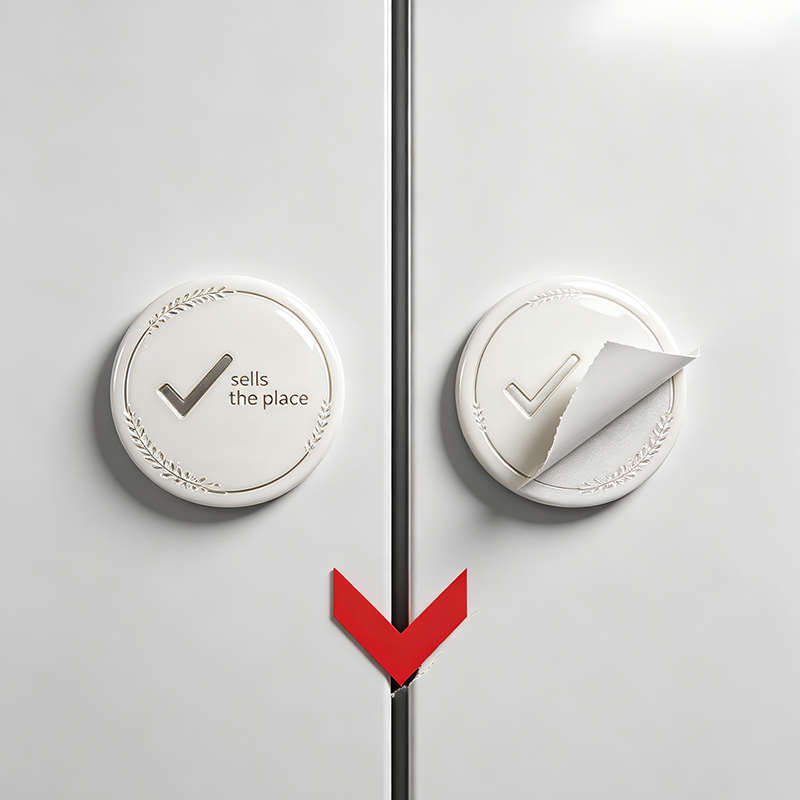
For a B2B souvenir program, the realistic shortlist is three backing classes. These custom magnet backing types each have a clear job, a clear cost profile, and a clear failure mode.
Flexible / Rubber Magnet
Magnetic powder pressed into a rubber or PVC binder, supplied as a thin, bendable sheet cut to shape. It is cheap, light, and gentle on fridge paint. The trade-off is the weakest pull — industry references put flexible backing around 0.4–0.5 lb (roughly 180–230g) of hold, and it can deform or weaken over years of use. It suits thin, light promotional pieces, not a 3D resin souvenir that needs to feel solid.
Ferrite / Ceramic Magnet
Made from iron oxide with barium or strontium, pressed into a rigid disc or block. Industry references cite a medium pull of about 1.1 lb (roughly 500g), with strong corrosion and demagnetization resistance at a low cost. The downsides are bulk and brittleness — it is thicker than flexible sheet and can chip if dropped. This is the workhorse band for decorative resin and metal pieces that need a steady, reliable hold.
Neodymium / Rare-Earth Magnet
A neodymium-iron-boron (NdFeB) core, the strongest permanent magnet commercially available, often plated in nickel or gold to fight rust. References put neodymium pull at roughly 5.8 lb (about 2.6 kg) — five to six times a ferrite backing of similar size. It is compact and long-lasting, but it carries a higher price and a real rust risk in humid environments if the plating is thin. It is the right call for a heavy metal badge, not a 90g resin landmark.
Fridge Magnet Backing Comparison Table
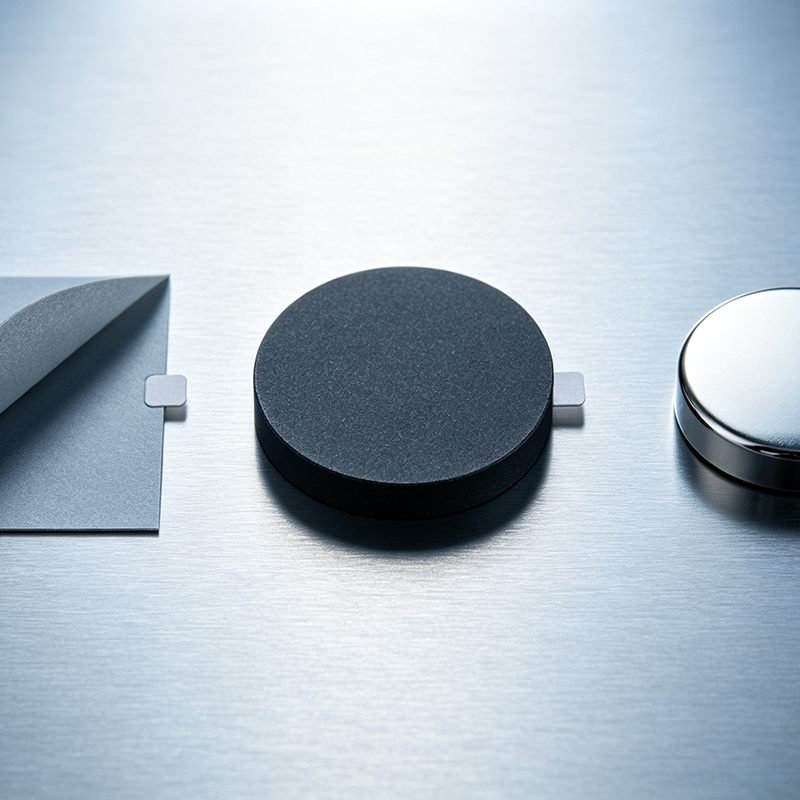
The table below puts the three backing classes side by side on the dimensions a buyer actually negotiates. Use it as your shortlist before you request a quote — and notice that “strongest” is not the same as “right.”
| Backing type | Typical pull force | Cost profile | Best paired with | Durability | Main risk | Typical B2B use |
|---|---|---|---|---|---|---|
| Flexible / rubber | ~0.4–0.5 lb (180–230g) | Lowest | Thin PVC, laminated paper, flat promo | Good; can deform over time | Weak hold; slips on heavier pieces | Mass flat promotional magnets |
| Ferrite / ceramic | ~1.1 lb (≈500g) | Low | Resin souvenirs, metal badges | High; corrosion & demag resistant | Bulky, can chip if dropped | Standard resin & metal souvenirs |
| Neodymium | ~5.8 lb (≈2.6 kg), 5–6× ferrite | Higher | Heavy metal, thick resin, tools | Very high; rust risk if unplated | Price; corrosion without plating | Premium heavy-duty pieces |
The practical read for a souvenir buyer: flexible is too weak for a 3D resin piece, neodymium is more hold than a 90g magnet needs (and adds cost and rust exposure), and ferrite-class backing sits in the band that delivers a safe, repeatable hold without either extreme. That is the band most resin souvenir programs should be quoted in — and it is the band our own 450g minimum standard lives in.
How Pull Force Is Actually Measured
Pull force is the maximum weight a magnet holds when pulled straight off a flat, thick, ferrous surface. The textbook unit is pounds or kilograms; the magnetic field itself is measured in gauss or tesla. Understanding the test conditions matters, because a number without conditions is marketing, not specification.
Three variables decide the real number:
- Surface. Pull is measured against smooth, thick, low-carbon steel. A brushed, painted, or stainless door (especially austenitic 304, which is nearly non-magnetic) can cut the effective hold dramatically.
- Contact. Full, flat contact gives the rated pull. A curved or textured back, or a warped fridge panel, shrinks the contact area and the grip.
- Direction. Pull force is measured perpendicular to the surface. Shear (sliding) and vibration from a slamming door are different stresses entirely.
So when a supplier says “strong magnet,” the only useful version of that sentence is: “minimum 450g pull force, tested on 100% of output, against a flat steel plate.” Anything less specific is a hope, not a spec. That is why a real factory-direct plant states the test method, not just the adjective.
The Substrate Reality: Why Your Fridge Door Changes the Number
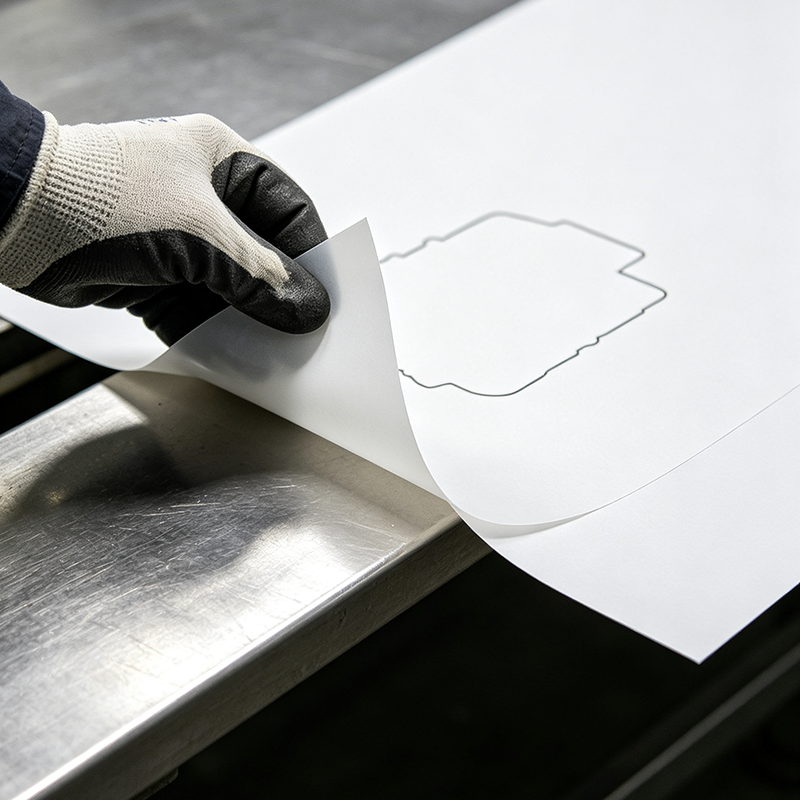
This is the part consumer-facing “strongest magnet” articles skip. The magnet does not live in a lab. It lives on a door that varies from home to home, and that variation is exactly why a safety margin exists.
Austenitic stainless steel — the 304 grade used on many modern and premium fridges — has almost no magnetic permeability, so even a strong magnet grips it weakly. Painted carbon steel holds far better, but a thick textured paint layer physically lifts the magnet off the metal by a fraction of a millimeter, and that gap kills pull. Curved door panels reduce contact to a small central spot. None of these are defects in the magnet; they are reasons the rated pull must be several times the piece weight.
For a resin souvenir weighing 60–100g, a 450g minimum hold gives a 4.5× to 7.5× safety margin against the piece alone — and that margin is what survives a painted door, a warm kitchen, and a slammed door. This is the quiet engineering answer to the question why do my fridge magnets fall off: they were specced to the lab number, not the kitchen.
Matching the Backing to the Decorative Face
The backing is chosen for the face, not in isolation. A mismatch is the second-most-common reason a souvenir underperforms after launch.
- Resin (UV or hand-painted). A 3D cast piece of 60–100g needs a ferrite-class resin magnet backing that reaches the 450g band. Flexible sheet is too weak; neodymium is overkill. The backing is bonded into the mold or glued to a flat resin foot on the back.
- Metal (badge, enamel, tin). Heavier and flatter, so it can ride on ferrite or, for thick pieces, a small neodymium disc. The metal itself adds stiffness, so the backing can be thinner.
- PVC (flat printed). Light and flexible, so it pairs naturally with flexible or thin ferrite sheet. PVC’s real risk is yellowing under retail light, not backing failure — keep the two failure modes separate when you brief the factory.
The brief you send should name the face material and the expected backing class together. Our material comparison guide covers the face decision; this guide covers what goes on the back of it. For the artwork that feeds both, see our artwork preparation guide.
Ferrite vs Neodymium: Which Backing Your Souvenir Program Needs
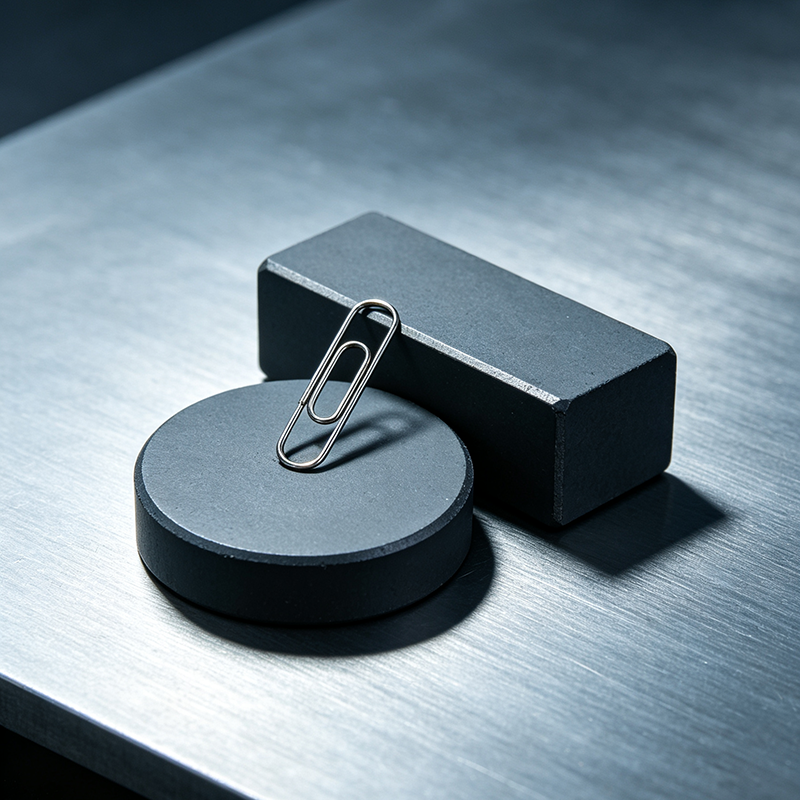
The ferrite vs neodymium for fridge magnets debate is where most buyers over-spend on a ferrite vs neodymium magnet they do not need. Neodymium is genuinely stronger, but “stronger” is not “better” for a 90g resin magnet.
Neodymium’s advantages — compact size, huge pull, long life — matter when the piece is heavy, the contact area is tiny, or the item must hold tools, not souvenirs. For a standard resin souvenir, neodymium adds three costs for no functional gain: a higher material price, a plating step to stop rust, and a magnet far stronger than the door can use. A ferrite-class backing that reaches 450g delivers the hold a resin piece needs, resists corrosion without special coating, and keeps the unit cost where a souvenir program requires it.
The exception is a deliberate premium line — aheavy metal badge or a thick resin collectible — where a buyer wants the “it will never fall” story and will pay for it. Even there, specify plated neodymium and confirm the plating standard, because unplated rare-earth magnet in a humid coastal gift store is a corrosion complaint waiting to happen.
What 450g Pull Force Means for a Resin Souvenir
Our production standard is a 450g pull force magnet minimum, tested on 100% of output, not sampled. Translated: every single piece — not a lucky few — holds at least 450g against a flat steel plate. For a resin souvenir of 60–100g, that is a 4.5× to 7.5× margin over the piece’s own weight, and the margin is what absorbs the real-world losses from paint, curvature, and slam.
This is not the highest number on the market. It is the right number for the product. A 450g floor sits in the ferrite-class band, which keeps the magnet cost-efficient and corrosion-resistant — exactly what a museum store reordering 1,200 pieces per design, six times a year, actually needs. If a supplier quotes you “super strong neodymium” for a standard resin magnet without asking the piece weight, that is a markup signal, not a quality signal.
How a Real Factory Verifies Pull Force
A pull-force claim is only as good as the QC behind it. The difference between a trading desk and a factory direct magnet supplier shows up exactly here: one resells a number, the other measures it.
In a real workshop, pull force is checked on the production line, lot by lot, against the AQL 2.5 inspection standard — and for a holding-spec this critical, the sensible practice is to test 100% of output rather than a random sample, because a single weak unit is a single returned souvenir. Every carton carries a lot tag back to the resin batch and the test record, so a buyer can trace a failure to its source. That lot-level traceability is what lets a national park or airport program reorder with confidence instead of re-auditing the supplier every season.
The same line that runs pull-force testing also runs the rest of the quality system: 48-hour yellowing test at 6500K retail light, AQL 2.5 final inspection, and EPE foam insert trays with lot-numbered cartons so transit breakage stays near zero. For the full supplier-vetting checklist, see our supplier selection guide.
Common Backing Mistakes B2B Buyers Make
After reviewing hundreds of custom souvenir programs, the same backing errors repeat. Catching them at the brief stage is cheaper than a redo.
- Accepting “strong magnet” as a spec. Demand a number with a test condition: minimum 450g, 100% tested, flat steel plate. Adjectives do not hold souvenirs.
- Over-specifying neodymium. Paying for rare-earth pull on a 90g resin piece buys rust risk and cost, not performance. Ferrite-class is the right band.
- Mismatching backing to face. Flexible sheet on a 3D resin magnet fails; thin ferrite on a heavy metal badge may under-hold. Name both materials in the brief.
- Ignoring the substrate. A 304 stainless door or a thick textured paint layer cuts real-world grip. Build the safety margin into the rated pull, not the lab number.
- Skipping the lot traceability question. If the factory cannot tie a weak unit back to its batch, you cannot fix a problem you will eventually have. Ask for the lot tag.
Frequently Asked Questions
How strong should a fridge magnet be?
For a standard resin or metal souvenir of 60–100g, specify a minimum pull force of 450g (about 1 lb), tested on 100% of output against a flat steel plate. That gives a 4.5× to 7.5× safety margin over the piece weight, which survives painted doors, curvature, and daily use. Heavier badges may need more, but most souvenir programs are well served at 450g.
What is the best backing for a souvenir magnet?
For a resin souvenir, the ideal magnet backing for resin souvenir programs is a ferrite-class backing that reaches the 450g band — the best balance of hold, cost, and corrosion resistance. Flexible sheet is too weak for a 3D piece; neodymium is more hold than a light resin magnet needs. Match the backing class to the decorative face and the piece weight, not to the strongest option available.
Does a souvenir magnet need neodymium?
Almost never for a standard resin or flat souvenir. Neodymium’s strength suits heavy metal badges or items that must hold tools, not a 90g landmark. For most programs, ferrite-class backing at 450g is the right, cost-efficient choice; reserve neodymium for deliberately premium heavy pieces, and then specify plating to prevent rust.
How is magnet pull force measured?
Pull force is the maximum weight a magnet holds when pulled straight off a flat, thick, low-carbon steel plate, measured in pounds or kilograms (the field itself in gauss or tesla). Real-world grip drops on painted, stainless, or curved surfaces, so the useful spec is always “minimum X grams, tested on 100% of output, against flat steel” — not a bare number.
Why do cheap fridge magnets fall off?
Two usual causes: a backing specced to the lab number instead of the kitchen (no safety margin for paint and curvature), or a flexible/rubber backing on a piece too heavy for its weak pull. Both are avoided by naming a minimum 450g pull force and matching the backing class to the face material and weight.
Request a Quote
The right partner does not just sell you the strongest magnet. It tells you — honestly — which backing class fits your artwork, your piece weight, and your retail environment, then proves it with a pull-force number and a lot-level test record instead of adjectives. Look for factory-direct pricing with no trading-company markup, a 1,200-piece minimum that lets you launch small, sampling in 7–21 days, bulk in 45–60 days from sample approval, and a quality line that states pull force, yellowing resistance, and inspection level by name.
If you are planning a museum, park, airport, or city tourism magnet line and want a quote that lists the backing class, the pull-force standard, the mold charge, the per-piece cost, and the lead time in plain numbers, send us your artwork. We quote within 24 hours, and we will tell you straight whether ferrite-class backing at 450g is the right call for each design — so your first sample is a confirmation, not a correction.

- Souvenir Magnet Program Planning: What Actually Sells for Museums, Parks & Tourism Boards - October 20, 2026
- Custom Fridge Magnet Sampling and Proofing: The B2B Guide to Approving a Sample (2026) - October 15, 2026
- Custom Mold Ownership & Design IP Protection for Souvenir Magnets: A B2B Buyer’s Guide (2026) - October 9, 2026