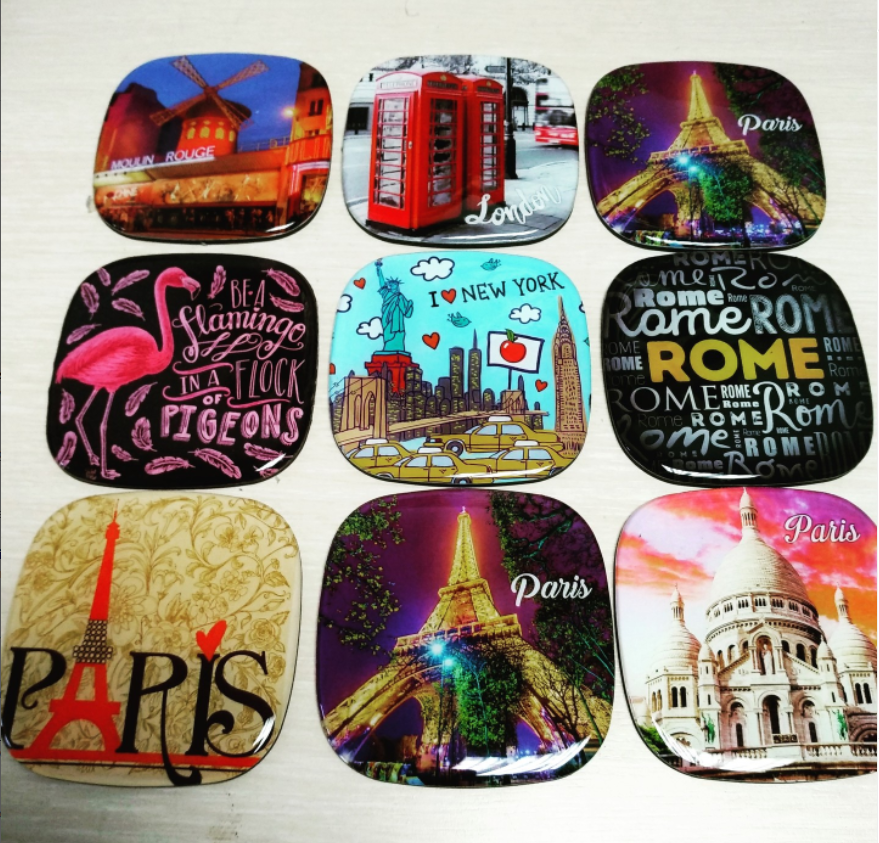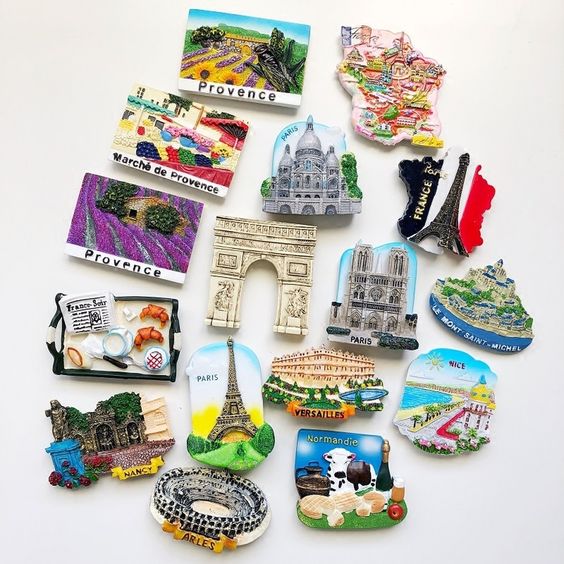
Souvenir magnet safety standards are the difference between a program that clears customs and lands on a museum shelf, and one that gets detained, fined, or pulled in a recall. If you buy custom fridge magnets for a museum store, a national park, an airport duty-free counter, or a city tourism board, compliance is not a paperwork afterthought — it is part of the product spec, sitting right alongside the artwork and the backing. In short, fridge magnet safety compliance is now a sourcing requirement, not a nice-to-have. This guide walks through the regulatory zones your magnets must clear, the chemical and magnetic limits that actually apply, the certificates a serious factory should put in your hand, and the mistakes that trip up first-time importers. No vague supplier promises. Just the standards, the numbers, and how to make them work for a B2B souvenir program.
What “Compliance” Actually Means for a Custom Souvenir Magnet

For a hobbyist buying one magnet, safety is a label they never read. For a B2B buyer, custom magnet compliance is three separate layers stacked on top of each other, and all three have to hold or the shipment does not move.
The first layer is chemical — what the resin, the ink, and the coating are allowed to contain. The second is physical and magnetic — whether a small, powerful magnet could become a loose, swallowable hazard. The third is documentation — the test reports and declarations that prove the first two layers are true, batch after batch. A supplier who nails the product but cannot show the paper is still a risk, because your buyer (the museum, the park, the airport concession) is the one Customs and the platform will chase.
This is why the buyer personas matter. A museum store buyer is not worried about one returned unit; they are worried about a brand-damaging recall across forty locations. An airport duty-free buyer answers to a concession-holder QA team that asks for certificates before the first PO. A city tourism board runs on public-procurement rules that assume documentation exists. The spec that satisfies all three is the same spec our own plant builds to: phthalate-free resin, heavy-metal controlled chemistry, and a third-party lab report per program rather than a verbal assurance.
The Three Regulatory Zones Your Program Must Clear
Most souvenir magnet programs sell into one of two markets — the United States or the European Union — with the UK and Canada close behind, and retail platforms (Amazon, Temu) layering their own enforcement on top. Every set of magnet safety regulations asks the same two questions: what is in the product, and could the magnet hurt a child. The table below puts the zones side by side so you can brief a factory in one conversation instead of three.
| Market / channel | Core framework | Chemical & substance limits | Magnet physics rule | Certificate needed |
|---|---|---|---|---|
| United States | CPSIA + ASTM F963-23 + 16 CFR 1262 | Lead: coating ≤90 ppm, substrate ≤100 ppm. Phthalates ≤0.1% (DEHP, DBP, BBP, DIBP) | Flux index <50 kG²·mm² if the magnet fits the small-parts cylinder; embedded magnets generally exempt | GCC (general use) or CPC (children’s) from an ISO 17025 lab |
| European Union | EN71-1/2/3 + REACH (Annex XVII) + CE | REACH SVHC screening; phthalates <0.1%; nickel release <0.5 µg/cm²/week on metal | EN71-1 clause 4.23: flux <50 kG²·mm² if a small part; “not a toy” age grading for souvenirs | CE declaration of conformity + third-party test report |
| UK & Canada | UKCA / GPSR; Canada Toys Regulations | Lead and phthalate limits aligned with US/EU; heavy-metal controls | Flux <50 kG²·mm² for small parts (BS EN 71-1) | Test report + manufacturer declaration |
| Retail platforms | Amazon / Temu safety policies | As above, enforced at inbound | As above, stricter document vetting | Valid lab report in original format; missing docs block intake |
The practical read for a souvenir buyer: most custom fridge magnets are adult decorative items, not toys, so the general-use path (GCC in the US, CE + “not a toy” in the EU) is the relevant one. But retailers routinely demand EN71 anyway to cap their own liability, which is why a factory that can show EN71, REACH, and CPSIA together — rather than negotiating each one after the fact — saves you a season of back-and-forth. The standards are not contradictory; they are a checklist, and a missing box is a held shipment.
Chemical & Substance Limits: Phthalates, Lead, and Heavy Metals

The chemical layer is where most first-time buyers get nervous, because the terms sound like a chemistry exam. They are not. For a resin souvenir, the substance rules boil down to three controls, and all three are about keeping softeners and metals out of a product that ends up in family environments.
REACH Annex XVII restricts the ortho-phthalates (DEHP, DBP, BBP, DIBP) to below 0.1% by weight in soft PVC compounds, and it screens for substances of very high concern (SVHC). CPSIA sets the US lead limits cited in the table above and extends phthalate control to products intended for children under twelve. California Proposition 65 pushes the same direction on lead and cadmium for the US market. None of these are exotic hurdles for a factory that formulated its resin correctly from the start — they are the reason our own material spec leads with two words: phthalate-free resin, heavy-metal controlled.
What that means on the line is simple to verify. A phthalate-free resin magnet starts with a formulation that removes the softener question before it is asked. A phthalate-free souvenir magnet is the output of that discipline, and REACH compliance for promotional magnets follows the same formulation-first rule. Heavy-metal control keeps lead and cadmium out of the pigment and the substrate. And because the chemistry is locked at the formulation stage, the third-party lab report per program is a confirmation, not a rescue mission. For a museum or park buyer sourcing into family-facing retail, that discipline is the quiet reason a program runs for years without a compliance letter.
Magnet Physics: Flux Index, Small Parts, and Embedded vs Loose
The magnetic layer is the one regulators scrutinize hardest, because small, powerful loose magnets are a documented ingestion hazard. Two rules dominate the world’s frameworks: the small-parts cylinder test, and the magnet flux index limit of 50 kG²·mm² for any magnet small enough to fit inside it.
Here is the part most compliance articles gloss over: the rule targets loose or separable magnets, not magnets that are permanently bonded into the product. A souvenir magnet built the right way has its ferrite disc cast or glued into the resin back, fixed for the life of the piece. It is not a loose bead, it does not separate, and in most classifications it sits outside the loose-magnet rule entirely. Our own backing standard — a ferrite-class disc delivering a 450g minimum pull force, tested on 100% of output — is inherently on the safe side of this line. Ferrite sits in the ~1.1 lb band; it is nowhere near the 200–500 kG²·mm² that neodymium loose magnets reach and that the rules strictly ban. As our fridge magnet backing and pull-force guide covers, the right backing class is also the compliant one.
The takeaway for a buyer: ask the factory how the magnet is retained, not just what grade it is. A magnet embedded in resin with a documented pull force is a different compliance animal from a loose disc that could pop out in a child’s hand. The design decision — ferrite, bonded, fixed — is what keeps your souvenir out of the hazard category without a special exemption.
REACH, CPSIA, and EN71: What Each Certificate Actually Covers
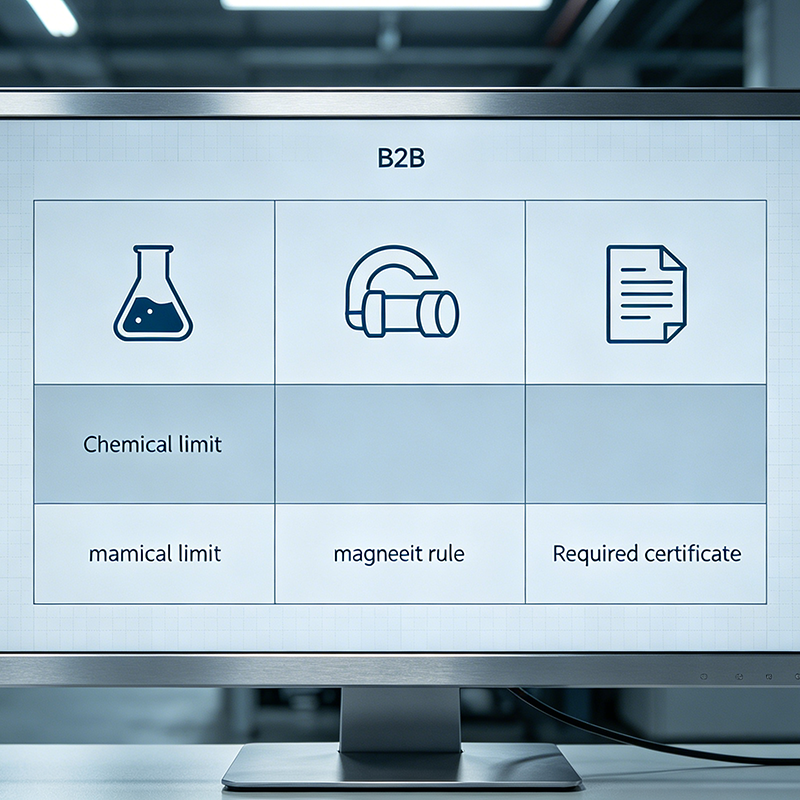
Three certificate names come up in every souvenir magnet conversation, and buyers often treat them as interchangeable. They are not. Each proves a different slice of the spec, and knowing the difference is how you spot a supplier who understands the category.
| Certificate | Market | What it actually proves | Why a souvenir buyer cares |
|---|---|---|---|
| REACH | European Union | Chemical safety: SVHC screening, phthalate and nickel limits across all substances in the product | Required for EU retail; proves the resin and coating chemistry is clean |
| CPSIA | United States | Lead and phthalate limits for products intended for children under 12; tracking-label discipline | Even adult souvenirs benefit from the substance control it enforces |
| EN71 | EU / UK (toy safety) | Mechanical, flammability, and chemical migration safety for toys and child-accessible items | Retailers demand it for decorative souvenirs to cap liability |
The pattern is consistent: for a fridge magnet that must satisfy REACH, CPSIA, and EN71 together, the three certificates are one substance-and-safety program. REACH and CPSIA are about what is in the product; EN71 is about how it behaves, including the magnetic clause we covered above. A factory that treats all three as one combined program — rather than three separate panic requests — is the factory you can reorder from. Our own documentation approach is a third-party lab report per program, scoped to the exact model and materials you are ordering, available on request rather than promised and never delivered.
The Certificate Paper Trail: CoC, GCC, CPC, and ISO 17025 Lab Reports
A certificate is only as good as its scope. The document types you will meet are a Certificate of Conformity (CoC), a General Certificate of Conformity (GCC) for general-use US products, a Children’s Product Certificate (CPC) if the item is aimed at under-12s, and the underlying test report from an ISO 17025-accredited lab such as SGS, TÜV, or Intertek.
The trap is generic templates. A certificate that covers “fridge magnets in general” tells you nothing about the specific resin, pigment, and backing in your run. The document you want names the exact model, the materials, and the production batch — because that is the only version Customs and a retailer’s QA team will accept. The right workflow is to confirm the sample first, request the CoC against that confirmed sample, and then hold the bulk to the same spec. For a distributor feeding a retail account, this paper trail is what turns “we think it’s fine” into “here is the report that proves it.” It is also why we issue lab reports per program: the scope matches the order, not a brochure.
Packaging, Labeling, and Customs Classification
Compliance does not stop at the magnet. The package is where age grading and warnings live, and those details change how the product is classified at the border. For an adult decorative souvenir, an explicit “Not a toy — keep out of reach of children” label keeps the item in the decorative classification (customs chapters 83 or 39) rather than the toy chapter (95), which carries its own heavier magnet rules. Miss that label and you can inherit the toy standard you were never supposed to meet.
The same package is where transit safety is won. Our own packing uses EPE foam insert trays inside lot-numbered cartons, so a magnet arrives undamaged and any weak unit is traceable back to its resin batch and test record. For EU-bound programs, packaging EPR registration (Germany and France especially) is a separate box to tick before Customs will clear the cartons. None of this is glamorous, but it is the difference between a carton that sails through and one that sits in a hold while you chase a registration number.
Factory-Direct vs Trading Company on Compliance
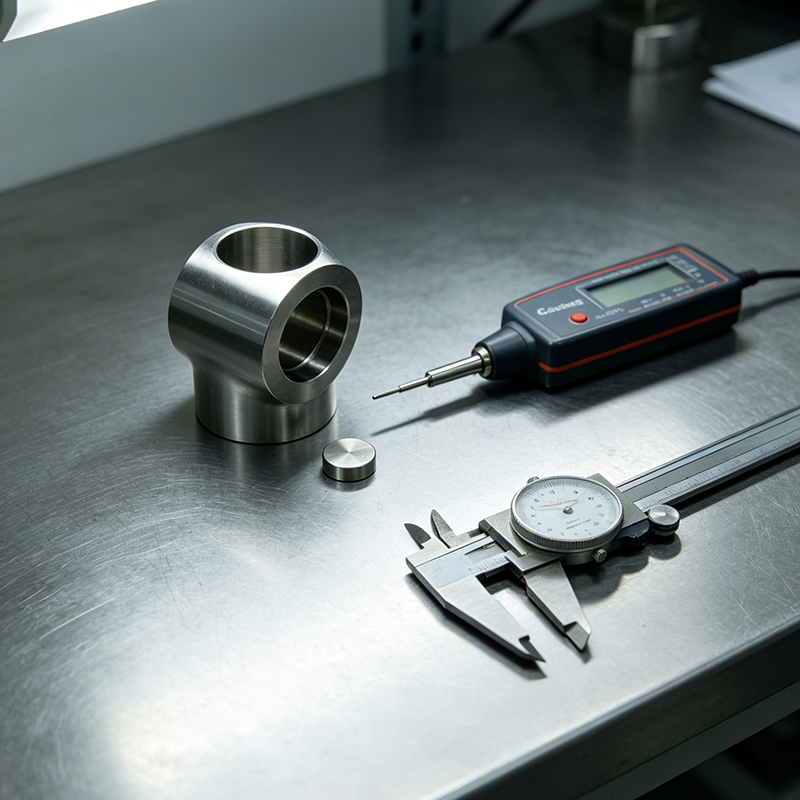
This is where a skyscraper article has to go further than the supplier blogs, because most of them resell a certificate they never saw. A trading desk will hand you a test report from a different factory’s different product and call it done. A real factory-direct plant measures the thing it ships.
The difference shows up in the line, not the brochure. Pull force is checked on 100% of output, not sampled, against a 450g floor. A 48-hour yellowing test at 6500K retail light confirms the print will not fade on a sunlit shelf. Final inspection runs to the AQL 2.5 standard, and every carton carries a lot tag back to the resin batch and the test record, so a buyer can trace a failure to its source instead of re-auditing the supplier every season. Priced factory-direct with no trading-company markup, that system is what lets a national park or airport program reorder 1,200 pieces per design, six times a year, without re-opening the compliance file each time. The certificate is the output of the system, not a substitute for it.
Common Compliance Mistakes B2B Buyers Make
After reviewing hundreds of custom souvenir programs, the same compliance errors repeat. Catching them at the brief stage is cheaper than a redo:
- Accepting a verbal “we can provide certificates.” Demand the actual report, scoped to your model and batch, before you pay for bulk.
- Assuming decorative means untested. Adult souvenirs still clear chemical rules; retailers still ask for EN71. Plan for both.
- Ignoring platform policies. Amazon and Temu vet documents at inbound. A missing lab report blocks the whole PO, not just one unit.
- Not checking certificate scope. A generic template covering “magnets in general” does not cover your resin, your pigment, or your backing.
- Skipping age grading on the package. Without a “not a toy” label, a decorative magnet can default into the toy classification and its stricter magnet rules.
- Mixing loose-magnet designs into a souvenir run. One separable high-flux disc can pull the whole program into the restricted category. Keep magnets embedded and documented.
Frequently Asked Questions
Are fridge magnets safe for children?
Standard souvenir fridge magnets built with embedded, bonded ferrite backing are designed as adult decorative items, not toys, and sit outside the loose-magnet hazard rules. The safety risk regulators target is small, powerful loose magnets with a flux index at or above 50 kG²·mm². A ferrite disc cast into resin with a documented pull force is a different category. Still, packaging should carry a “not a toy” age grade, and magnets should never be loose or separable.
Do souvenir magnets need EN71 certification?
EN71 is the EU toy-safety standard, so a purely decorative adult souvenir is not strictly required to carry it. In practice, retailers and distributors demand EN71 anyway to cap their own liability, and many EU buyers will not list a magnet without it. Treating EN71 as part of the standard spec — alongside REACH and CPSIA — is the path that clears the most doors without a follow-up request.
What are the CPSIA requirements for fridge magnets?
For US-bound magnets, CPSIA sets lead limits (coating ≤90 ppm, substrate ≤100 ppm) and restricts phthalates to 0.1% for products intended for children under 12, backed by ASTM F963-23 and, for magnet products, 16 CFR 1262. Even adult decorative magnets benefit from the substance discipline CPSIA enforces, and a General Certificate of Conformity from an ISO 17025 lab is the document US Customs and platforms expect.
What is 16 CFR 1262 for refrigerator magnets?
16 CFR 1262 is the US CPSC safety standard for magnet products, including refrigerator and decorative magnets. It requires that any magnet fitting the small-parts cylinder have a flux index below 50 kG²·mm², with testing by a CPSC-accepted third-party lab and a GCC for general-use items. Because it applies to all consumer magnet products, a souvenir importer needs it regardless of target age — which is why embedded, low-flux ferrite backing is the compliant design choice.
Is a souvenir magnet classified as a toy for customs?
Usually not. An adult decorative souvenir with a “not a toy — keep out of reach of children” label is classified under decorative customs chapters (83 or 39), not the toy chapter (95). That distinction matters because the toy chapter carries stricter magnet-physics rules. The label, the age grading, and the embedded (non-loose) magnet design together keep the product in the lighter regulatory lane.
How to verify a magnet supplier’s certificates?
Ask for the actual test report from an ISO 17025-accredited lab (SGS, TÜV, Intertek), and check that it names your exact model, materials, and production batch — not a generic “magnets” template. Confirm the sample first, request the Certificate of Conformity against that sample, then hold bulk to the same spec. A factory that issues a third-party lab report per program, scoped to the order, is showing you the system, not a borrowed PDF.
Request a Quote
The right partner does not just sell you the strongest magnet or the cheapest resin. It tells you — honestly — which standards your program must clear, proves the chemistry and the backing with a scoped lab report, and ships with the lot-level traceability and age-graded packaging that get the cartons through Customs. Look for factory-direct pricing with no trading-company markup, a 1,200-piece minimum that lets you launch small, sampling in 7–21 days, bulk in 45–60 days from sample approval, and a quality line that states substance compliance, pull force, yellowing resistance, and inspection level by name.
If you are planning a museum, park, airport, or city tourism magnet line and want a quote that lists the material, the backing class, the compliance scope, the mold charge, the per-piece cost, and the lead time in plain numbers, send us your artwork. We quote within 24 hours, and we will tell you straight which certificates your target market requires for each design — so your first sample is a confirmation, not a correction.

- Souvenir Magnet Program Planning: What Actually Sells for Museums, Parks & Tourism Boards - October 20, 2026
- Custom Fridge Magnet Sampling and Proofing: The B2B Guide to Approving a Sample (2026) - October 15, 2026
- Custom Mold Ownership & Design IP Protection for Souvenir Magnets: A B2B Buyer’s Guide (2026) - October 9, 2026