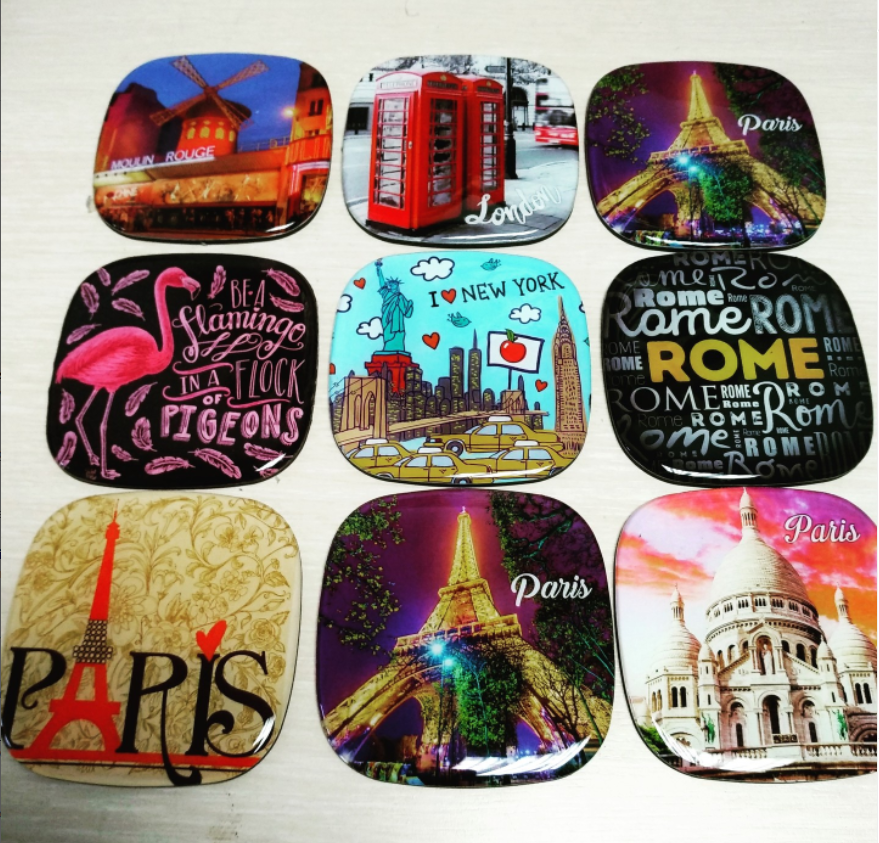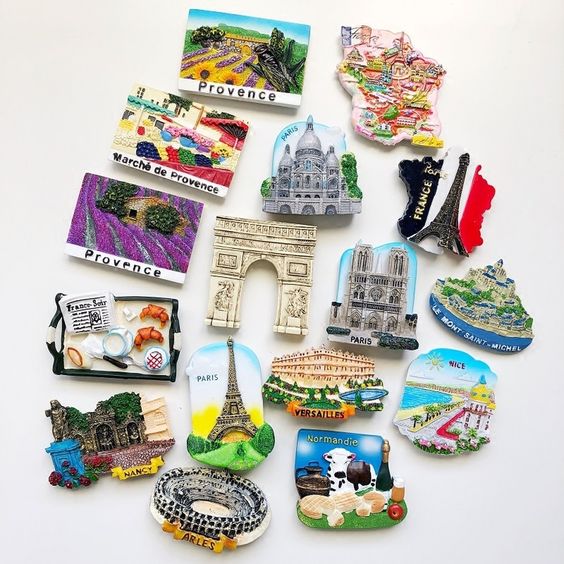
For the innovative brand manager, the landscape of sustainable design is no longer about simply using “green” materials—it is about visualizing that sustainability. We are entering an era where consumers, particularly in high-traffic travel retail and luxury sectors, demand proof of a product’s origin. In 2026, the most significant aesthetic shift in the global souvenir and gift industry is the rise of Eco-Embeds.
This isn’t just another manufacturing technique; it is a design philosophy that utilizes crystal-clear, bio-based resins to “freeze” recycled waste in time, turning ocean plastic, discarded electronics, and organic bypass into high-end art. For category managers at groups like Dufry or Hudson, Eco-Embeds solve a critical problem: how to make a recycled product look premium rather than “recycled.”
At Craftmgf.com, we specialize in the intersection of technical manufacturing and strategic brand storytelling. As Google SEO experts, we know that capturing the interest of forward-thinking importers requires moving beyond generic sourcing tips. This guide applies the Skyscraper and Ferris Wheel techniques to explore the technical alchemy, logistical precision, and retail psychology of the Eco-Embed trend.
The Competitor Landscape: A Superficial Look at Sustainable Resin

A review of current SEO content for “sustainable design trends” or “recycled resin” reveals a predictable, shallow structure:
- Intro: Sustainability is important.
- Definition: What is recycled plastic?
- Examples: Coasters made of plastic chips.
- Conclusion: Buy green products.
The “Skyscraper” Depth Expansion:
This standard approach fails to address the technical refined requirements of a global brand manager. It ignores the chemistry of optical clarity, the logistics of clean-stream sourcing, and the critical Total Landed Cost (TLC) of innovation. Passive sourcing is a Major Trap; our “Ferris Wheel” approach deepens this by connecting the aesthetic trend to the functional profit center of high-traffic retail.
1. The 2026 Aesthetic: From “Hiding” to “Showcasing” the Narrative
Historically, recycled materials were hidden. Recycled plastic was typically turned into opaque, dark-colored objects to mask inconsistencies in the raw material. In 2026, the trend has flipped. Physical Transparency is the new luxury.
Visual Storytelling through Crystal Clear Resin
By using high-optical-grade bio-based epoxy or polyurethane, manufacturers can now encase recognizable fragments of recycled waste. Imagine a custom souvenir—perhaps a miniature of a coastal city—where the base is a transparent block containing genuine cleaned ocean plastic collected from that very coastline.
This creates an immediate emotional connection. The consumer isn’t just buying a “green” product; they are buying a preserved piece of a localized environmental success story. For experienced souvenir importers, this represents the ultimate move from commodity to collectible.
The Design Language of “Suspended Motion”
Eco-Embeds rely on a design language of “suspended motion.” Whether it is colorful shavings of recycled aluminum, reclaimed wood fibers, or discarded watch gears, the resin acts as a lens. It magnifies the detail of the recycled material, transforming “trash” into a high-detail focal point. This is manufacturing partnership at its most creative, requiring a factory that understands both the chemistry of the resin and the artistry of the placement.
2. Technical Alchemy: Achieving Optical Clarity in High-Volume Production
The biggest barrier to Eco-Embeds is clarity. Standard industrial resin often has a slight yellow tint or develops micro-bubbles during the curing process, which ruins the “crystal clear” effect. For a brand retailer, a cloudy resin embed looks cheap and erodes trust.
Vacuum Degassing and Pressure Casting
Achieving the 2026 standard for Eco-Embeds requires a specialized China souvenir factory equipped with advanced degassing technology. When recycled materials are placed in resin, they often trap air. Without a rigorous vacuum process, those bubbles remain visible, distracting from the embed.
- The Technical Fix: Professional resin souvenir manufacturers use a two-stage pressure-casting system. First, the resin is degassed in a vacuum chamber to remove air from the liquid. Second, the mold is cured under high pressure, which shrinks any remaining microscopic bubbles until they are invisible to the naked eye.
Refractive Index Matching
A sophisticated souvenir product development team will consider the refractive index (RI) of both the resin and the embedded material. If the RI is mismatched significantly, the edges of the recycled material may look distorted or “silvery.” Technical refined optimization ensures that the embed looks like it is floating in air, not stuck in plastic.
3. Sourcing the “Waste”: The Logistics of Clean-Stream Embeds
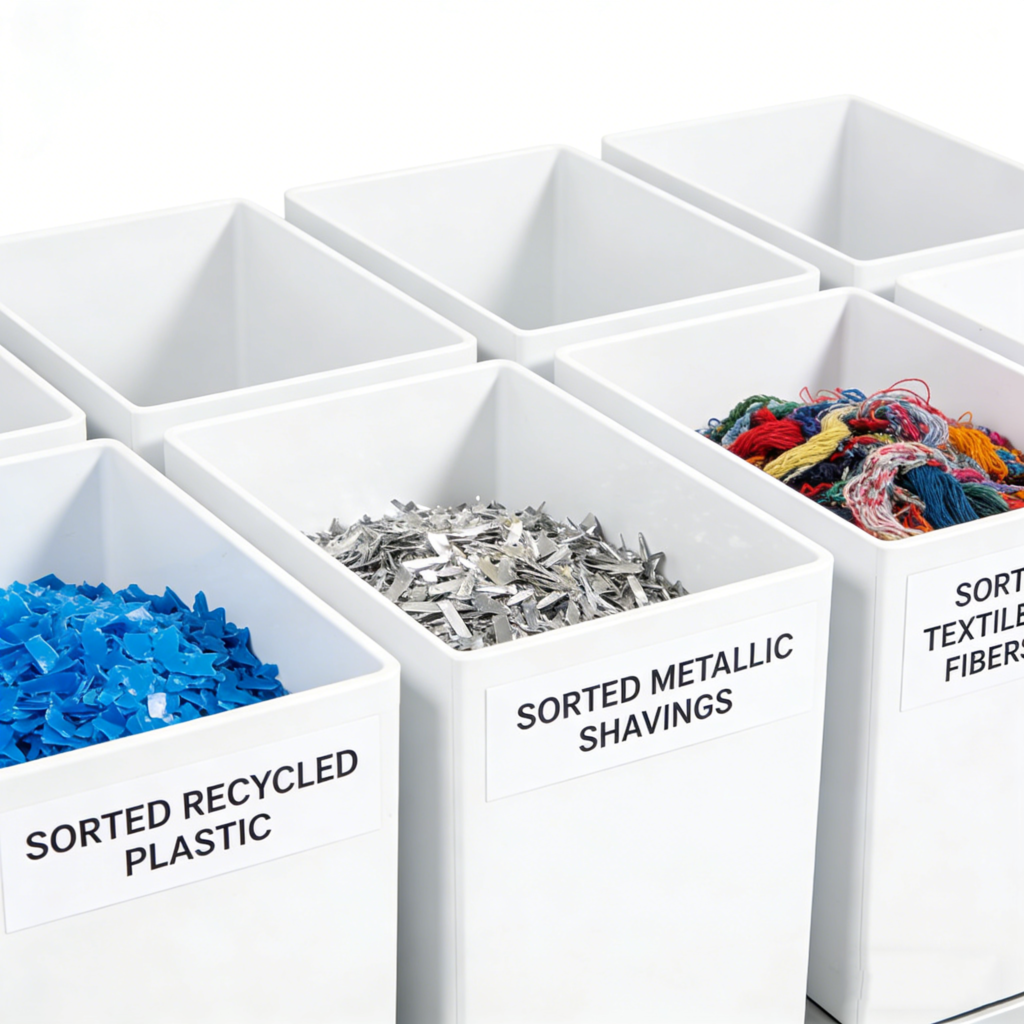
A common misconception is that you can just throw any trash into resin. In reality, the logistics of sustainable corporate gifts involving embeds are incredibly complex. Contamination is the enemy of clarity.
The “Clean Stream” Requirement
If you are encasing recycled ocean plastic, that plastic must be industrially cleaned, dried, and sorted by color. Any moisture left in the plastic will react with the resin (especially polyurethanes), creating foam or cloudiness.
- Logistical Sourcing: Experienced managers now look for a manufacturing partnership that includes a verified “Clean Stream” supply chain. This means the factory doesn’t just buy “recycled plastic”; they buy pre-processed, high-purity flakes that are guaranteed to be compatible with clear resin casting.
Material Diversity in 2026
The 2026 trend is expanding beyond plastic. We are seeing high demand for:
- E-Waste Embeds: Tiny circuit board fragments or copper wiring encased in blocks for tech-forward cities.
- Agricultural Bypass: Coffee husks or dried floral waste from local industries, providing a sensory (though visual) connection to the region.
- Textile Scraps: Shredded recycled denim or silk, creating a “frozen fabric” effect.
4. Brand Storytelling: Transparency as a Retail Conversion Engine
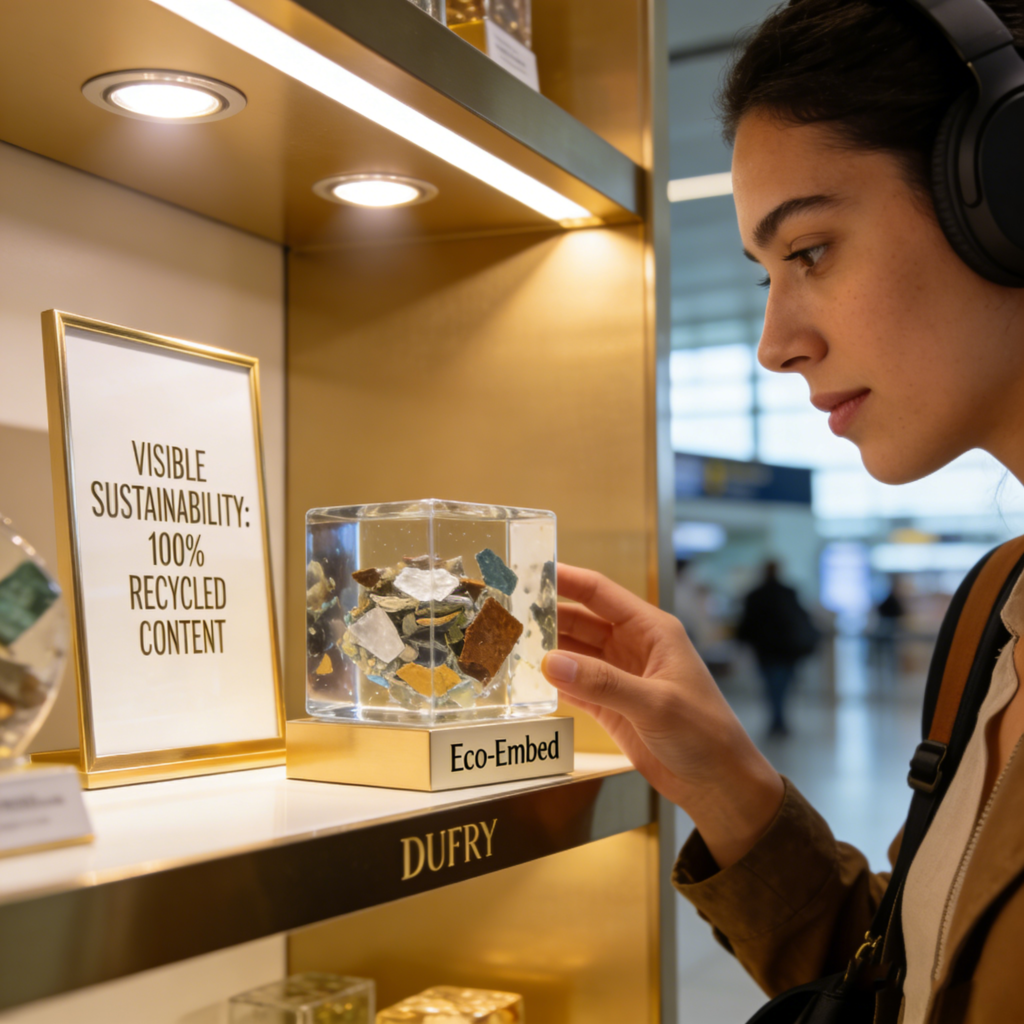
In the world of Hudson or Dufry, where shoppers have only minutes to make a decision, the product must speak for itself. An Eco-Embed is a self-explaining product.
The “Proof in the Plastic”
When a traveler sees a souvenir with visible recycled content, the “greenwashing” filter in their brain is bypassed. They don’t need to read a long paragraph about the company’s carbon goals; they can see the recycled material with their own eyes. This visual proof increases the perceived value, allowing the retailer to move from a $15 price point to a $35+ “Artisanal Sustainable” price point.
Customization and Exclusivity
For brand retailers, Eco-Embeds offer a high degree of exclusivity. Because the arrangement of recycled fragments is slightly different in every piece, each souvenir becomes a “1 of 1” edition. In the 2026 market, “unique” is a powerful sales driver. A manufacturing partnership that can deliver mass-produced uniqueness is a massive competitive advantage.
5. The Data: Quantifying the Value of Eco-Embed Innovation
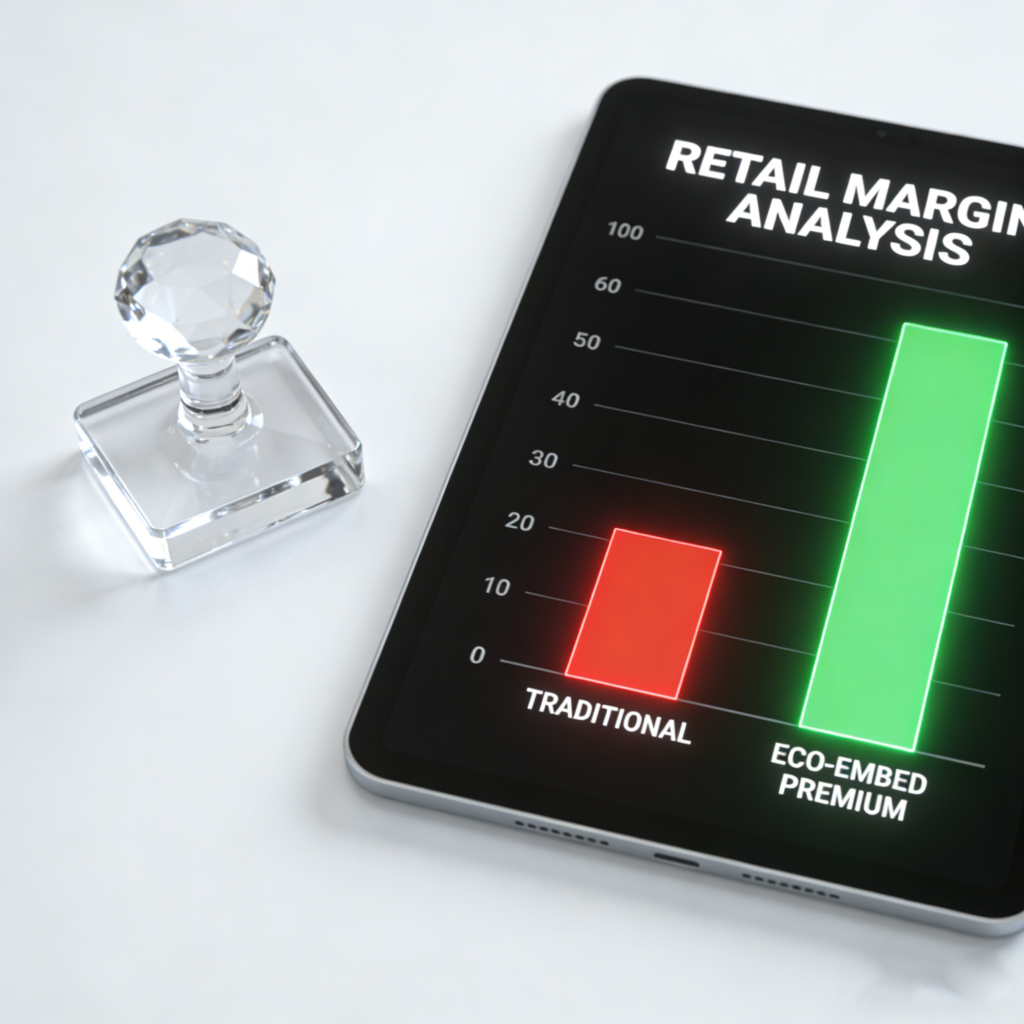
Innovative brand managers must justify the shift to Eco-Embeds with hard data. Passive calculation often suggests that clear resin is more expensive, but a Total Landed Cost (TLC) analysis reveals a different story when retail performance is factored in.
| Metric | Standard Opaque Recycled Souvenir | Premium Crystal Clear Eco-Embed | Business Impact |
| Material Cost (FOB) | Baseline ($2.00) | $3.50 (Premium bio-resin) | Higher initial investment. |
| Scrap/Reject Rate | 2% | 5% (Due to clarity QC) | Requires expert souvenir quality control. |
| Visual Sustainability Proof | Low (Requires labeling) | High (Self-evident) | Reduces marketing friction. |
| Average Retail Price (SRP) | $12.00 | $34.99 | Significant Margin Expansion. |
| Customer Retention/IG Appeal | Moderate | Extreme (High “shareability”) | Free organic social marketing. |
| Compliance (UV/Lead-Free) | Standard | Certified (Prop 65/REACH) | Port security and brand safety. |
The Math of Margin
While the Total Landed Cost (TLC) might be 40-50% higher than a standard souvenir, the Retail Margin expands by over 150%.
$$Margin\% = \frac{SRP – TLC}{SRP}$$
In the Eco-Embed model, the numerator ($SRP – TLC$) grows so significantly that the higher production cost becomes irrelevant. Passive exporting is a Major Trap; turn economic headwinds into strategic tailwinds by focusing on margin, not just cost.
6. Durability & UV Resistance: Preventing the “Yellowing” Disaster
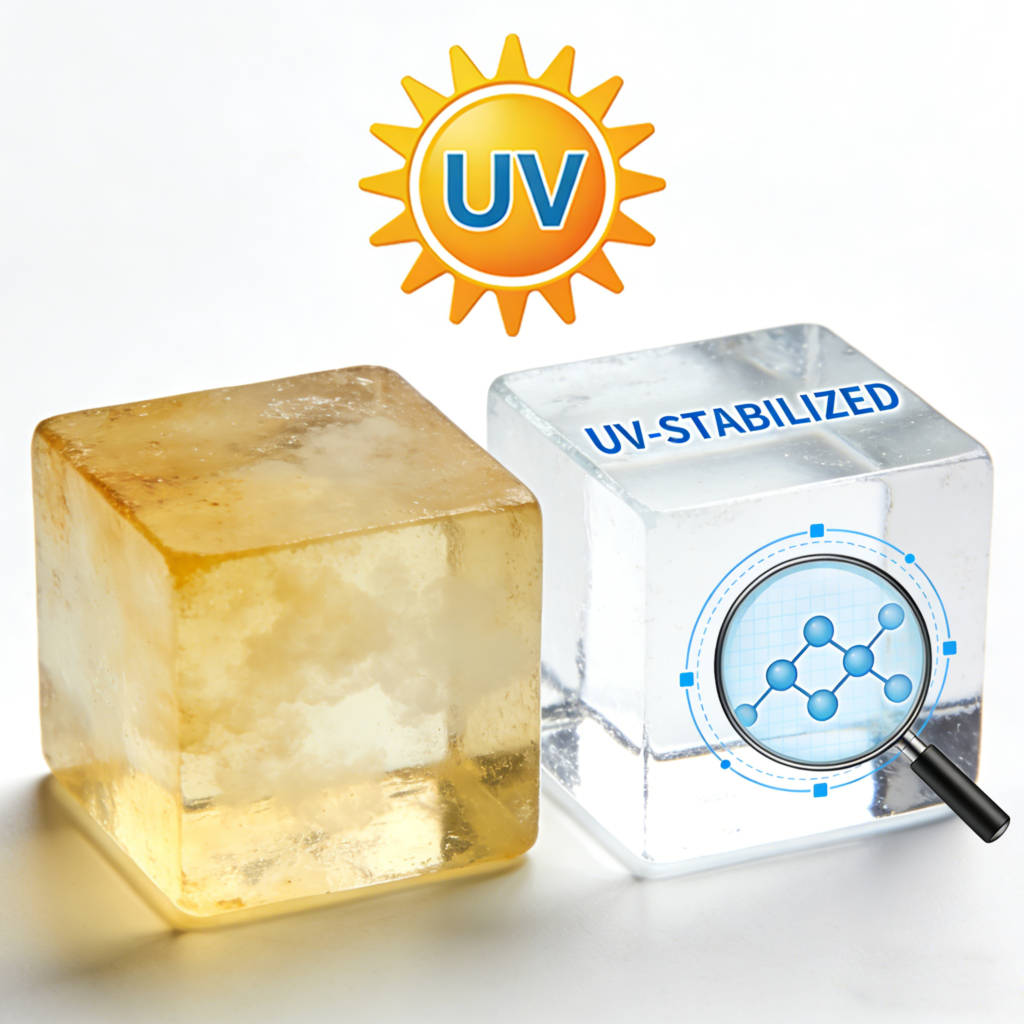
The single biggest fear for a tourism souvenir importer dealing with clear resin is yellowing. All resins, if not properly stabilized, will eventually turn yellow when exposed to the UV light of a retail window or a customer’s home.
HALS and UV Stabilizers
To protect the brand, the manufacturing partnership must utilize Hindered Amine Light Stabilizers (HALS) and specialized UV absorbers. In 2026, premium bio-resins are engineered with these additives at the molecular level.
- The Vetting Process: When vetting a China souvenir factory, an experienced importer shouldn’t just ask for a sample; they should ask for the results of an Accelerated Weathering Test (ASTM G154). This test simulates years of UV exposure in weeks. If the factory cannot provide this data, your brand is at risk.
Heat Stability in Transit
Clear resins can also suffer from “heat deflection” in hot shipping containers. A technically refined factory will ensure the “Glass Transition Temperature” ($T_g$) of the resin is high enough to withstand the 60°C+ temperatures found in summer ocean freight. Passive communication on these specs creates risk; proactive engineering is the strategy.
7. Strategic Sourcing: Partnering for Eco-Embed Success
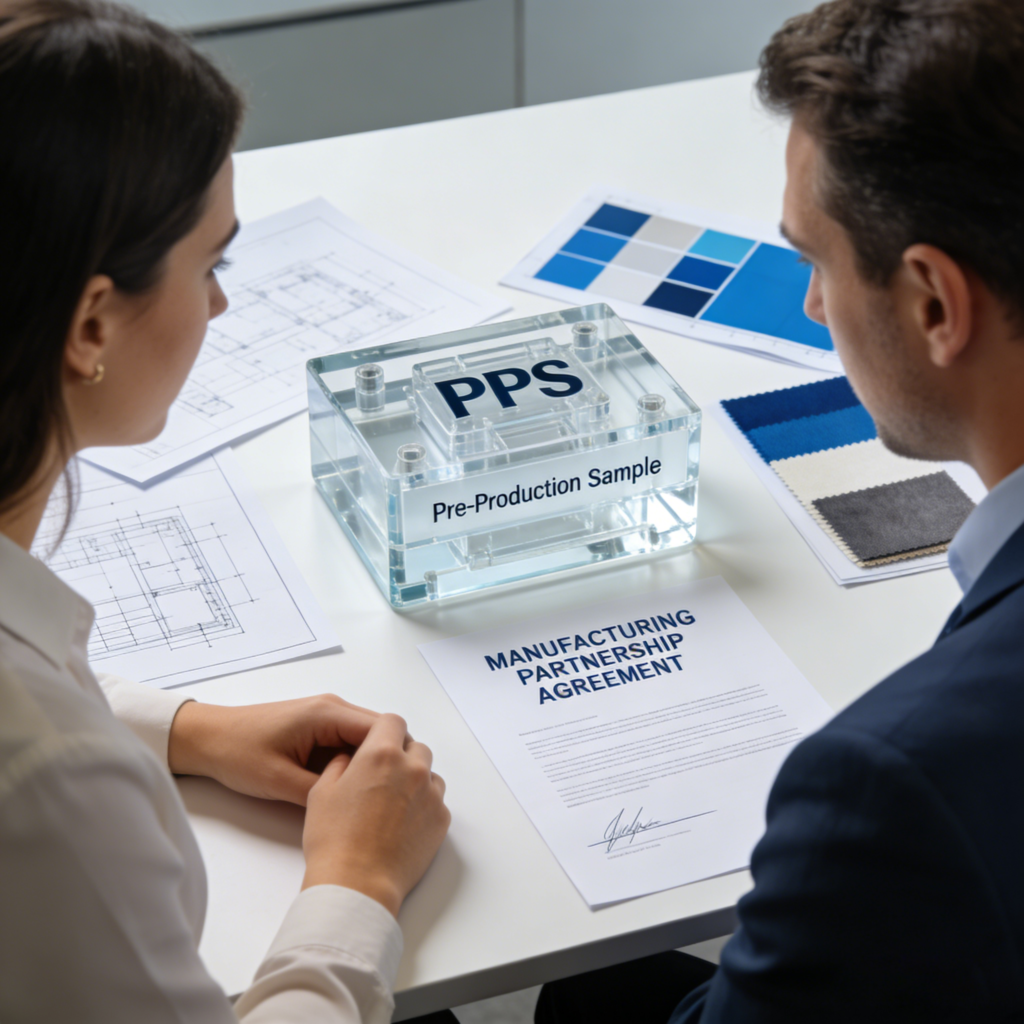
Launching an Eco-Embed line in 2026 requires a more intimate manufacturing partnership than traditional wholesale.
The Prototype Phase (PPS)
Because of the complexity of the embeds, the Pre-Production Sample (PPS) phase is critical. You must see how the resin reacts with your specific recycled material. Does it bleed color? Does it create “silvering”?
- The Strategy: Work with a factory in Quanzhou or a custom souvenirs manufacturing Vietnam center that has a dedicated R&D lab for clear casting.
ESG and Transparency
For the innovative brand manager, the “Eco” in Eco-Embed must be verified. This means BSCI audits, ISO 14001 certification, and potentially Global Recycled Standard (GRS) certification for the embed materials. In 2026, the “story” is only as good as the data backing it up.
Conclusion: The Clear Future of Souvenir Retail
The rise of Eco-Embeds represents the maturation of sustainable design. We have moved past the era of “green-looking” products and into an era of verifiable, high-detail transparency. For the brand manager at Hudson, Dufry, or high-end resorts, Eco-Embeds offer a way to command premium prices while satisfying the consumer’s deep desire for environmental proof.
Passive importing is a memory; strategic sourcing is the future. Success in 2026 won’t be found in the cheapest catalog, but in the most innovative manufacturing partnership. Compliance is your foundation; technical refined optimization is your profit. Sourcing is a memories business; manufacturing is a data business.
Are you ready to lead the 2026 design curve? Contact Craftmgf.com today for a technical consultation on Eco-Embed development and a comprehensive Landed Cost Audit for your sustainable transition. Let’s turn your recycled story into a crystal-clear profit center.

- Eco-Embeds: The 2026 Design Trend of Encasing Recycled Materials in Crystal Clear Resin - April 1, 2026
- The Rise of Bio-Resins: How Soy-Based Materials are Transforming Sustainable Souvenir Production - March 25, 2026
- Private Label vs. Generic Wholesale: Which Strategy Wins in High-Traffic Airport Retail? - March 18, 2026